What Is a Duchenne Smile? The Science Behind a Real Smile
Not all smiles are created equal. A Duchenne smile — named after French neurologist Guillaume-Benjamin Duchenne de Boulogne — is the only kind that cannot be fully faked on command. It is the universal marker of genuine happiness, and modern AI can detect it in under a second. Here is the science behind it, why it matters, and what sets it apart from every other smile.
What Is a Duchenne Smile?
A Duchenne smile is a genuine smile that simultaneously activates two facial muscles: the zygomatic major (which pulls the mouth corners upward) and the orbicularis oculi (which wraps around the eye, creating crow's feet and a characteristic eye narrowing). Most smiles only activate the zygomatic major. The Duchenne smile activates both.
The key distinction is involuntary activation. You can deliberately move your zygomatic major — this is how you smile on command. You cannot reliably and convincingly activate the orbicularis oculi at will. It fires naturally in response to genuine positive emotion. This is why Duchenne smiles look unmistakably real while posed smiles look staged even when technically 'correct.'
Named after Guillaume-Benjamin Duchenne de Boulogne, who first documented this dual-muscle activation in his 1862 publication Mécanisme de la Physionomie Humaine, the Duchenne smile has been studied in depth by neurologists, psychologists, and more recently, AI researchers for over 160 years.
Duchenne Smile vs Fake Smile: The Key Differences
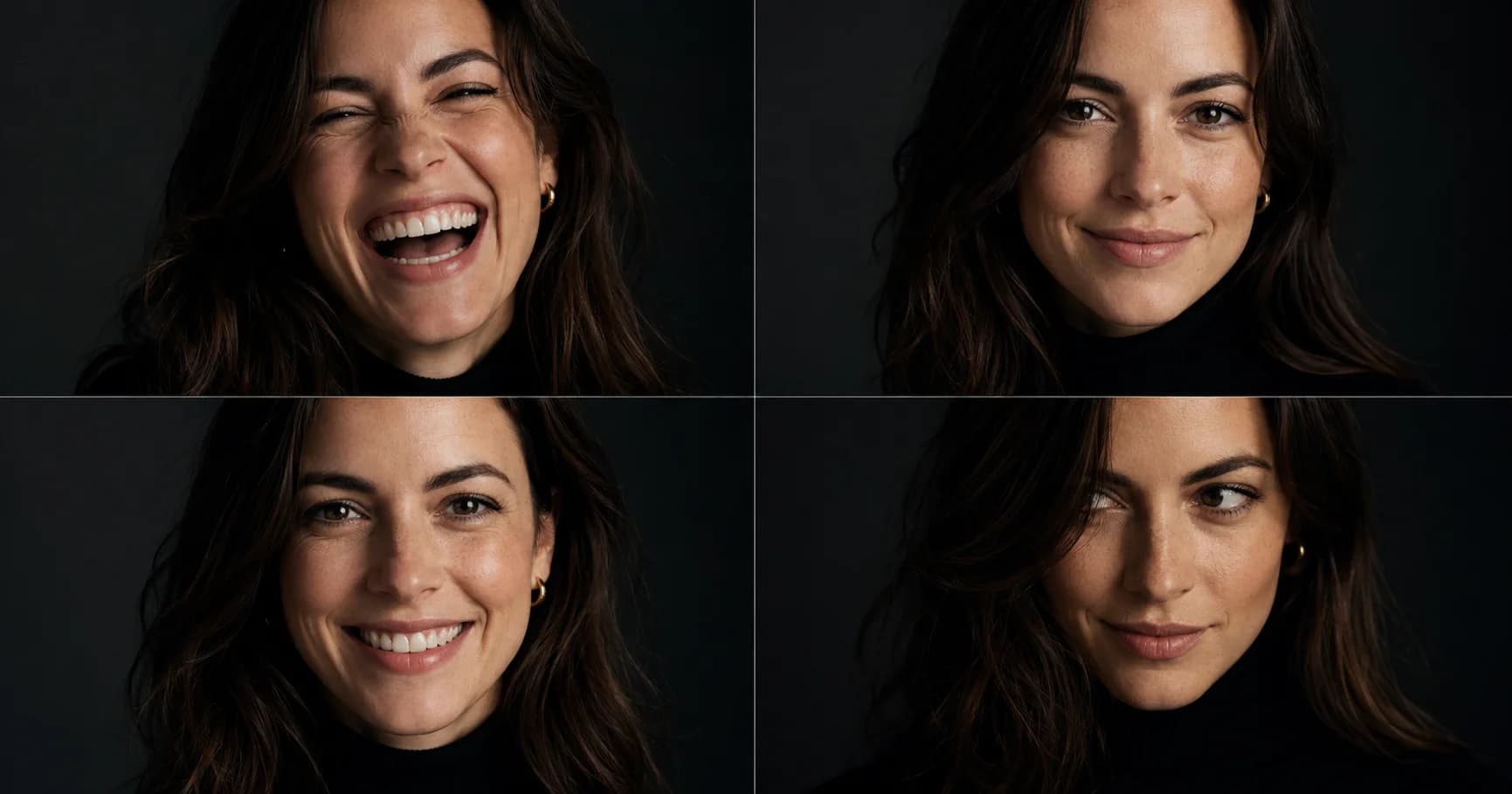
The most visible difference between a Duchenne smile and a social smile is the eye area. In a genuine Duchenne smile, the lower eyelids rise slightly, the cheeks push upward, and fine lines appear at the outer corners of the eyes. The upper part of the face is fully involved. In a non-Duchenne smile, the eyes remain largely neutral — the expression lives entirely in the mouth.
A secondary difference is timing. Genuine smiles build gradually (about half a second to reach full expression), hold briefly, then fade slowly. Fake smiles often appear more abruptly and drop off more sharply — a timing pattern that observers instinctively detect as performed.
A third difference is symmetry. Genuine Duchenne smiles tend to be slightly asymmetric — naturally uneven in a way that reads as real. Posed smiles are often more symmetrical but paradoxically look less natural because of it. The brain is calibrated to detect these subtle asymmetries as authenticity signals.
The Two Muscles That Define It
The zygomatic major originates at the cheekbone and inserts at the corner of the mouth. When it contracts, it pulls the lip corners upward and outward, creating the visible smile shape. This muscle is fully under voluntary control — you can move it deliberately, on command, without any emotional trigger.
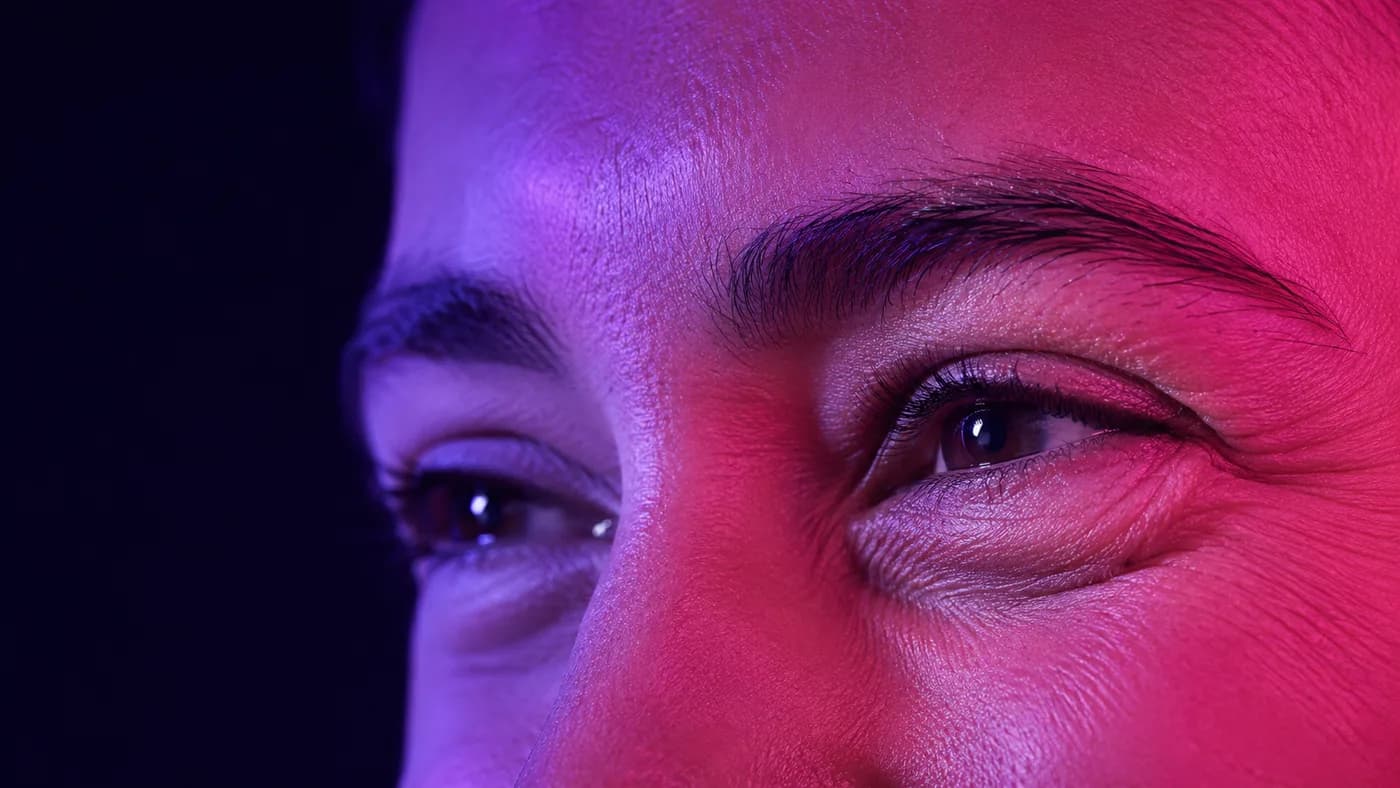
The orbicularis oculi is a ring-shaped muscle that encircles the eye. Its outer portion (the pars orbitalis) is what creates the eye squint in a genuine smile. Unlike the zygomatic major, this outer portion is not reliably controllable by conscious will. Paul Ekman, who developed the Facial Action Coding System (FACS) in the 1970s, catalogued the Duchenne smile as the combination of Action Units AU6 (cheek raiser, orbicularis oculi) and AU12 (lip corner puller, zygomatic major).
When both muscles contract simultaneously, the entire midface lifts, the cheeks become prominent, the eye area narrows, and the expression reads as warm and authentic. When only AU12 fires without AU6, the face looks pleasant but not genuinely happy — the upper face is uninvolved.
Advertisement
Can You Fake a Duchenne Smile?
Duchenne himself noted that the orbicularis oculi cannot be activated by pure will — it responds only to genuine emotion. Modern research largely confirms this — while trained actors and some individuals with high emotional awareness can produce a partial approximation, most people cannot convincingly fake full orbicularis oculi engagement on demand.
What you can do is create conditions that reliably trigger a genuine Duchenne smile. Recalling a vivid happy memory, engaging with something you find genuinely funny, or focusing on a person you feel warmly toward — all of these activate the limbic system, which then fires the orbicularis oculi naturally. The result is not a fake Duchenne smile but a real one triggered deliberately.
Daily practice of raising the cheeks independently (without moving the mouth) in a mirror also strengthens the neural pathway between intent and orbicularis oculi activation. Over weeks, this practice makes it progressively easier to produce the characteristic eye engagement when you choose to.
“The muscle around the eye is only put in play by the sweet emotions of the soul; its inertness in smiling unmasks a false friend.”
To produce a genuine Duchenne smile on demand: recall a specific happy memory 2–3 seconds before you need to smile. The limbic system triggers the eye engagement automatically.
How AI Detects a Duchenne Smile
Smile Tracker uses Google MediaPipe Face Landmarker to map 478 facial landmarks and read 52 blendshape coefficients in real time. The blendshapes most directly relevant to Duchenne detection are cheekSquintLeft, cheekSquintRight, eyeSquintLeft, and eyeSquintRight — four values that correspond precisely to orbicularis oculi engagement.
A high Smile Score requires strong values across both the mouth region (mouthSmileLeft, mouthSmileRight) and the eye/cheek region (the squint values). Two people with identical mouth smile curves can produce dramatically different scores depending solely on their eye engagement — which is exactly what Duchenne's original research identified as the differentiating factor.
This is also why uploading a photo where you're genuinely laughing typically produces a higher score than one where you posed — the AI detects the Duchenne marker the same way human observers do, just considerably faster.
Why a Duchenne Smile Changes How Others See You
In a landmark 2001 longitudinal study, Harker and Keltner (UC Berkeley) analyzed college yearbook photos and found that women who displayed Duchenne smiles reported greater life satisfaction, stronger marriage quality, and higher social wellbeing in follow-up assessments conducted up to 30 years later — a correlation robust enough to be cited in over 400 subsequent academic papers.
In immediate social interactions, Duchenne smiles are consistently rated as more trustworthy, warmer, and more attractive than non-Duchenne smiles — even in exposures shorter than 100 milliseconds. Observers are not consciously evaluating the eye engagement; they're simply responding to a social signal that has been wired into human perception through evolution.
For photography and professional contexts, a Duchenne smile produces a portrait that feels alive rather than performed. The difference between a photo where someone is genuinely happy and one where they're performing happiness is immediately apparent — and it comes down almost entirely to the orbicularis oculi.
Frequently Asked Questions
What is the difference between a Duchenne and non-Duchenne smile?
A Duchenne smile activates both the zygomatic major (mouth corners) and the orbicularis oculi (around the eyes), producing crow's feet, raised cheeks, and a characteristic eye narrowing. A non-Duchenne smile only activates the zygomatic major — the eyes stay neutral and the upper face is uninvolved. Observers detect this difference in under 100 milliseconds.
Can you fake a Duchenne smile?
Not reliably. The orbicularis oculi — the eye muscle that defines a Duchenne smile — cannot be voluntarily activated by most people. However, you can trigger a genuine Duchenne smile deliberately by recalling a specific happy memory, which activates the limbic system and fires the eye engagement naturally. This is not faking — it's creating conditions for a real smile.
Why is it called a Duchenne smile?
It is named after French neurologist Guillaume-Benjamin Duchenne de Boulogne, who first documented the dual-muscle activation in his 1862 publication Mécanisme de la Physionomie Humaine. Using early electrical stimulation on facial muscles, Duchenne discovered that artificially activating only the mouth smile muscle produced a convincing-looking but clearly 'fake' expression, while genuine happiness additionally activated the eye muscle.
How can you tell if someone's smile is genuine?
Look at the eyes. A genuine Duchenne smile shows: slight narrowing of the lower eyelids, raised cheeks pushing upward, fine lines or crow's feet at the outer eye corners, and upper cheek fullness. The smile also builds gradually and fades slowly. A posed smile stays mainly in the mouth area, the eyes remain relatively neutral, and it often appears and disappears more abruptly.
Does a Duchenne smile make you more attractive?
Research consistently shows that Duchenne smiles are rated as significantly more attractive, trustworthy, and warm than non-Duchenne smiles by independent observers. The effect is robust across cultures and persists even in very brief exposures. The key driver is the eye engagement — it signals genuine positive emotion rather than social performance.
Lena Whitmore
Science Writer · Facial Analysis & Appearance Psychology
Lena covers the science of smiles, facial aging, and AI-powered biometrics. She writes evidence-based guides grounded in peer-reviewed research, with a focus on making appearance science accessible and actionable. All tools on Smile Tracker run locally in your browser — your photo is never uploaded anywhere.
Put it to the test
See your results with AI
Upload a photo and get your personalized Smile Score, smile type, and eye engagement reading — free, private, instant.
Analyze My Smile Free →Advertisement
Sources