Why Does My Smile Look Fake in Photos? (Causes & Fixes)
If you have ever wondered why does my smile look fake in photos, you are not alone — and the answer has nothing to do with your face. There is a specific, well-documented neurological reason why smiling on command produces a different result than smiling naturally. Understanding it is the first step to fixing it permanently.
The Two Smile Pathways in Your Brain
Your brain produces smiles through two completely separate neural circuits. The voluntary pathway — originating in the motor cortex — can generate a technically correct smile on command: corners up, teeth showing, cheeks raised. The involuntary pathway — rooted in the limbic system — fires in response to genuine emotion and additionally activates the muscles around the eyes.
A 'fake' smile isn't fake because you're being dishonest. It looks fake because only the first pathway is active when both should be firing together. The voluntary smile is anatomically complete but emotionally hollow — and human perception, shaped by millions of years of reading faces, detects this instantly.
This is also why you can look perfectly natural smiling in a mirror while looking completely different in a photo. In front of a mirror, there's no performance pressure — your expressions arise naturally. In front of a camera, the brain often shifts to deliberate control, shutting down the limbic pathway.
Your Eyes Give It Away Every Time
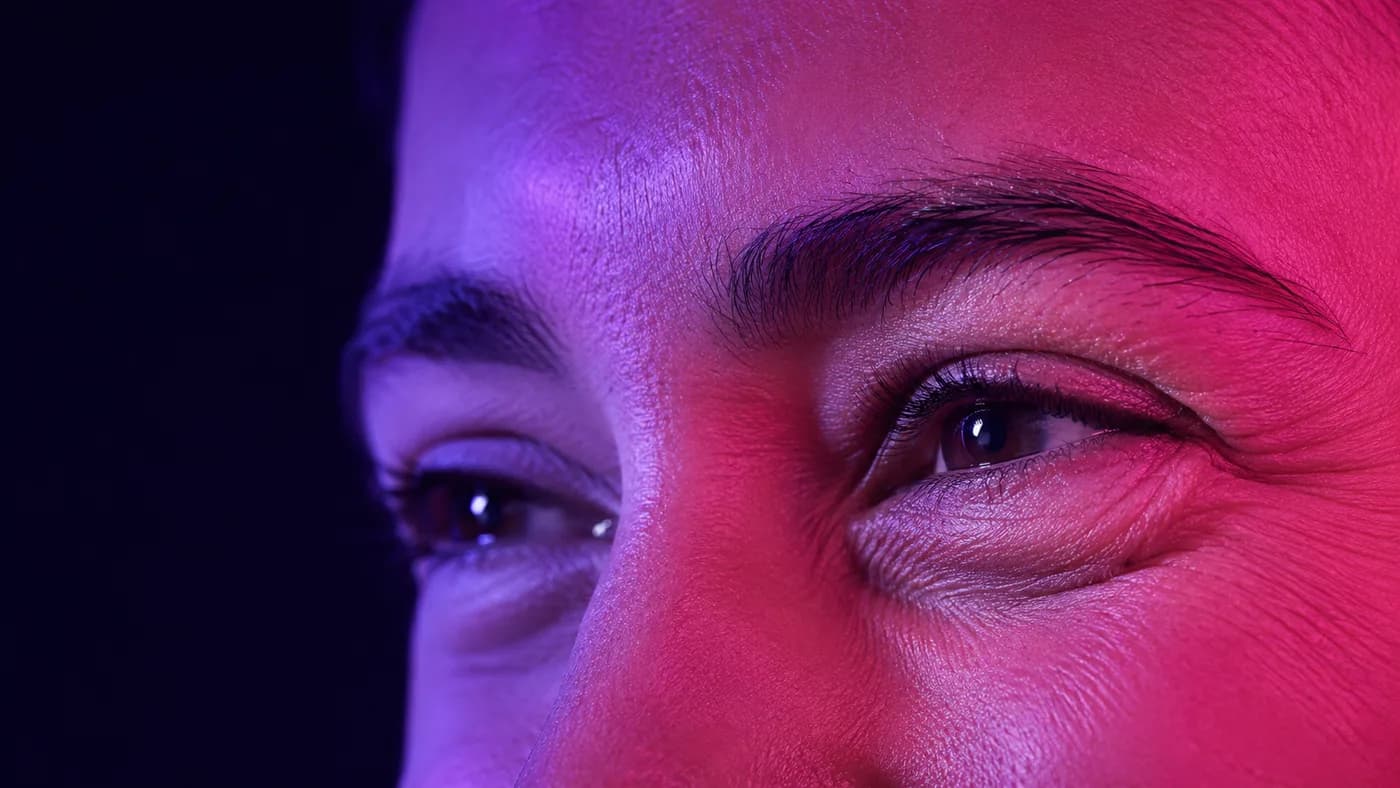
The most visible reason a smile looks fake is the absence of eye engagement. When only the zygomatic major (the mouth smile muscle) fires, the eyes stay neutral. No cheek lift, no lower eyelid narrowing, no crow's feet — just a wide mouth over neutral eyes. This specific combination reads as performed to every observer who sees it.
The orbicularis oculi — the ring-shaped muscle around the eye — cannot be voluntarily activated by most people. It fires automatically in response to genuine positive emotion. This is what neurologist Duchenne identified in 1862 as the marker of a real smile, and it remains the primary signal that modern AI systems (including Smile Tracker) use to detect genuine versus posed expressions.
The fix is not to force eye engagement but to trigger the limbic pathway through genuine emotion — specifically by recalling a vivid, specific happy memory before you smile. When the limbic system fires, the orbicularis oculi activates automatically and the fake-smile problem resolves at the source.
“In the Duchenne smile, the muscle around the eye is involuntary — it cannot be reliably controlled by will. That is precisely what makes it a reliable indicator of genuine emotion.”
Jaw and Facial Tension Makes It Worse
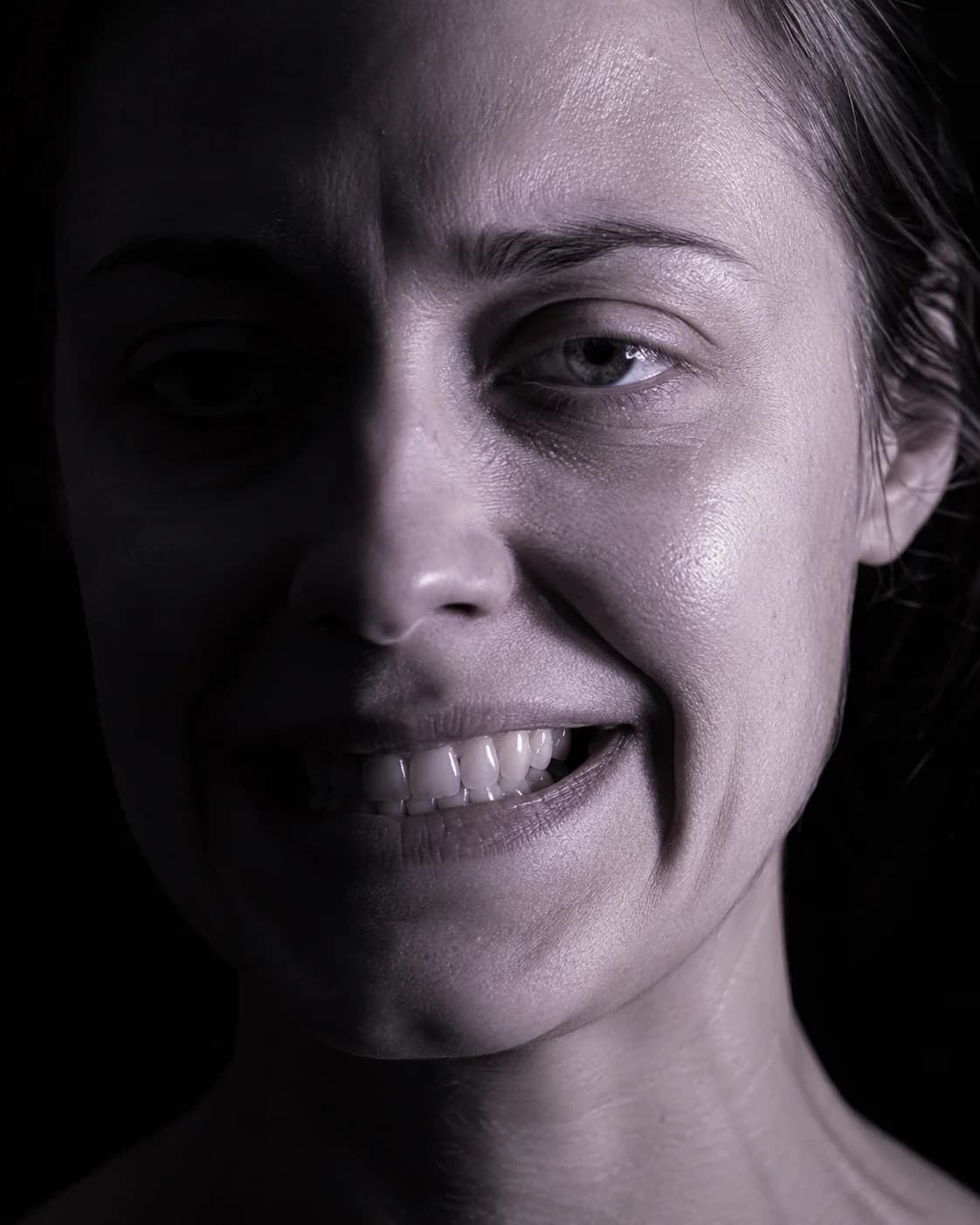
Tension in the jaw, forehead, and around the eyes is the second most common cause of an unnatural-looking smile. Under the stress of being photographed, the masseter (jaw muscle) often clenches, the frontalis (forehead) furrows slightly, and the orbicularis oculi tightens — all of which physically prevent smile muscles from moving freely.
This tension is invisible in real-time but shows clearly in photos because photos freeze moments of maximum effort. When you're trying to hold a smile for a camera, tension builds progressively. The smile that looks fine in a two-second window looks increasingly strained by the five-second mark.
The fastest reset: slow exhale through the mouth, consciously drop the jaw, and let the face go slack before smiling again. This physically releases the tension pattern and produces a noticeably softer result.
Exhale fully through your mouth before every photo — three seconds of tension release produces a noticeably different smile.
Advertisement
Why the Mirror Lies to You
Most people are surprised when they see how different they look in photos versus their mirror reflection — and the difference is almost never about the photo unfairly capturing a bad moment. The mirror lies in two ways: it flips your face laterally (so you're always seeing a mirrored version of yourself) and it shows you in real-time without the freeze-frame effect of a photo.
In real time, your brain fills in motion, context, and familiarity. Your mirror smile looks natural because you're watching it build and settle, and you're used to that face. A photo captures a single frozen millisecond — often a moment mid-build or mid-drop — and shows you the face from a perspective that others see but you don't.
The mirror also responds to your mood in real time. You naturally smile into it when you're in a good mood. You tend to photograph yourself (or be photographed) in forced, performed situations. The discrepancy is largely about context, not appearance.
The Timing Problem
Photos often capture a smile either mid-build (before it's reached its natural peak) or mid-drop (after it has begun to fade). Both captured states look uncomfortable — the mid-build looks nervous and the mid-drop looks insincere.
A natural genuine smile takes about 500 milliseconds to fully build, holds at peak for a moment, then fades gradually. A photo taken at the wrong moment in this arc captures a state the brain reads as transitional rather than genuine.
A simple fix: instead of smiling and then saying 'take it,' count silently — smile at 'two' so the expression reaches its peak at 'three' when the shutter fires. This timing adjustment consistently produces better results than trying to hold a smile indefinitely.
Five Fixes That Work Immediately
First: use a specific happy memory 2–3 seconds before the photo — this triggers the limbic pathway and adds natural eye engagement. Second: exhale fully through your mouth to reset jaw tension. Third: count to three and smile at 'two' so the peak lands on 'three.'
Fourth: practice the soft eye squint in a mirror daily — raise your cheeks without moving your mouth to strengthen the orbicularis oculi pathway. Fifth: improve your lighting — face a window or light source at eye level to eliminate the shadows that make any expression look harder.
These five fixes address the neurological, physical, and environmental causes of a fake-looking smile. Research from portrait photography professionals shows that lighting correction alone can shift how genuine an expression reads, independent of the expression itself. Together these fixes produce immediate, measurable results — upload a photo to Smile Tracker before and after implementing them to see exactly which signals improved.
Frequently Asked Questions
Why do I look fake when I smile in photos?
The most common cause is the brain activating only the voluntary smile pathway (motor cortex) instead of both pathways. The voluntary pathway produces a technically correct smile but without the eye engagement (orbicularis oculi activation) that makes it look genuine. The fix is to use a real happy memory before smiling, which triggers the limbic system and adds the missing eye engagement automatically.
Why does my smile look weird even when I'm genuinely happy?
Camera awareness often suppresses even genuine expressions. The moment you become self-conscious about being photographed, the brain partially overrides the natural limbic expression with the voluntary pathway. The result is a blend of genuine and performed expression that reads as awkward. The solution is to reduce camera awareness — take more shots, use burst mode, and focus on the memory technique to stay emotionally connected rather than self-monitoring.
Can people tell the difference between a real and fake smile?
Yes — reliably, and very quickly. Research shows that people correctly identify genuine Duchenne smiles versus posed smiles at above-chance rates even in exposures of under 100 milliseconds. The primary cues are the eye area (orbicularis oculi engagement), the timing of the smile (genuine smiles build and fade more gradually), and subtle muscle coordination around the cheeks.
How do I fix a forced smile?
The most effective fix is the memory technique: recall a specific, vivid happy memory 2–3 seconds before smiling. This bypasses the voluntary smile pathway and triggers the limbic system instead, producing genuine orbicularis oculi engagement. Additionally, exhale slowly before smiling to release jaw tension, and practice the soft eye squint daily to strengthen the neural pathway for natural eye engagement.
Why do I look better in the mirror than in photos?
The mirror shows a laterally flipped, real-time view of your face in a low-pressure context. You naturally smile into it when you feel good, and your brain fills in motion and context. Photos capture a frozen millisecond from an unfamiliar angle in a high-pressure context. The discrepancy is almost entirely about context and timing rather than how you actually look — which means it's fixable.
Lena Whitmore
Science Writer · Facial Analysis & Appearance Psychology
Lena covers the science of smiles, facial aging, and AI-powered biometrics. She writes evidence-based guides grounded in peer-reviewed research, with a focus on making appearance science accessible and actionable. All tools on Smile Tracker run locally in your browser — your photo is never uploaded anywhere.
Put it to the test
See your results with AI
Upload a photo and get your personalized Smile Score, smile type, and eye engagement reading — free, private, instant.
Analyze My Smile Free →Advertisement