Why Do I Look Different in Photos vs the Mirror? The Science Explained
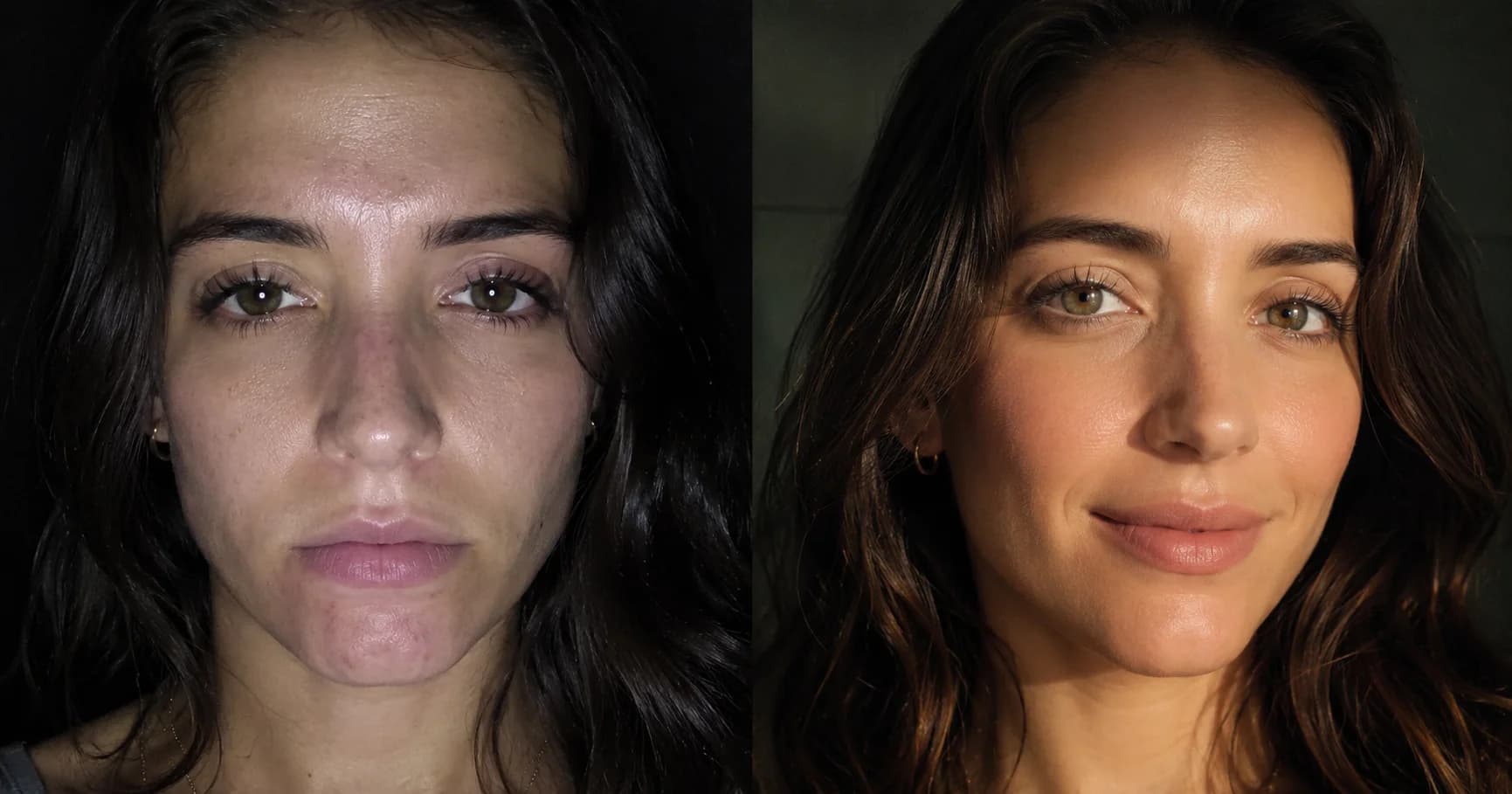
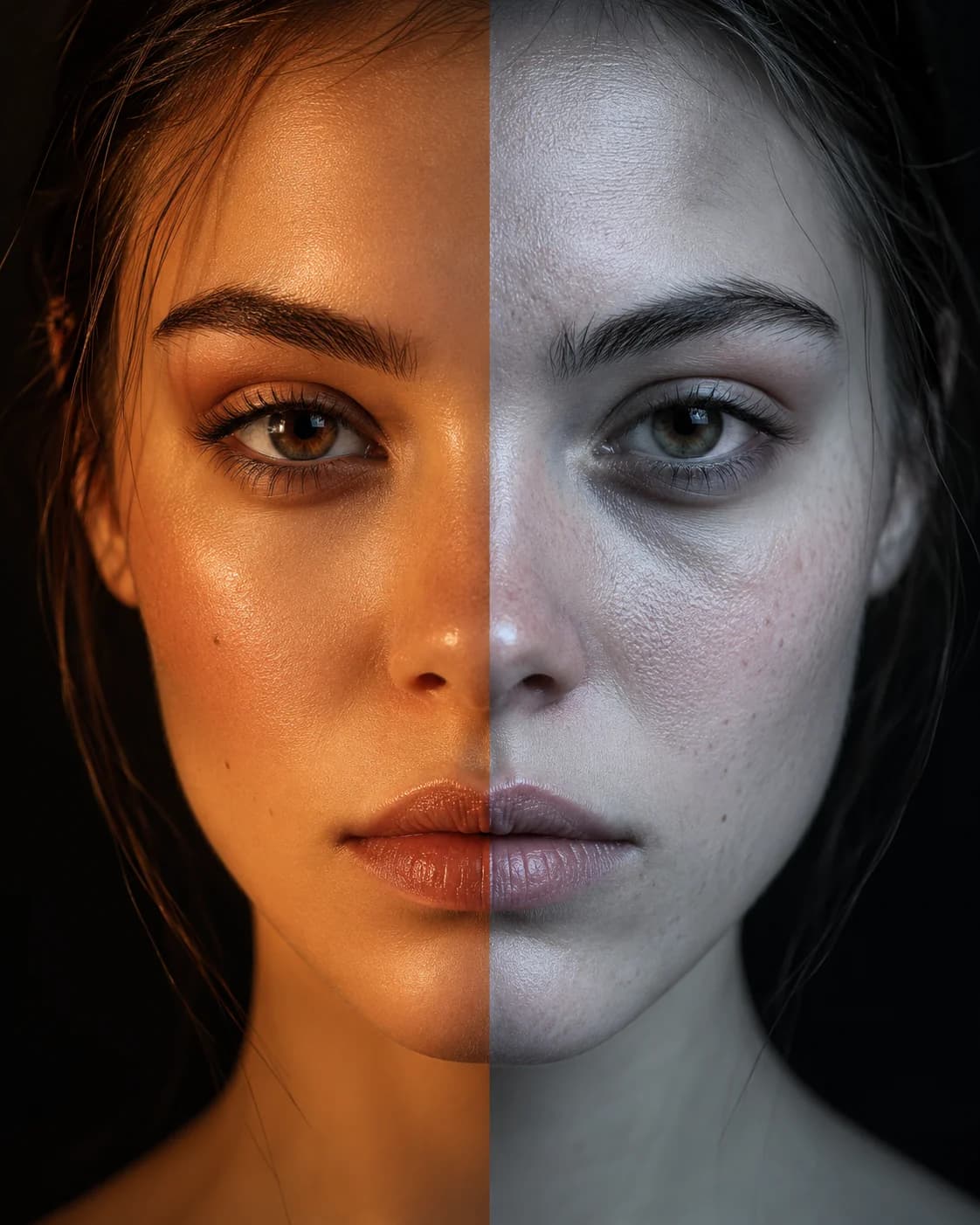
Most people have experienced it — you look in the mirror, feel reasonably fine about your appearance, then see a photo and barely recognise yourself. This is not distorted self-perception or excessive vanity. It is a measurable, scientifically documented phenomenon rooted in three distinct causes: a quirk of psychology called the mere-exposure effect, the optical physics of camera lenses, and the fundamental difference between how a mirror and a camera capture your face. Understanding each one changes how you interpret what you see — and how you approach getting better photos.
You Are Not Imagining It — And Neither Is Anyone Else
The discomfort most people feel seeing themselves in photos is nearly universal. In a now-classic 1977 study, psychologists Theodore Mita, Marshall Dermer, and Jeffrey Knight showed people two versions of their own portrait: one normal, one mirror-reversed. Participants consistently preferred the mirror-reversed version — the view they were used to seeing of themselves. Their close friends, meanwhile, preferred the normal (non-reversed) version.
This result tells you something important: photos are not distorting your face. They are showing the face other people actually see. It is your mirror reflection — reversed left-to-right — that is the unusual view. You have seen that reversed image every day of your life, which makes it feel correct. A photo simply shows the version everyone else has always seen.
So when a photo looks 'wrong,' it is usually not the photo that is inaccurate. It is your comparison point — the mirror — that is subtly off.
“People prefer mirror-reversed photographs of themselves, while their friends prefer the non-reversed photographs.”
The Mere-Exposure Effect: Why Your Mirror Face Feels 'Right'
The mere-exposure effect, first described by psychologist Robert Zajonc in 1968, states that familiarity breeds preference. The more often you are exposed to something, the more positively you evaluate it — regardless of any objective quality. This applies to music, words, images, and faces.
You see your mirror reflection dozens of times each day. Over years, that accumulated exposure makes the reversed image deeply familiar — and therefore comfortable. When a photo shows the non-reversed version, your brain registers the subtle asymmetries in unfamiliar positions and flags the image as slightly 'off,' even though it is more accurate.
This is also why other people do not typically have the same negative reaction to your photos that you do. They have always seen your non-reversed face — the photo version is the familiar one for them.
Ask a close friend whether your photos look like you. Their response will almost always be 'yes' — because for them, that is the face they know.
Lens Distortion: How Camera Optics Physically Change Your Face
The mere-exposure effect explains why the photo feels unfamiliar. Lens distortion explains why it can also look objectively different. Smartphone cameras use wide-angle lenses — typically equivalent to a 24–28mm focal length in full-frame terms. At close range, this lens geometry causes the features closest to the camera to appear disproportionately larger than features further away.
When you hold a phone at arm's length for a selfie — roughly 30–40 centimetres — your nose is the closest feature. Research has found that at this distance, a standard phone camera can make the nose appear 20–30% wider than it actually is. The forehead and chin, being further back in the frame, appear proportionally smaller. The result is a facial proportion that does not match what you see in a mirror or what others see in person.
Professional portrait photographers use 85–135mm lenses specifically to avoid this distortion. At 5 feet or more of distance with a longer focal length, facial proportions render accurately. If your photos are consistently taken up close with a phone camera, the geometry of the lens is working against you — not your face.
For any important photo, ask the photographer to step back and zoom in rather than stand close. Distance is what eliminates lens distortion.
Advertisement
2D vs 3D: What Photos Physically Cannot Capture
A mirror shows a real-time, three-dimensional reflected image. Your brain processes it with full depth perception — volume, texture, shadow-and-highlight relationships all read as live, spatial information. You also adjust your position automatically, always viewing yourself from a slightly flattering angle without realising it.
A photograph collapses that three-dimensional information into a flat, two-dimensional plane. Features that define your face in three dimensions — the shadow along the side of the nose, the depth between cheekbone and temple, the volume of the lower face — all render as flat marks on a 2D surface. Without the brain's 3D processing to interpret them, these features can look heavier, sharper, or more prominent than they appear in life.
Lighting compounds this. In a mirror, your eyes adjust in real time to compensate for harsh or unflattering light. A photo freezes one specific light at one specific moment — which may not be when the light was most flattering. This is why outdoor midday photos (harsh overhead light) tend to be universally unflattering, while golden hour or diffused window light produces images that match what you see in the mirror more closely.
Why Photos Always Catch You at a Specific Moment
In a mirror, you are in continuous, real-time control. You unconsciously adjust your angle, expression, and posture until you are satisfied with what you see. Every time you look in a mirror, you are essentially selecting your best real-time frame from a continuous video stream.
A photo freezes a single fraction of a second — often mid-expression, mid-blink, or during the natural pause between expressions. Human facial expressions are fluid; the moments between expressions often look nothing like the expression itself. A photo may capture the moment your smile has started but your eyes have not caught up, producing the asymmetric, staged look that feels so jarring.
This is not a flaw in how you look. It is a flaw in the single-frame capture method and the conditions under which most photos are taken.
Using AI to See Your Face the Way Others Actually Do
The most objective view of your face is neither your mirror reflection (reversed, compensated by your brain, always from your best angle) nor a selfie (wide-angle distortion at close range). It is a photo taken from at least five feet away by another person, with the camera at eye level, in even, flattering light.
Once you have that photo, an AI face analysis tool gives you a genuinely external perspective — not your mirror's reversed familiarity, not your subjective self-assessment, but a data-driven score of the features others actually perceive. Running Guess My Age on such a photo tells you exactly how your face reads to an objective system — including whether your lighting, angle, or expression is adding years to your apparent age.
The goal is not to be surprised or distressed by photos. It is to understand the variables you can control — angle, distance, lighting, expression — and optimise them once, so that every photo from then on reflects what you actually look like.
Frequently Asked Questions
Why do I look worse in photos than in the mirror?
Three main reasons: (1) the mere-exposure effect — you are deeply familiar with your mirror reflection and photos look subtly 'wrong' by comparison; (2) lens distortion — phone cameras at close range enlarge the nose and distort proportions; (3) 2D capture — photos flatten 3D facial structure into a flat plane, removing the depth cues that make features read correctly in real life.
Do other people see me the way I look in photos or in the mirror?
Neither precisely, but photos are significantly closer to what others see. Your mirror image is reversed left-to-right, which subtly changes the position of your asymmetries. The people who know you have always seen your non-reversed face — which is what photos capture. The 1977 Mita et al. study confirmed this: friends and strangers consistently preferred the non-reversed (photo) version of people's faces.
Why does my nose look bigger in photos?
This is caused by lens distortion. Smartphone cameras use wide-angle lenses that, at close range, make the closest feature to the lens — typically the nose — appear 20–30% wider than it actually is. Taking photos from a greater distance (5+ feet) with the photographer zooming in eliminates this effect almost entirely.
Is the mirror image or the photo more accurate?
Photos are generally more accurate representations of what others see, with one caveat: photos taken at close range with a phone camera introduce lens distortion. A photo taken at 5+ feet, at eye level, in good light is the most accurate single-frame representation of your face. Your mirror reflection is reversed and always self-selected from your most flattering real-time angle.
How can I take more flattering photos?
The three highest-impact changes: (1) camera distance — have the photographer stand back and zoom in, never shoot at selfie distance; (2) lighting — face a window or light source directly, avoid overhead-only lighting; (3) camera height — ensure the camera is at or slightly above eye level. These three adjustments eliminate lens distortion, reduce harsh shadows, and produce a natural viewing angle.
Lena Whitmore
Science Writer · Facial Analysis & Appearance Psychology
Lena covers the science of smiles, facial aging, and AI-powered biometrics. She writes evidence-based guides grounded in peer-reviewed research, with a focus on making appearance science accessible and actionable. All tools on Smile Tracker run locally in your browser — your photo is never uploaded anywhere.
Put it to the test
See your results with AI
Upload a photo and get your AI-estimated apparent age and Youthful Energy Score — free, private, instant.
Try Guess My Age Free →Advertisement
Sources
- Mita et al. (1977) — Reversed facial images and the mere-exposure hypothesis. Journal of Personality and Social Psychology
- Bailenson, J.N. (2021) — Nonverbal overload: A theoretical argument for the causes of Zoom fatigue. Technology, Mind, and Behavior
- Cleveland Clinic (2025) — Why Many of Us Think We Look Bad in Photos
- Google MediaPipe Face Landmarker — Facial landmark detection