What Your Smile Says About Your Personality (Science Explains)
Your smile is not just an expression — it is one of the most information-rich signals your face produces. Research across psychology, neuroscience, and social behaviour consistently shows that what does your smile say about you goes well beyond the moment it occurs. Smile frequency, genuineness, timing, and style all correlate with measurable personality traits — and observers read these signals more accurately than most people expect.
How Observers Read Your Smile
Human perception of smiles is fast and largely unconscious. Studies in social cognition show that people form reliable personality impressions from facial expressions in exposures as short as 100 milliseconds — before conscious evaluation can take place. The signals they are reading are primarily: whether the smile is genuine (Duchenne vs. non-Duchenne), how quickly it builds and fades, its symmetry, and its frequency relative to the social context.
These rapid judgments are not always accurate reflections of a person's true character — but they are consistent. Observers tend to agree with each other about what a given smile signals, even when viewing unfamiliar faces from other cultures. The social signal language of the smile appears to be largely universal.
Understanding what your smile signals — and what you want it to signal — is the first step to developing a more intentional and effective expression.
Genuine Smilers and What Research Reveals About Them
The most studied correlation between smile type and life outcomes comes from a landmark 2001 study by Harker and Keltner at UC Berkeley. Analyzing college yearbook photos, they found that women who displayed more genuine Duchenne smiles at age 21 reported significantly higher life satisfaction, more positive marriage quality, and greater social wellbeing in follow-up assessments conducted up to 30 years later.
What distinguishes genuine smilers is not just expression habit but underlying emotional processing. People who smile genuinely more frequently tend to score higher on agreeableness and extraversion in personality assessments, report lower chronic stress, and are rated as more trustworthy and approachable by strangers within the first ten seconds of interaction.
Importantly, the correlation is bidirectional. Genuine smiling does not only reflect a positive personality — it reinforces it. Regular activation of the Duchenne smile pathway appears to strengthen the neural circuits associated with positive affect over time.
“The smile is the shortest distance between two people — but only when it reaches the eyes.”
What a Frequent Smile Says About You
People who smile frequently in social situations are consistently perceived as warmer, more approachable, more sociable, and more extraverted than low-frequency smilers. These perceptions are robust across cultures and persist even in very brief interactions.
High-frequency genuine smilers also tend to report higher empathy scores — they are more attuned to others' emotional states and more responsive to them. The smile functions as both an inbound signal (I perceive you positively) and an outbound signal (I am open, safe, and approachable).
However, frequency alone is less meaningful than genuineness. High-frequency social smiling — smiling performed in service of social lubrication rather than felt emotion — does not carry the same personality signal. Observers distinguish between genuine and social smiles at above-chance rates, and the personality impressions associated with each are quite different.
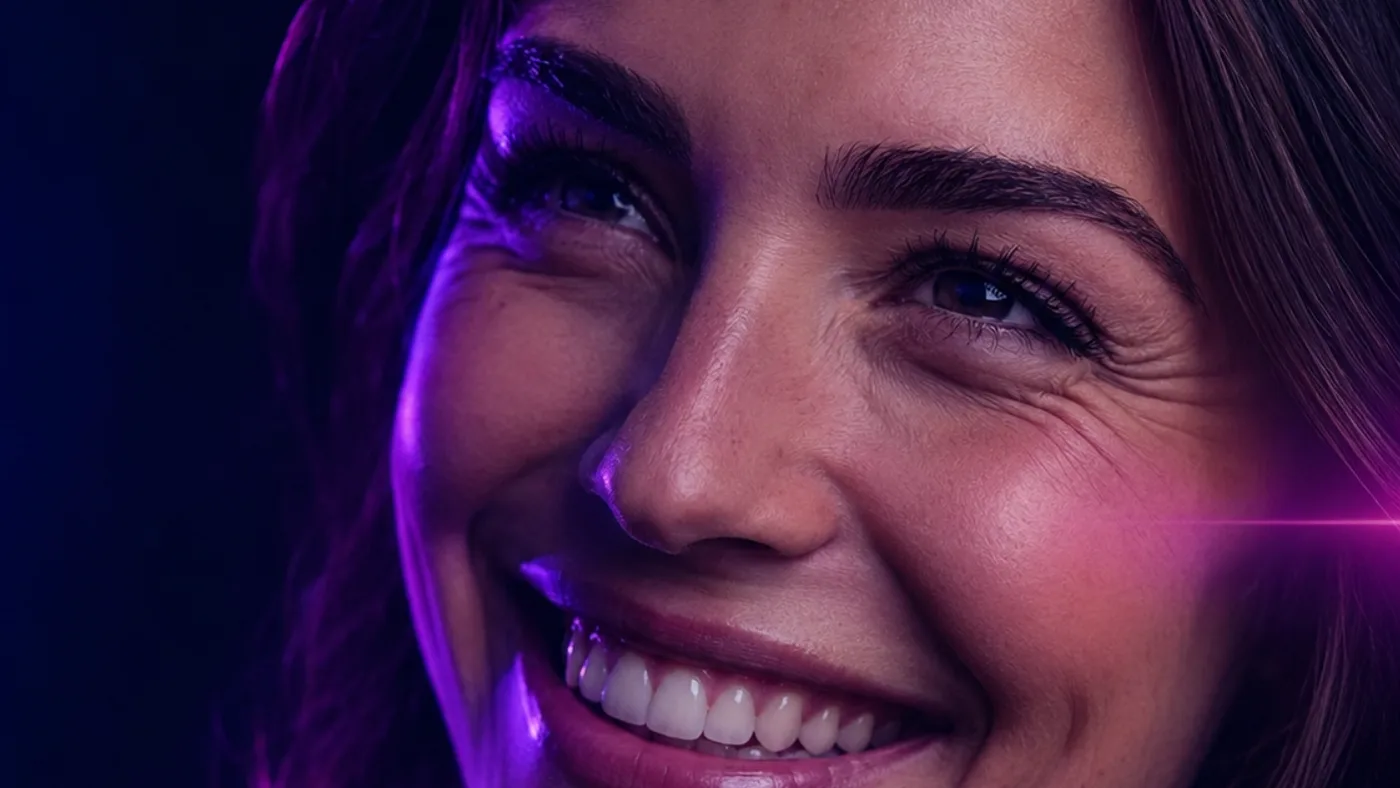
Smiling frequently is only half the signal — genuine eye engagement is what makes high-frequency smiling read as warm rather than performative.
Advertisement
What a Rare or Controlled Smile Says
People who smile less frequently or who maintain a more controlled expression are often perceived as more reserved, intellectual, analytical, or guarded. These perceptions are not necessarily negative — in professional contexts, a controlled smile can signal confidence, authority, and emotional regulation.
Research in leadership perception shows that high-status individuals tend to smile less frequently but more genuinely when they do smile — and that this pattern is read as confidence rather than coldness. The resting expression matters significantly here: a calm, neutral resting face reads very differently from a tense or downturned one, even with the same smile frequency.
If you naturally smile less frequently, the question is whether your resting expression signals approachability and calm, or inadvertently signals displeasure. The muscles that shape your default expression — particularly the depressor anguli oris (which pulls the corners of the mouth down) — can be a significant factor in how others read you before you've even begun to interact.
The Social Smile vs. the Genuine Smile
Most people produce a mix of genuine and social smiles throughout the day. The social smile — a voluntary expression used to signal politeness, acknowledgment, or social ease — is not dishonest. It serves an important function in group interaction. But its personality signal is different: it reads as professional courtesy rather than genuine warmth.
The distinction matters most in high-stakes contexts: job interviews, first dates, performance reviews, and professional networking. In these situations, even a small increase in genuine Duchenne markers — eye engagement, gradual build, slight asymmetry — produces measurably stronger trust and likeability ratings than a technically correct social smile.
Knowing when you are producing each type gives you useful self-awareness. Pay attention to whether your smile reaches your eyes in photos taken in relaxed settings versus formal ones. The gap between the two reveals how much performance mode is suppressing your natural expression.
Smile Types and Their Personality Signals
Researchers have catalogued dozens of distinct smile types in the FACS system. The most socially significant beyond the Duchenne smile include: the embarrassed smile (AU12 + lip compression + gaze aversion, signals humility and social awareness), the contempt smile (unilateral, one-sided, signals superiority or dismissal), the fear-smile (wide, tense, signals appeasement), and the reward smile (Duchenne + high intensity, signals genuine delight).
In everyday interaction, the most important distinction is between the reward smile (genuine, bilateral, eye-involved) and the affiliative smile (moderate, social, eyes less involved). People who use reward smiles frequently in genuine response to positive situations are consistently rated as among the most likeable and socially skilled individuals in group settings.
If you are unsure which type you default to, upload several photos from different social contexts to Smile Tracker. The blendshape analysis provides specific data on your eye engagement, symmetry, and smile intensity — the core signals that determine how your smile is read.
Can You Change What Your Smile Says?
Yes — and the research on smile training is encouraging. Studies on actors trained in emotional recall techniques show measurable increases in Duchenne marker frequency over training periods of four to eight weeks. The underlying mechanism is neural: strengthening the limbic pathway connection to the orbicularis oculi makes genuine eye engagement more accessible and more automatic.
The most effective approach is not to perform a different smile but to work on the conditions that produce genuine smiling naturally: reducing performance anxiety around being observed, building the memory trigger habit, and practicing the isolated eye engagement exercises described in our guide to smiling with your eyes.
The goal is not inauthenticity — it is reducing the barriers between what you genuinely feel and what your face shows. For most people, the gap between their inner warmth and their expressed warmth is primarily mechanical and habitual, not characterological.
Frequently Asked Questions
Does your smile reveal your personality?
Research shows consistent correlations between smile patterns and personality traits. Genuine Duchenne smilers (whose smiles reach their eyes) are more often associated with higher agreeableness, extraversion, and social warmth. Smile frequency, genuineness, and timing are all signals that observers read — often unconsciously — within the first seconds of meeting someone. However, these correlations are tendencies, not definitive readings.
What does a genuine smile say about you?
Genuine smiles (Duchenne smiles with eye engagement) are consistently linked to higher warmth, trustworthiness, and social approachability. Research by Harker and Keltner found that genuine smile frequency in early adulthood correlated with life satisfaction and relationship quality decades later. Observers also rate genuine smilers as more likeable, more emotionally stable, and more socially skilled in brief interactions.
What does it mean when someone rarely smiles?
Low smile frequency on its own is neutral — the personality signal depends heavily on context and resting expression. Reserved smilers are often perceived as more analytical, composed, or introverted. When the resting expression is calm and neutral, low smile frequency reads as controlled confidence. When the resting expression is tense or slightly downturned, low smile frequency can be misread as displeasure or disapproval.
Can people tell if your smile is fake?
Yes — reliably, even in brief exposures. People correctly identify genuine vs. posed smiles at above-chance rates in exposures under 100 milliseconds. The primary cues are eye engagement (orbicularis oculi activation), smile timing (genuine smiles build and fade more gradually), and slight natural asymmetry. Observers do not consciously evaluate these features — they simply feel the difference as warmth vs. performance.
What does a one-sided smile say about you?
A consistently unilateral (one-sided) smile is associated in FACS research with contempt or dismissiveness — one side activating without the other is interpreted as a social dominance signal. However, slight natural asymmetry in a bilateral Duchenne smile is normal and actually reads as more genuine than perfect symmetry. The key difference is whether the expression is essentially bilateral with slight variation (natural) versus consistently one-sided (social signal).
Lena Whitmore
Science Writer · Facial Analysis & Appearance Psychology
Lena covers the science of smiles, facial aging, and AI-powered biometrics. She writes evidence-based guides grounded in peer-reviewed research, with a focus on making appearance science accessible and actionable. All tools on Smile Tracker run locally in your browser — your photo is never uploaded anywhere.
Put it to the test
See your results with AI
Upload a photo and get your personalized Smile Score, smile type, and eye engagement reading — free, private, instant.
Analyze My Smile Free →Advertisement
Sources