High Cheekbones vs Low Cheekbones: Attractiveness and What They Signal
Cheekbones are one of the most frequently discussed facial features in attractiveness research, modelling, and facial analysis. 'High cheekbones' appear in almost every beauty context — but few people know how to identify whether they have them, what they structurally mean, or what the research actually says about their relationship to attractiveness. This guide covers the anatomy, the measurement, and the science — including what AI facial landmark analysis reveals about cheekbone prominence and its role in overall face scoring.
What 'High Cheekbones' Actually Means Anatomically
The cheekbones (zygomatic bones) form the prominent bony arches on either side of the face, directly below the outer corner of each eye. 'High' and 'low' cheekbones refer to the vertical position of the maximum projection point of the zygomatic arch relative to the total face height.
High cheekbones: the maximum projection point sits close to the lower eyelid — roughly level with or just below the outer corner of the eye. This creates a defined shadow beneath the cheekbone and a visible highlight on the cheekbone itself, even in flat lighting. The face appears to have more structure in the midface.
Low cheekbones: the maximum projection point sits lower on the face, typically closer to the nose tip level. The face looks fuller through the middle, with less visible shadow-and-highlight structure. The transition from cheek to lower face is smoother and less defined. Neither position is inherently unattractive — low cheekbones create a softer, fuller facial appearance that has its own aesthetic qualities.
How to Tell If You Have High or Low Cheekbones
Face a mirror in good, even light — ideally a window facing you. Find the widest point of your cheek by pressing gently across the cheekbone from temple to nose. The widest, most prominent point is your cheekbone maximum projection.
Now mark its vertical position: is it at or above the level of the bottom of your eye socket (the outer corner of your eye)? If yes, you likely have high cheekbones. Is it significantly below that level, closer to the middle of the nose? You likely have low or medium cheekbones.
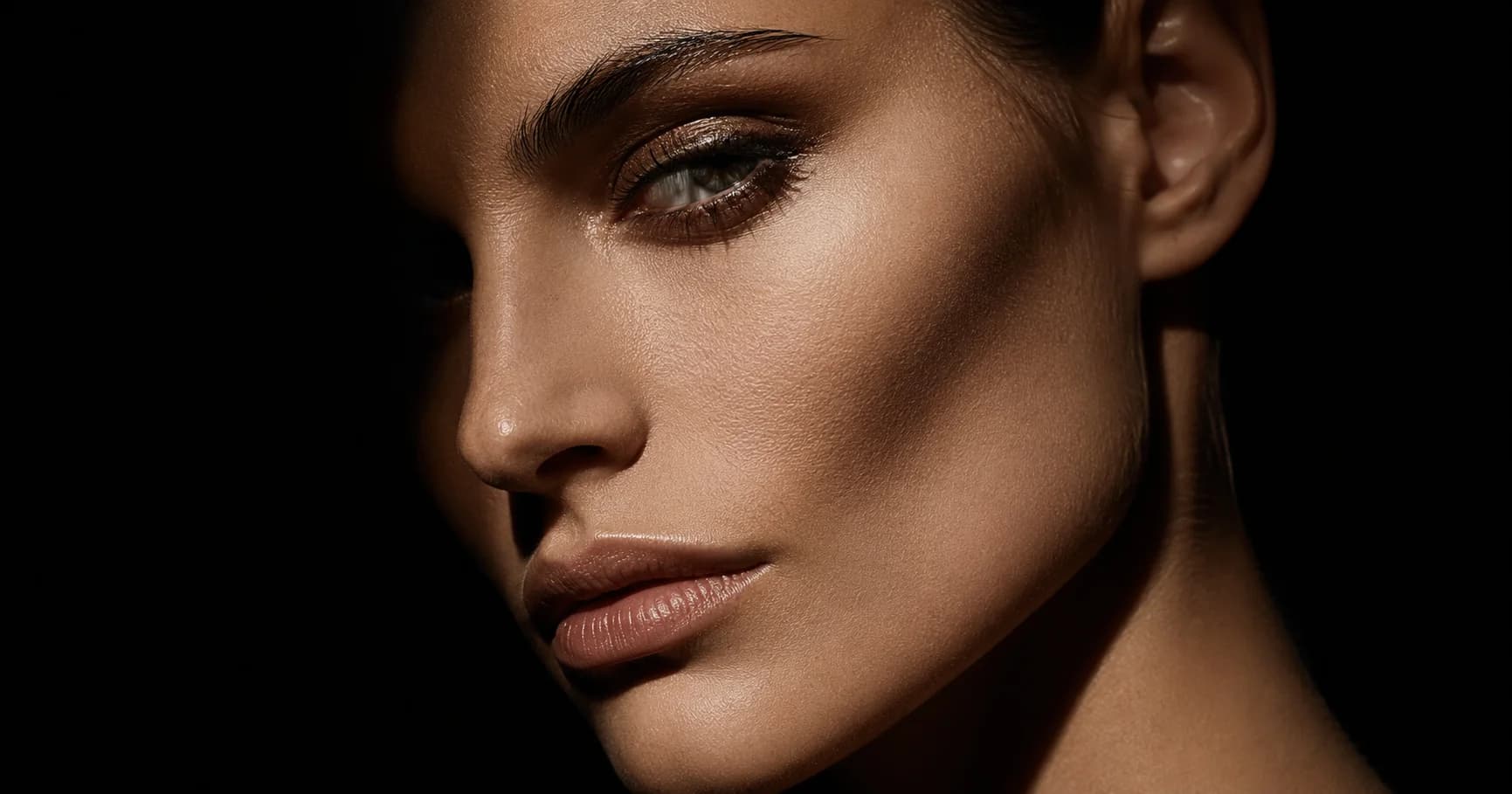
A second method: look for the natural highlight and shadow pattern on your cheeks in direct light from one side. High cheekbones create a distinct horizontal shadow line below the prominence and a clear highlight above it. If your cheek transitions smoothly without a pronounced shadow line, your cheekbones sit lower on the face.
Photograph your face in natural side-lighting (window to one side) to make cheekbone shadows most visible. The shadow line's vertical position on your face tells you everything.
What Attractiveness Research Says About Cheekbones
Multiple studies in evolutionary and social psychology have found that prominent (high) cheekbones are positively associated with attractiveness ratings across cultures. The primary proposed evolutionary explanations involve two signals: sexual dimorphism and facial structure indicating developmental health.
In women, high cheekbones are associated with oestrogen influence during development — they are considered a femininity marker. In men, cheekbone prominence combined with facial breadth is associated with testosterone-influenced development and is rated as dominant and masculine. Both associations are cross-cultural and appear in research using standardised facial ratings across diverse populations.
A 1998 study by Perrett and colleagues found that composite 'feminised' female faces — which include high cheekbone placement as a dimension — are consistently rated as more attractive than non-feminised versions. The effect size is moderate, not overwhelming: cheekbones are one of several structural features that together determine attractiveness, not a single determinant.
“Structural cues to sexual dimorphism — including cheekbone placement — are reliably associated with attractiveness ratings across cultures, suggesting evolved mate-preference mechanisms.”
Advertisement
Cheekbones and Facial Aging: The Hidden Reason They Matter
High cheekbones have a structural ageing advantage that goes beyond aesthetics. The lateral cheek fat compartment — which deflates and descends with age — sits directly on top of the zygomatic arch. When cheekbones are high and prominent, the fat compartment is supported at a higher position for longer as the underlying skeletal support is closer to the surface. The descent is slower and the visual impact is less dramatic.
Conversely, low cheekbones provide less structural support for the overlying fat compartment, which tends to descend and thin earlier, creating earlier nasolabial fold deepening and jowl formation. This is one reason why people with prominent high cheekbones are often perceived as ageing more gracefully — the structural scaffold maintains the face's geometry longer.
This mechanism also explains why the Guess My Age tool scores cheekbone definition as part of the Youthful Energy Score. Visible, defined cheekbones are not just an attractiveness signal — they are a structural indicator of maintained facial volume and skeletal support, both of which read as youth.
How AI Measures Cheekbone Prominence
AI face analysis using Google MediaPipe's 478 facial landmarks can measure cheekbone prominence with high precision. The relevant landmarks are those defining the zygomatic arch and the malar region — the system calculates the horizontal and vertical position of maximum cheekbone projection relative to total face height and width.
This measurement feeds into face attractiveness scoring as part of the midface definition component. The Rate My Face tool calculates facial thirds and cheekbone prominence as part of its overall assessment, giving you an objective numerical picture of where your cheekbone structure sits relative to proportional ideals.
What AI measurement adds beyond a mirror assessment is precision and consistency. It measures the same thing every time regardless of lighting variation, and it gives you a number you can track over time — useful if you are monitoring changes from ageing, lifestyle interventions, or photography setup differences.
Frequently Asked Questions
How do I know if I have high cheekbones?
Stand in front of a mirror in even light and find the most prominent point of your cheek. If this point sits roughly level with or above the outer corner of your eye (the lower eyelid), you have high cheekbones. If the most prominent point is lower — closer to the level of your nose — you have low or medium cheekbones. In side lighting, high cheekbones create a visible horizontal shadow line below the prominence; low cheekbones create a smoother, less defined transition.
Are high cheekbones attractive?
Research across multiple cultures shows that prominent cheekbones are positively associated with attractiveness ratings. The effect is more pronounced in women (where cheekbone placement signals femininity and oestrogen influence during development) and in men when combined with facial breadth (signalling testosterone influence). However, the effect is moderate — cheekbones are one component of overall facial structure, and their attractiveness contribution is context-dependent and interacts with other features.
What is the difference between high and low cheekbones?
High cheekbones: the zygomatic arch's maximum projection is positioned high on the face, at or near the eye level. Creates visible cheekbone definition, shadow-and-highlight structure, and a more sculpted midface appearance. Low cheekbones: the maximum projection is positioned lower on the face, near nose tip level. Creates a fuller, softer midface with less visible shadow structure. Both have aesthetic qualities — high cheekbones tend to read as more defined; low cheekbones as fuller and softer.
Can you change your cheekbone structure?
The bone structure itself cannot be changed without surgery. However, the appearance of cheekbone prominence is influenced by several factors: body fat percentage (lower body fat makes cheekbones more visible), contouring techniques (makeup or lighting that emphasise the natural cheekbone shadow), and photography angle (three-quarter angles with side lighting maximise visible cheekbone definition). Weight loss that reduces facial fat can make existing cheekbones appear significantly more prominent.
Lena Whitmore
Science Writer · Facial Analysis & Appearance Psychology
Lena covers the science of smiles, facial aging, and AI-powered biometrics. She writes evidence-based guides grounded in peer-reviewed research, with a focus on making appearance science accessible and actionable. All tools on Smile Tracker run locally in your browser — your photo is never uploaded anywhere.
Put it to the test
See your results with AI
Upload a photo and get your AI facial proportion analysis, symmetry measurement, and feature breakdown — free, private, instant.
Analyse My Face Free →Advertisement
Sources