How to Look Younger in Photos: 8 Techniques Tested with AI
If you want to know how to look younger in photos, the answer is not cosmetics or editing — it is physics and neuroscience. AI age estimation reveals something portrait photographers have known for decades: apparent age in photos is not fixed. The same person, photographed with different lighting, expression, and positioning, can appear years — sometimes more than a decade — younger or older. Here are eight techniques that make a measurable difference, verified by AI age analysis.
This article is for informational and educational purposes only and does not constitute medical, dermatological, or psychological advice. Consult a qualified professional before making changes to your health or skincare routine.
Why You Look Older in Photos Than in Real Life
One of the most common questions in portrait photography is: why do I look older in photos than I do in the mirror? The answer is a combination of factors: photos freeze unflattering milliseconds of expression, camera optics can slightly flatten features, most indoor lighting creates shadows that emphasize lines and hollows, and the mirror shows a familiar, real-time view that the brain processes more charitably.
AI age estimation models work by reading facial geometry, skin texture signals, and expression characteristics. They are sensitive to exactly the factors you can control — lighting, expression, angle, and posture — which means apparent age in photos is genuinely malleable. The following techniques work because they directly address what AI and human observers read as age signals.
Lighting Is the Single Biggest Factor
No other factor has as large an impact on how old you appear in photos as lighting quality. Overhead lighting — the default in most offices, kitchens, and indoor environments — creates hard downward shadows that emphasize under-eye hollows, nasolabial folds, and jaw definition. These are the primary structural features that AI associates with older apparent age.
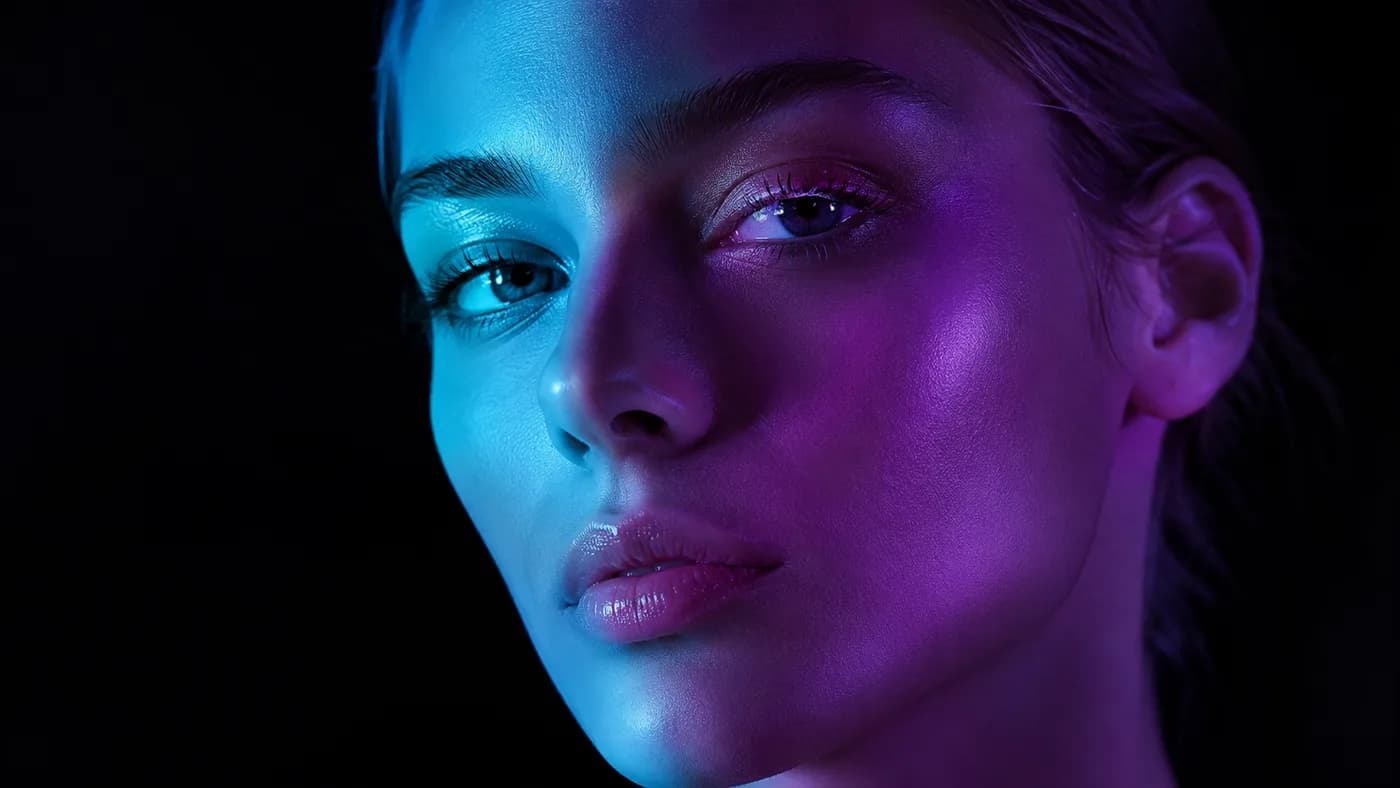
Soft, even frontal lighting — natural daylight from a window facing you, or a ring light at eye level — fills in these shadows and produces a more even skin tone. The impact can be significant: the same face under dramatically different lighting can shift an AI apparent age estimate by five to eight years. In 2025 AI age estimation benchmarks, lighting was consistently the single largest controllable variable affecting estimated apparent age.
For the best results: position yourself facing a north-facing window during daylight hours, or face any window with indirect natural light. Avoid sitting with a window behind you (backlighting silhouettes), beside you (harsh side shadows), or under ceiling fixtures (overhead shadows).
Face a window during daylight — this is the single fastest improvement you can make to how young you appear in photos.
A Genuine Smile Reads as Younger
Multiple peer-reviewed studies have shown that smiling faces are consistently rated 1–2 years younger than neutral faces by independent observers. The mechanism is straightforward: a genuine Duchenne smile raises the midface (cheeks and under-eye area), producing a lifted appearance that is structurally associated with youth.
AI age estimation models pick up on the same signals. A relaxed neutral expression allows facial geometry to sag slightly and produces more shadow definition in the lower face — both of which register as older. A genuine smile with full cheek and eye engagement produces a lifted, more youthful facial geometry.
The keyword here is genuine. A posed smile without eye engagement (non-Duchenne) can actually increase the apparent age reading because the muscle tension it creates produces unnatural lines. The memory technique from our smile improvement guides produces a genuine Duchenne smile that is measurably more youthful.
Advertisement
Chin Forward, Not Up
The 'chin up' posture that feels confident in person often translates poorly to photos. Tilting the chin upward elongates the neck but also creates shadows under the jaw, accentuates the neck area, and positions the eyes at an unflattering angle. It frequently reads as older and more strained than intended.
Bringing the chin slightly forward — toward the camera — and very slightly down has the opposite effect: it stretches the skin under the jaw, removes shadow definition, and opens the eye area. Portrait photographers use this direction consistently with clients who want to look their best.
This technique is immediately verifiable with AI age estimation. Try uploading two photos — one with chin up and one with chin forward — and compare the apparent age readings. The difference is often two to four years.
Posture Affects Your Face
Slouching compresses the neck and creates a heavier-looking lower face. The skin under the jaw bunches, the chin area appears fuller, and the overall expression looks more fatigued. Sitting or standing upright with shoulders back and head balanced over the spine lifts the entire face by several millimeters — a small physical change that photographs significantly.
A useful technique for photos: before the shot, take a breath that lifts your chest, roll your shoulders back, and hold that position as you exhale and smile. This posture produces a more lifted, energetic appearance consistently.
Background and Contrast Matter
A cluttered, busy, or dark background reduces the visual prominence of your face and makes features harder to read clearly. A plain background — particularly one that is lighter than your clothing — focuses visual attention on the face and makes features appear sharper and more defined.
Skin contrast is also a factor. Wearing colors that blend with your skin tone reduces the visual separation between face and clothing, which tends to flatten and age the overall appearance. Strong contrast between clothing and skin makes the face more visually prominent and reads as more youthful.
Common Mistakes That Add Years
Furrowed brow: tension in the frontalis muscle (which creates forehead lines) is one of the strongest age signals AI models detect. Consciously relax your forehead before any photo — close your eyes briefly and open them with a neutral, soft expression rather than an alert or tense one.
Squinting in bright light: direct sunlight causes involuntary squinting that creates tension lines around the eyes and forehead. Position yourself so the light comes from the side or diffused rather than directly into your face.
Wrong focal length: phone cameras at very close range (under 60cm) create mild wide-angle distortion that can make the nose appear wider and the face fuller. Stepping back from the camera and using a slight zoom produces a more flattering, less distorted portrait.
Relax your forehead consciously before every photo — a furrowed brow adds more apparent years than almost any other single factor.
Test Your Results with AI Age Estimation
The most objective way to measure the impact of these techniques is to test them directly. Upload photos taken with different lighting setups, expressions, and angles to the Smile Tracker Guess My Age tool and compare the apparent age readings. The AI gives you immediate, objective feedback on which specific changes produce the largest improvements.
Most people find that lighting change alone produces the biggest single improvement — typically two to five years in apparent age reading. Adding a genuine smile typically produces an additional two to four years of apparent youth. Combined, these two changes are often more impactful than any cosmetic intervention.
Frequently Asked Questions
Why do I look so much older in photos than in real life?
Several factors combine to make photos age you: most indoor lighting creates downward shadows that emphasize lines and hollows; photos freeze unflattering split-second expressions; camera optics can slightly flatten facial features; and you're comparing a frozen image to your familiar, real-time mirror reflection. The fix is primarily lighting (face a window) and expression (genuine smile, relaxed forehead).
What lighting makes you look youngest in photos?
Soft, even, frontal lighting — particularly natural daylight from a window facing you — consistently produces the most youthful-looking results. It fills in shadows under the eyes, nose, and jaw that overhead or side lighting creates. A ring light at eye level indoors produces a similar effect. Avoid overhead lighting and direct sunlight hitting your face from the front.
Does smiling make you look younger in photos?
Yes — specifically a genuine smile with full cheek and eye engagement (Duchenne smile). The cheek lift raises the midface and reduces the appearance of hollows and shadows associated with aging. Studies show smiling faces are consistently rated as younger by observers. A posed smile without eye engagement has a smaller effect, and in some cases can add apparent age through the tension it creates.
What angle makes you look youngest in photos?
A direct front-facing angle with the chin slightly forward and very slightly down produces the most youthful result for most people. This removes jaw and neck shadows, elongates the jawline, and opens the eye area. Camera at eye level or slightly above is optimal — shooting from below creates chin and jaw shadows that add apparent age significantly.
Can AI accurately estimate age from a photo?
AI age estimation tools estimate apparent age — how old someone looks — rather than chronological age. The accuracy depends heavily on photo quality, lighting, and expression. Well-lit, front-facing photos with genuine expressions produce the most accurate readings. Poorly lit or heavily shadowed photos will consistently overestimate apparent age because the model reads shadows and tension as age signals.
Lena Whitmore
Science Writer · Facial Analysis & Appearance Psychology
Lena covers the science of smiles, facial aging, and AI-powered biometrics. She writes evidence-based guides grounded in peer-reviewed research, with a focus on making appearance science accessible and actionable. All tools on Smile Tracker run locally in your browser — your photo is never uploaded anywhere.
Put it to the test
See your results with AI
Upload a photo and get your AI-estimated apparent age and Youthful Energy Score — free, private, instant.
Try Guess My Age Free →Advertisement