Nervous Smile vs Natural Smile: Why Your Smile Changes Under Pressure (and How to Fix It)
You have seen it in your own photos — the smile that looks perfectly natural in the mirror but appears tense and strange the moment a camera appears. This is not a permanent limitation or a flaw in how your face works. A nervous smile is a biologically predictable response to a specific type of social threat: the threat of being evaluated and judged. Once you understand what is actually happening in your nervous system and your facial muscles when you feel that tension, you can intervene at the right point — and produce a genuinely relaxed, natural expression instead.
What a Nervous Smile Actually Is (Biologically)
The human nervous system operates in two primary modes: the sympathetic system (the fight-or-flight response) and the parasympathetic system (the rest-and-digest state). Social evaluation — being watched, photographed, or assessed — activates mild sympathetic arousal even in people who do not consciously feel anxious. The brain classifies being evaluated as a low-level threat, and the body responds accordingly.
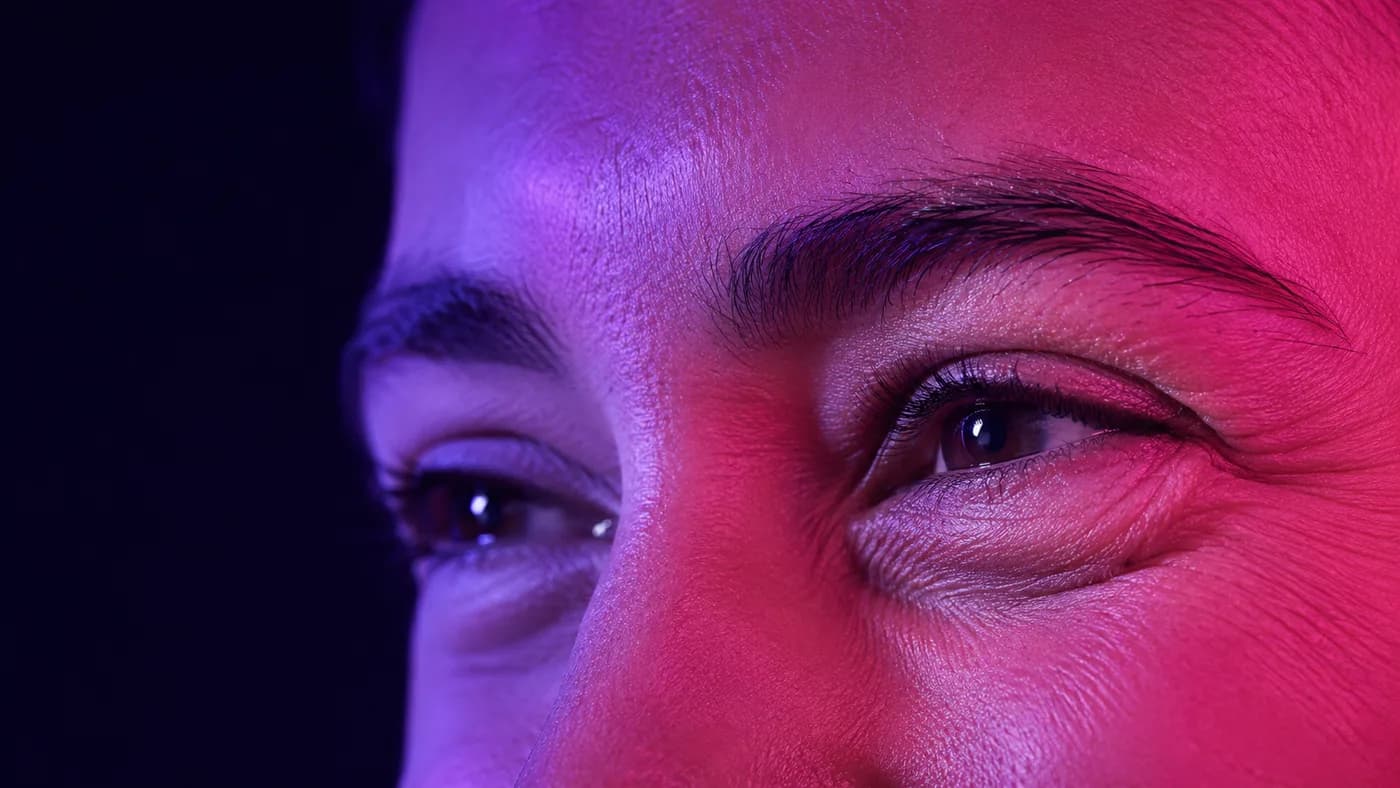
Under sympathetic activation, several physiological changes occur that directly affect facial expression. Muscles tense, including the masseter (jaw muscle) and the muscles around the mouth. The orbicularis oculi — the ring-shaped muscle around the eye whose outer portion fires involuntarily in a genuine Duchenne smile — becomes harder to activate deliberately. The result is a face that can produce the voluntary mouth component of a smile but cannot recruit the involuntary eye component.
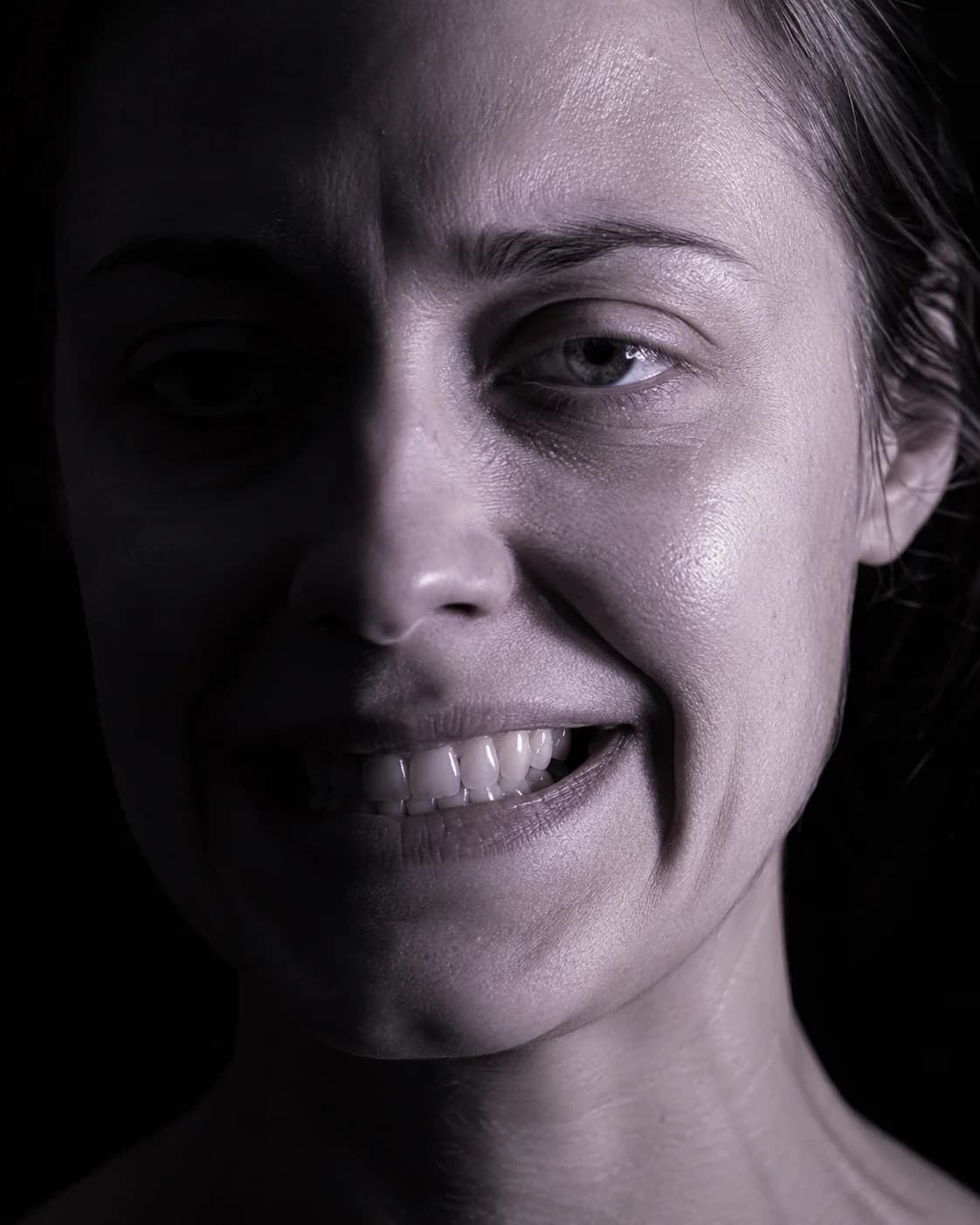
This produces the classic nervous-smile anatomy: a mouth smile without eye involvement. The zygomatic major (lip corner puller) contracts on command, but the orbicularis oculi stays flat. The upper face is uninvolved. This is not a performance failure — it is the expected output of a nervous system running mild sympathetic arousal while trying to produce a voluntary expression.
“The muscle around the eye is only put in play by the sweet emotions of the soul; its inertness in smiling unmasks a false friend.”
Why the Camera Specifically Triggers It
Mirrors provide real-time feedback and complete control. You can adjust your expression, angle, and posture continuously until you are satisfied with what you see. This control eliminates the evaluation threat — there is no fixed, permanent capture, no audience, no moment you cannot revise.
A camera is the opposite. It captures a fixed, uncontrollable moment that may be seen by others indefinitely. The brain registers this as higher-stakes evaluation, and the anticipatory anxiety activates sympathetic arousal before the photo is even taken. The moment the camera appears, the nervous system has already shifted state — and the smile that follows reflects that state.
This is why even people with genuinely warm, expressive smiles in person can produce stiff, flat-eyed photos. Their face is not the problem. Their nervous system is responding appropriately to a perceived evaluation threat, and the expression is the output of that state. The solution is not to try harder to smile correctly — it is to change the physiological state before the expression is attempted.
The mistake most people make is trying to correct a nervous smile by focusing on their face. The fix is in the nervous system — change your physiological state first, then the expression follows.
How to Recognise a Nervous Smile in Your Photos
Knowing the biology makes the visual signs easy to identify. The most consistent marker is the absence of upper face involvement: the eyes remain neutral while the mouth smiles. The cheeks may rise slightly, but not enough to create the characteristic lifting and narrowing of the eye area that defines a genuine Duchenne smile.
Secondary signs include lip tension — corners pulled back horizontally rather than curving upward, creating a thin, taut smile rather than a full one. Jaw visibility is often reduced because mild clenching narrows the lower face. The smile duration is anomalous: it appears abruptly when the camera is raised and drops off sharply afterward, rather than building and fading gradually as genuine smiles do.
The overall effect is an expression that reads as an effort — recognisably a smile in structure, but without the warmth or authenticity that makes a smile communicative. Most people can identify this quality in their own photos immediately when they know what to look for.
Advertisement
The Physiological Reset: Changing Your State Before You Smile
Because the nervous smile is a product of sympathetic nervous system arousal, the most direct intervention is physiological: down-regulate the sympathetic state before attempting the expression. The fastest evidence-based method is the physiological sigh — a breathing technique consisting of two sharp nasal inhales followed by a single long exhale through the mouth.
Research on the physiological sigh shows it resets the ratio of carbon dioxide to oxygen in the blood faster than a standard single deep breath, which activates the parasympathetic nervous system within seconds. Lower sympathetic tone means reduced muscle tension — including in the masseter and around the mouth — which makes the orbicularis oculi progressively easier to activate.
This technique takes five seconds. Performed immediately before a photo or a high-stakes smile moment, it measurably reduces the physiological substrate of a nervous smile. It is not a guarantee of a Duchenne smile — but it removes the primary barrier to one.
Two sharp inhales through the nose, then one long exhale through the mouth. This is the fastest way to shift from sympathetic to parasympathetic state — do it right before the camera appears.
Memory Anchoring: The Cognitive Complement
The physiological sigh resets the body. Memory anchoring resets the mind. Recalling a specific, vivid happy memory 2–3 seconds before needing to smile triggers the limbic system — the brain's emotional centre — which then fires the orbicularis oculi involuntarily. This is the same mechanism that produces a genuine smile in everyday life: not a voluntary effort but an involuntary response to genuine emotional experience.
The specificity of the memory matters significantly. 'Think happy thoughts' is too vague to reliably trigger the limbic system. A specific memory — a particular funny moment, a specific person's laugh, a distinct scene that reliably makes you smile — produces a much stronger and more consistent response. The brain treats the recalled emotional content as sufficiently real to trigger the associated facial expression.
Combining the physiological sigh (body reset) with memory anchoring (emotional trigger) produces genuine Duchenne smile expression even under high-evaluation conditions. The sequence: physiological sigh → recall your memory → let the feeling build → allow the expression to follow. The result is physiologically indistinguishable from a spontaneous genuine smile.
Testing Whether Your Interventions Are Working
The challenge with nervous smiles is that you cannot evaluate them in real time. You need external feedback to know whether the techniques are producing a genuinely different result. Practising in front of a mirror builds muscle awareness but does not replicate the evaluation-threat conditions that produce the nervous smile in the first place.
Smile Tracker provides the most objective feedback available without a professional assessment. After practice sessions using the physiological sigh and memory anchoring, take a photo under conditions that previously produced your nervous smile — camera present, knowing the image will be saved — and analyse the result. The four signals measured (mouth curve, cheek lift, eye squint, jaw openness) map directly onto the physiological differences between a nervous and a genuine smile.
Track your score across multiple sessions. If the interventions are working, eye squint and cheek lift scores will increase progressively as your nervous system becomes less reactive to the evaluation conditions. If scores are not improving, the memory anchors may not be strong enough or the physiological reset may need to happen earlier in the sequence.
Frequently Asked Questions
Why do I smile differently in photos than in real life?
Being photographed activates mild sympathetic nervous system arousal — a low-level threat response to the evaluation conditions of a camera. This arousal makes the orbicularis oculi (the eye muscle in a genuine smile) harder to activate voluntarily, producing a smile that uses the mouth muscles without the eye engagement that characterises a genuine Duchenne smile. The result looks different from your natural smile because it is physiologically different.
Can nervousness cause a fake-looking smile?
Yes — directly and through a specific biological mechanism. Sympathetic arousal (the mild stress response to being evaluated) increases facial muscle tension and reduces the accessibility of the involuntary eye muscles that make a smile look genuine. The smile that results is technically correct in structure but lacks the orbicularis oculi engagement that observers read as authentic warmth.
How do I relax my face for photos?
The fastest evidence-based method is the physiological sigh: two sharp inhales through the nose followed by one long exhale through the mouth. This resets the autonomic nervous system toward parasympathetic (relaxed) state in under 10 seconds. Perform this immediately before the photo is taken. Follow it with a specific happy memory to trigger genuine emotional expression. This combination addresses both the physiological and emotional components of the nervous smile.
Why do I look stiff in photos even when I am trying to smile naturally?
Trying hard to smile naturally often makes the result worse, not better, because increased effort activates the voluntary motor cortex while creating additional performance anxiety. A genuine natural smile is not produced by effort — it is the output of a relaxed emotional state. The solution is to reduce the effort and change the underlying state through physiological down-regulation (physiological sigh) and emotional triggering (specific happy memory).
What is the difference between a nervous smile and a genuine smile?
A nervous smile activates the zygomatic major (mouth smile) without the orbicularis oculi (eye engagement). A genuine Duchenne smile activates both simultaneously. The visual difference is the upper face: in a genuine smile, the cheeks lift, the lower eyelids rise slightly, and fine lines appear at the eye corners. In a nervous smile, the upper face stays largely flat and the expression lives only in the mouth.
Lena Whitmore
Science Writer · Facial Analysis & Appearance Psychology
Lena covers the science of smiles, facial aging, and AI-powered biometrics. She writes evidence-based guides grounded in peer-reviewed research, with a focus on making appearance science accessible and actionable. All tools on Smile Tracker run locally in your browser — your photo is never uploaded anywhere.
Put it to the test
See your results with AI
Upload a photo and get your personalized Smile Score, smile type, and eye engagement reading — free, private, instant.
Analyze My Smile Free →Advertisement
Sources
- Ekman, P. & Friesen, W.V. (1982) — Felt, false and miserable smiles. Journal of Nonverbal Behavior
- Kreibig, S.D. (2010) — Autonomic nervous system activity in emotion: A review. Biological Psychology
- Vlemincx, E. et al. (2010) — Sigh rate and respiratory variability during mental load and sustained attention. International Journal of Psychophysiology
- Duchenne de Boulogne, G.B. (1862) — Mécanisme de la physionomie humaine. Paris: Jules Renouard