Why Do I Look Older Than My Age? The Science Behind Perceived Age
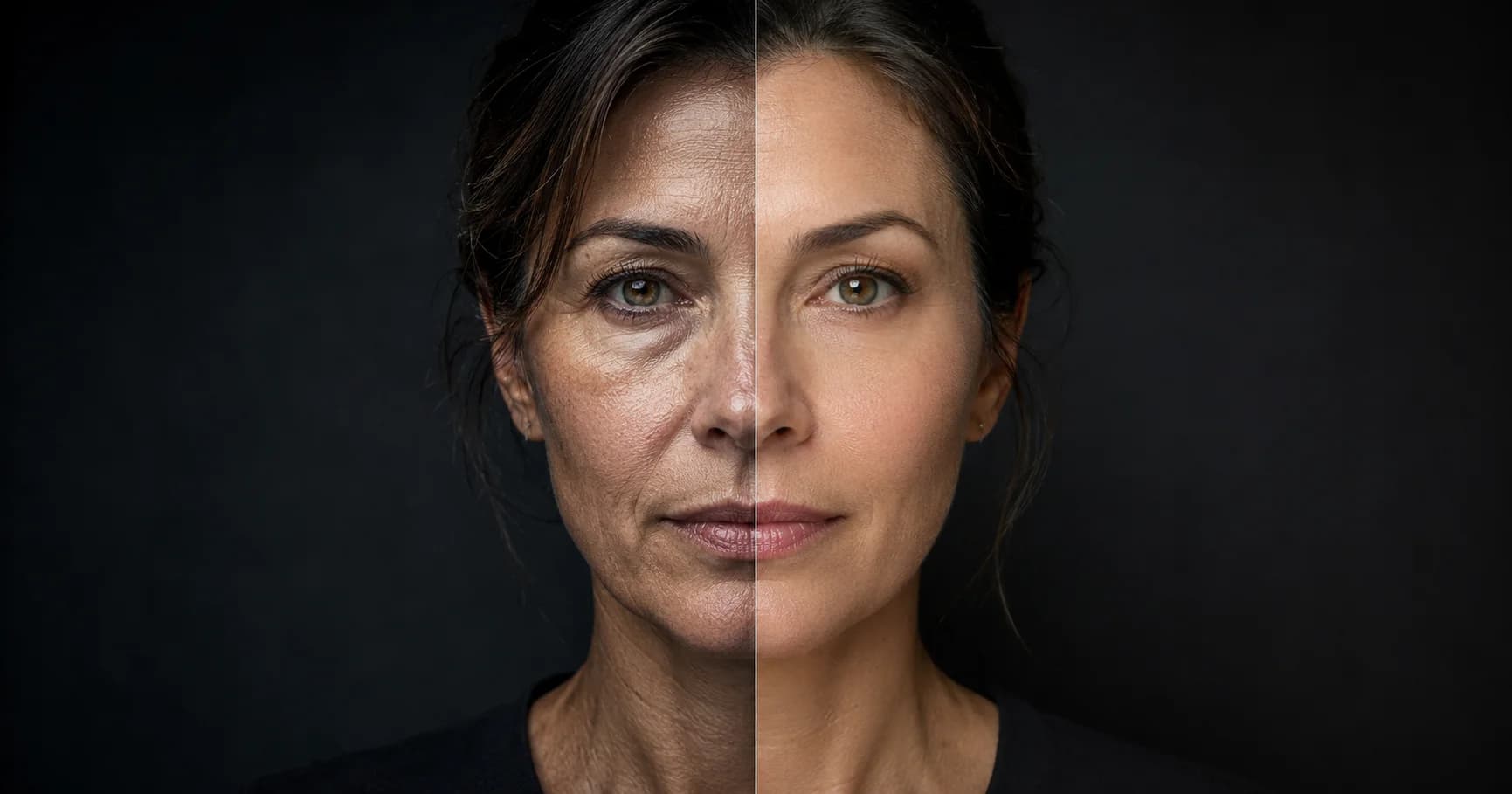
If you look older than your age, the reasons are specific, measurable, and — for the most part — fixable. Looking older than your chronological age is not simply bad luck or genetics. It reflects a divergence between three distinct ages: chronological age (years lived), biological age (how old your cells actually are), and perceived age (how old your face reads to others). These three numbers rarely align. Research published in the British Medical Journal established that perceived facial age is a meaningful proxy for biological ageing — the people whose faces read as older than their years tend to have biomarkers that are also older. Understanding exactly what drives this gap transforms an appearance concern into actionable health information.
This article is for informational and educational purposes only and does not constitute medical, dermatological, or psychological advice. Consult a qualified professional before making changes to your health or skincare routine.
Why You Can Look Older Than You Are: Three Ages, One Face
Chronological age is simply time elapsed since birth. It is the number everyone knows and the one that determines legal rights, retirement dates, and demographic categories. It has no direct relationship with how the body or face actually functions.
Biological age — sometimes called physiological age — is a measure of how efficiently your cells and tissues function relative to a reference population at your chronological age. It is assessed through biomarkers: telomere length, epigenetic methylation patterns, inflammatory markers, and organ function tests. A 45-year-old with the telomere length and organ function of a typical 35-year-old has a biological age of 35. Biological age can be measured; it cannot be seen directly.
Perceived age is what observers estimate when they look at your face. It is the most practically consequential of the three because it is what other people actually respond to. A large body of research has established that perceived facial age is a meaningful proxy for biological age — faces that look older than their chronological age tend to come from people whose biological markers are also aged relative to their years.
Why Perceived Age Is a Genuine Health Signal
A landmark 2009 study published in the British Medical Journal by Christensen and colleagues assessed perceived age in 387 pairs of twins. Independent raters estimated the age of each twin from photographs. The twin who looked older consistently showed worse performance on cognitive tests, shorter telomeres, and higher mortality over the following seven years — even after controlling for chronological age and shared genetic background.
The finding was significant: perceived facial age was a better predictor of survival than chronological age in the same individuals. Looking older than your years is not vanity — it is a signal that something in your biology is ageing faster than it should.
More recently, Harvard researchers released FaceAge in May 2025 — an AI system trained to estimate biological age from facial photographs. Their validation studies found that cancer patients' FaceAge readings correlated significantly with survival outcomes, independent of tumour type and treatment stage. The face, it turns out, is a window into biological ageing processes that clinical biomarkers only partially capture.
“Perceived age was a stronger predictor of survival than chronological age, suggesting that facial aging reflects underlying biological processes.”
What Drives the Gap Between Perceived and Chronological Age
The biggest drivers of perceived age that exceed chronological age are well-documented. UV radiation is the largest single factor — cumulative sun exposure degrades collagen, causes pigmentation changes, and thickens skin in ways that consistently read as older. A 2008 study by Gunn and colleagues found that sun exposure explained more variance in perceived facial age than smoking, BMI, or stress combined.
Sleep is the second most powerful factor. During deep sleep, growth hormone drives cellular repair throughout the body, including skin collagen synthesis and lymphatic drainage of the face. Chronic sleep deprivation produces measurably higher perceived age ratings — a 2013 study found that sleep-deprived faces were rated as less healthy, less attractive, and significantly older than the same individuals after adequate sleep.
Smoking, chronic psychological stress, high alcohol consumption, and low physical activity all accelerate the biological ageing processes that drive perceived age. Conversely, the individuals who consistently look younger than their chronological age tend to cluster on the other side of each of these variables: low UV exposure, consistent sleep, non-smoking, active lifestyle, and managed stress.
Advertisement
How AI Estimates Perceived Age From a Photo
AI age estimation models are trained on large datasets of facial photographs with known chronological ages. The models learn which visual features correlate most strongly with age across a population: skin texture, under-eye area brightness and fullness, eye openness, skin evenness, facial volume in the cheeks and temples, and the definition of features like the jawline and cheekbones.
The Guess My Age tool on Smile Tracker measures four specific signals: eye area brightness and openness, facial symmetry, skin vitality (evenness and luminosity), and structural definition of cheekbones and jawline. These four signals together produce an apparent age estimate and a Youthful Energy Score that reflects how effectively your face preserves the markers of youth.
What makes AI age estimation useful beyond curiosity is the signal-level breakdown. If your apparent age reads older than expected but your eye area score is the lowest component, that tells you specifically where the ageing signal is coming from — and what interventions (sleep, hydration, lighting) are most directly relevant. It converts a general 'you look older' judgment into a specific, actionable measure.
Closing the Gap: What Actually Changes Perceived Age
The research on modifiable perceived-age factors is consistent. The interventions with the best evidence are: daily broad-spectrum sunscreen (SPF 30 minimum) — prevents the UV damage that is the largest single driver of premature perceived ageing; 7–9 hours of sleep consistently — restores the eye-area brightness, skin plumpness, and facial symmetry that ageing erodes; retinoid-based skincare (topical vitamin A) — the most evidence-backed topical ingredient for improving actual collagen density, not just surface hydration.
Regular aerobic exercise improves skin vascularity and oxygenation, reduces inflammatory markers, and maintains the muscle tone that preserves facial definition. A 2014 study found that regular exercisers over 65 had skin that more closely resembled the composition of 20–40-year-olds than sedentary people of the same age.
The key insight is that most perceived-age determinants are lifestyle variables, not genetic ones. Studies on identical twins with divergent lifestyles consistently show dramatic perceived-age differences despite identical DNA. Your chronological age is fixed; your perceived age is, to a large extent, a choice made through daily habits.
Frequently Asked Questions
What is the difference between perceived age and biological age?
Biological age measures how efficiently your cells and tissues function (assessed through biomarkers like telomere length and epigenetic markers). Perceived age is how old your face looks to observers. They are related but not identical — perceived age is a visual proxy for biological ageing processes, and research confirms they correlate meaningfully. A face that looks older than its chronological age tends to come from someone whose biological markers are also older than average; faces that look young tend to come from people with younger biological profiles.
Why do I look older than my age?
The most common causes: (1) cumulative UV exposure — the single largest driver of premature facial ageing, affecting skin texture, pigmentation, and collagen; (2) poor or insufficient sleep — impairs the cellular repair processes that maintain skin plumpness and eye-area brightness; (3) chronic stress — elevated cortisol degrades collagen and increases systemic inflammation; (4) smoking; (5) dehydration. The good news is that all five are modifiable, and research on twins shows that lifestyle differences produce dramatic perceived-age differences even between people with identical genetics.
Can AI accurately estimate your age from a photo?
AI age estimation from photos is reliable within a range of approximately ±5–8 years for most people. The AI is not estimating your chronological age — it is estimating how old your face looks based on the same visual signals human observers use: skin quality, eye-area brightness and fullness, facial symmetry, and structural definition. The Harvard FaceAge study (2025) validated that AI-estimated facial age correlates with clinical biological age markers and health outcomes in patient populations.
Is perceived age the same as apparent age?
Yes — perceived age, apparent age, and estimated age all refer to the same concept: how old observers judge a face to be based on visual information. The term 'apparent age' is more commonly used in dermatology and cosmetic medicine; 'perceived age' in psychology; 'estimated age' in AI and computer vision. All three contrast with chronological age (time elapsed) and biological age (cellular function level).
What makes a face look younger?
The visual markers observers use to judge youth are: bright, open eyes (reduced under-eye hollowing and shadow); even, luminous skin tone; full, high cheeks; a defined jawline; and facial symmetry. These markers are maintained or improved by: adequate sleep, sun protection, consistent hydration, non-smoking, exercise, and retinoid-based skincare. The highest-impact changes are almost always in sleep and sun protection — both address the two largest drivers of premature perceived ageing.
Lena Whitmore
Science Writer · Facial Analysis & Appearance Psychology
Lena covers the science of smiles, facial aging, and AI-powered biometrics. She writes evidence-based guides grounded in peer-reviewed research, with a focus on making appearance science accessible and actionable. All tools on Smile Tracker run locally in your browser — your photo is never uploaded anywhere.
Put it to the test
See your results with AI
Upload a photo and get your AI-estimated apparent age and Youthful Energy Score — free, private, instant.
Try Guess My Age Free →Advertisement
Sources