What Makes a Face Look Older? 7 Factors AI Aging Tools Detect
Understanding what makes a face look older is more useful than most people expect — because several of the key factors are not fixed. AI age estimation tools reveal that apparent age is not simply a function of chronological age or genetics. Lighting, expression, posture, and even the tension in specific facial muscles all measurably shift how old a face reads. Here are the seven most significant factors, and which ones you can change today.
This article is for informational and educational purposes only and does not constitute medical, dermatological, or psychological advice. Consult a qualified professional before making changes to your health or skincare routine.
How AI Reads Age in a Face
Modern AI age estimation models analyse a combination of geometric and textural features. Geometric features include the relative positioning of facial landmarks: the depth of the nasolabial folds, the distance between eye corners and brow, the jaw-to-cheekbone ratio, and the degree of midface descent. Textural features include skin surface variation and contrast.
The important insight from AI research is that many of these signals are variable — they change with lighting, expression, posture, and tension. A well-designed AI age estimation tool is sensitive to these variables, which means it can reveal which factors are adding apparent years to your specific face.
Smile Tracker's Guess My Age tool uses these signals to produce a Youthful Energy Score alongside an apparent age estimate. Testing the same face under different conditions gives you direct, objective feedback on which factors are most affecting your apparent age.
Factor 1: Overhead Lighting Shadows
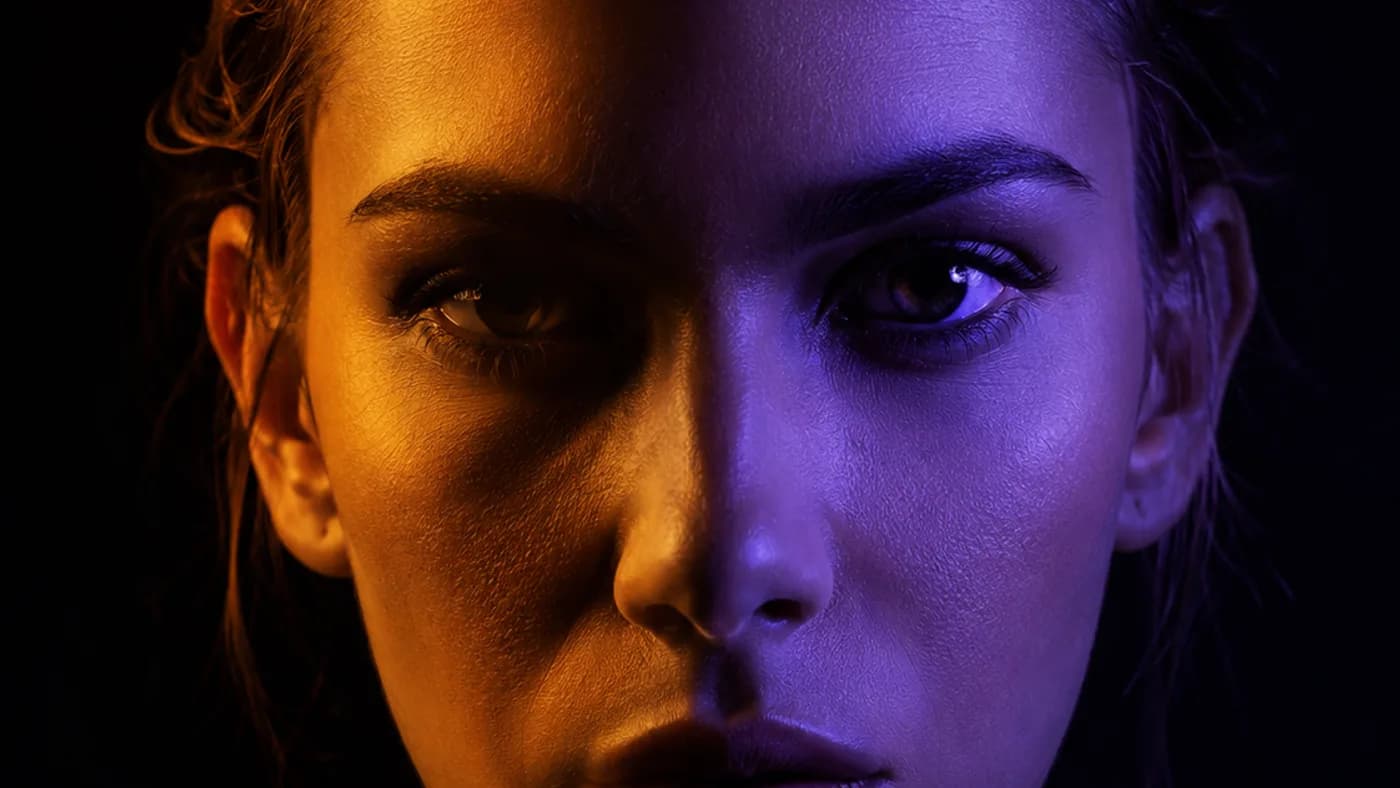
The single largest controllable factor in apparent age is lighting direction. Overhead lighting — the default in most offices, kitchens, and indoor environments — creates hard downward shadows that fill under-eye hollows, nasolabial folds, and jaw definition with dark contrast. These shadows are structurally identical to the shadows created by tissue volume loss — which is one of the primary physical markers of facial aging.
AI models cannot distinguish between a real nasolabial fold and a shadow that mimics one. Both register as the same geometric feature. This means overhead lighting alone can add five to ten years to an apparent age reading — not because anything has changed in the face, but because the lighting is creating age-mimicking shadow patterns.
The fix is simple: face a window during daylight or position yourself in front of a light source at eye level rather than above. This fills in the shadows and removes the false aging signal entirely.
“Of all the factors that make a face look older in a photograph, none is more powerful — or more immediately correctable — than the direction of light.”
Face a window during daylight — this single change typically removes 5–8 apparent years from an AI age reading.
Factor 2: Forehead Tension and Brow Furrow
The frontalis muscle controls brow raising; the corrugator and procerus control brow furrowing. Chronic tension in the corrugator — which creates the vertical '11 lines' between the brows — is one of the strongest age signals AI models detect. Even mild brow tension produces horizontal forehead lines and a slightly compressed upper face that reads as significantly older.
Most people carry habitual facial tension they are unaware of. Performance situations — being photographed, video calls, presentations — increase this tension automatically. A slightly furrowed brow in a photo can add three to seven apparent years depending on the individual.
Before any photo or video call, consciously smooth your forehead. Close your eyes briefly, then open them to a neutral, soft expression. This physical reset releases corrugator tension and removes one of the most powerful age signals from your face.
Close your eyes and open them softly before any photo — this releases the brow tension that adds years to every shot.
Advertisement
Factor 3: Neutral or Downturned Resting Expression
A neutral or slightly downturned resting expression allows the midface muscles to relax fully, which permits gravity to create the appearance of midface descent — a key marker of aging. When the zygomatic and cheek muscles are slightly engaged (as they are in a warm, relaxed near-smile), the midface appears lifted and more youthful.
This is why people with naturally upturned mouth corners tend to look younger than their chronological age — the resting position of their zygomatic major creates a subtle lift that counteracts the appearance of volume loss. Conversely, people with naturally downturned corners often look older than they are.
A genuine Duchenne smile produces the most dramatic midface lift — research shows smiling faces are rated an average of one to two years younger than the same face at rest. The memory technique from our smile guides produces exactly this kind of lifting expression.
Factor 4: Poor Posture Creating Neck and Jaw Shadows
Slouching compresses the neck, bunches the skin under the jaw, and creates a shadow under the chin that AI models read as jaw volume increase — a classic aging marker. Even a small amount of forward head position (the 'tech neck' posture common from screen use) can add apparent years by creating these shadow and skin-bunching effects.
Sitting or standing with the head balanced directly over the spine — ears over shoulders, chin level — lifts the lower face, elongates the neck, and removes the bunching effect. Combined with the chin-forward-and-slightly-down position for photos, this posture produces a noticeably younger-looking result in any image.
Factor 5: Squinting in Direct Light
When light hits the face directly from the front — particularly direct sunlight or camera flash — the natural response is to squint: the upper lids descend, the lower lids rise, and the brow may furrow slightly. This combination creates tension lines around the eyes, forehead lines, and a compressed upper face that is one of the most aging expressions the face can produce.
The fix is to avoid direct frontal light sources. Position yourself so light comes from slightly above eye level and diffused — natural daylight through a window, or a soft box light rather than direct flash. If photographed outdoors in bright sunlight, position yourself in open shade where the light is ambient and even rather than direct.
Never shoot with direct sunlight or flash aimed straight at your face — the squinting response it triggers adds significant apparent age.
Factor 6: Camera Distance and Lens Distortion
Smartphone cameras used at close range (under 60cm) apply a mild wide-angle distortion that subtly widens the nose, flattens the midface, and can make the face appear heavier and fuller — all of which register as aging signals. This is not a flaw in how you look; it is a physics artifact of the lens focal length.
Stepping back from the camera and zooming in slightly — or using portrait mode, which artificially increases the effective focal length — produces a more flattering, less distorted result. Camera at eye level or very slightly above also produces a younger-looking result than shooting from below, which creates jaw and neck shadows.
For AI age estimation specifically: close photos with wide-angle distortion can add two to five apparent years purely from geometric distortion. This is worth testing directly — take a close selfie and a same-day photo from further away and compare the Guess My Age readings.
Factor 7: Background and Contrast
A dark or cluttered background reduces visual contrast with the face, making facial features harder to read clearly. AI models processing low-contrast face-background combinations may read the reduced feature clarity as age-related skin texture loss rather than a background interference effect.
A plain background that is lighter than the subject — neutral white, light grey, or soft blue — maximizes face-background contrast and produces the clearest possible facial geometry reading. In practice, the combined impact of background and lighting changes can shift an apparent age reading by several years. Test the full range using Guess My Age and compare the outputs directly.
Frequently Asked Questions
What is the biggest factor that makes a face look older?
Based on AI age estimation research, lighting direction has the largest single controllable impact on apparent age. Overhead lighting creates shadows that mimic nasolabial folds and under-eye hollows — primary structural markers of aging — and can add five to ten apparent years. Soft frontal lighting removes this effect entirely and is the single most impactful change you can make.
Why do I look older in photos than in real life?
Photos freeze unflattering moments of expression, are usually taken under overhead indoor lighting that creates aging shadows, and capture a perspective you are unfamiliar with (mirror reflection is laterally flipped). Most people look noticeably younger in photos with proper frontal lighting, a genuine smile, and a relaxed forehead — the discrepancy is largely environmental and expressional, not physical.
Does stress make your face look older?
Chronic stress elevates cortisol, which over time accelerates collagen breakdown and promotes the development of expression lines through habitual tension in the frontalis and corrugator muscles. More immediately, the tense facial expression associated with stress — furrowed brow, tight jaw, flat neutral expression — produces significant apparent age increases in both AI and human observer assessments.
Does smiling make you look younger?
Yes — specifically a genuine smile with full cheek and eye engagement (Duchenne smile). The cheek lift raises the midface and reduces the appearance of hollows and shadows. Research consistently shows smiling faces are rated younger by observers. However, a tense posed smile without eye engagement can actually add apparent age by creating muscle tension lines — the genuine version is required for the youthful effect.
Can I test what makes me look older?
Yes — Smile Tracker's Guess My Age tool lets you upload photos under different conditions and compare apparent age readings directly. Test: overhead lighting vs. frontal window light, neutral expression vs. genuine smile, furrowed brow vs. relaxed forehead, close selfie vs. stepped-back portrait. The direct comparison gives you objective data on which factors are most affecting your specific apparent age.
Lena Whitmore
Science Writer · Facial Analysis & Appearance Psychology
Lena covers the science of smiles, facial aging, and AI-powered biometrics. She writes evidence-based guides grounded in peer-reviewed research, with a focus on making appearance science accessible and actionable. All tools on Smile Tracker run locally in your browser — your photo is never uploaded anywhere.
Put it to the test
See your results with AI
Upload a photo and get your AI-estimated apparent age and Youthful Energy Score — free, private, instant.
Try Guess My Age Free →Advertisement
Sources