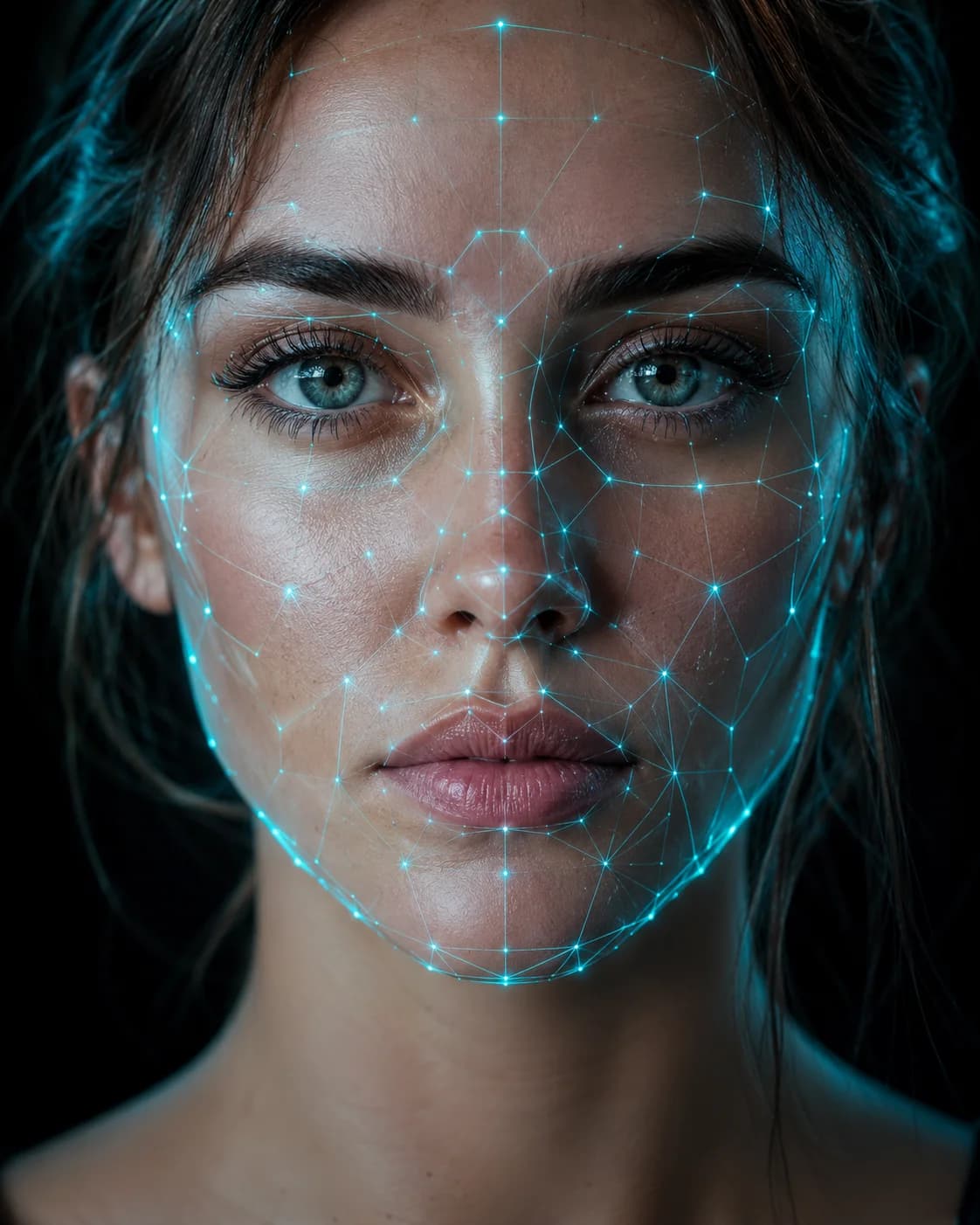
How AI Age Estimation Works: The Science Behind Photo-Based Apparent Age
AI tools that guess your age from a photo are not doing what most people imagine. They are not searching a database for matching faces or estimating biological age in any medical sense. They are reading specific visual features from your photo and comparing them to patterns learned from millions of labeled training images. Understanding the mechanism — what it reads, what confounds it, and why the same face can read as years older or younger under different conditions — makes these tools significantly more useful and the results far more interpretable.
This article is for informational and educational purposes only and does not constitute medical, dermatological, or psychological advice. Consult a qualified professional before making changes to your health or skincare routine.
How AI Estimates Age From a Photo
AI age estimation models are convolutional neural networks trained on large datasets of face images labeled with chronological ages. During training, the model learns to associate specific visual patterns — facial geometry, texture, and expression characteristics — with specific age ranges. When you upload a new photo, the model reads those same patterns and outputs an age estimate.
Importantly, these models estimate apparent age — how old someone looks — not chronological age. They cannot access your birth certificate. They can only read what the photo contains: the visual signals that, in their training data, correlated with specific ages. This means the estimate reflects how your photo looks, not how old you are. The two can differ by years in either direction.
Smile Tracker's Guess My Age tool uses Google MediaPipe to detect 478 facial landmarks and compute blendshape values, then derives apparent age from the facial geometry and expression signals these produce. This approach is more reliable than pixel-level analysis because it is robust to image resolution and colour variation.
The Facial Features AI Reads as Age Signals
The primary geometric features that AI associates with age are: the depth of nasolabial folds (the lines running from the nose corners to the mouth corners), under-eye hollow depth, the degree of midface descent (how far the cheek and midface have dropped relative to the bone structure), jaw definition, forehead line density, and the relative position of brow to eye.
Textural features also contribute: AI models pick up on skin surface variation, pore visibility, and contrast texture — all of which tend to increase with age. In high-resolution photos, these textural signals can substantially shift the age estimate independently of geometric signals.
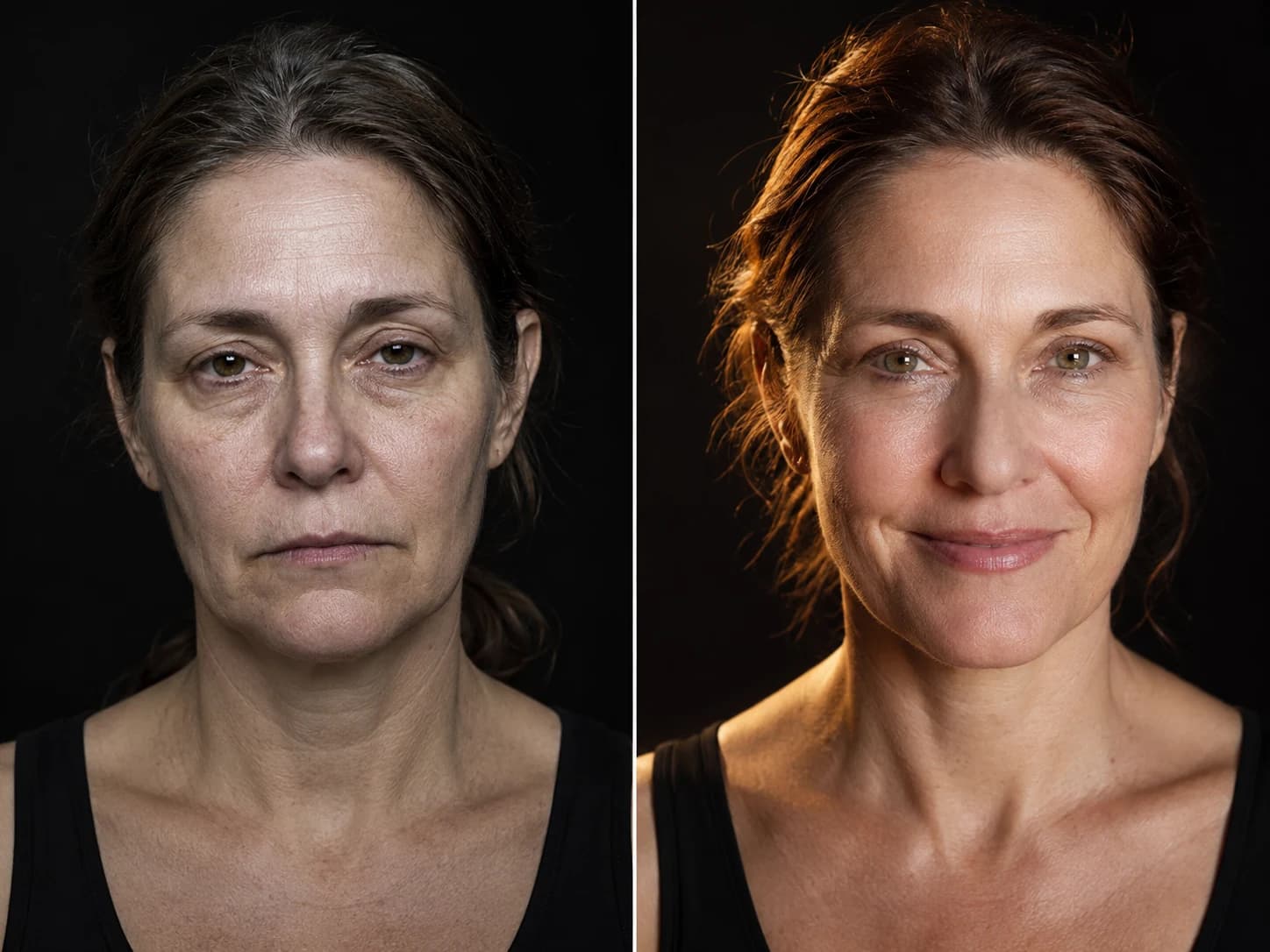
The critical insight is that many of these signals are variable and context-dependent. Nasolabial fold depth increases dramatically under overhead lighting (shadow creates depth that is not structurally present). Midface appearance changes with expression. Forehead lines appear and disappear with brow tension. The AI is reading whatever the photo contains — not your face's underlying structure.
Why Lighting Changes Your AI Age Reading
Lighting direction is the single largest controllable factor in AI age estimation results. Overhead lighting — the default in most offices, kitchens, and indoor environments — creates hard downward shadows under the eyes, nose, and nasolabial area. These shadows are geometrically identical to the shadows that naturally deepen nasolabial folds and under-eye hollows with age. The AI cannot distinguish between the shadow and the fold — both register as the same signal.
Research on AI age estimation accuracy consistently identifies lighting as the strongest environmental variable. Under controlled conditions, switching from overhead lighting to even frontal lighting can shift an AI apparent age estimate by five to eight years for the same face, without any change in the person's actual appearance.
The practical implication is powerful: if your AI age result seems higher than expected, change your lighting before concluding anything about your actual apparent age. Upload a new photo facing a window during daylight and compare. The difference is often striking.
“Apparent age is not a fixed property of a face — it is a property of how a face is photographed. The same person can look a decade apart in different conditions.”
Face a window during daylight before testing AI age estimation — overhead lighting systematically produces older-reading results for everyone.
Advertisement
How Accurate Is AI Age Estimation?
The accuracy of AI age estimation depends heavily on photo quality, lighting, and facial position. Under ideal conditions — frontal face, even lighting, neutral to positive expression — modern AI age estimation models achieve a mean absolute error (MAE) of approximately three to five years on high-quality datasets. This means the estimate is typically within three to five years of chronological age.
Under suboptimal conditions — overhead lighting, strong shadows, extreme angles, or obscured facial features — accuracy degrades significantly. The model is still producing a result, but it is being influenced by lighting and angle artifacts rather than the underlying facial geometry.
For Smile Tracker specifically: the apparent age estimate is designed to measure how old your photo looks, not how old you are. Using it to track changes — comparing photos taken at different times, under controlled conditions — is more meaningful than treating any single reading as an absolute measure of your appearance.
What Your AI Age Result Actually Means
An AI apparent age reading higher than your chronological age does not necessarily mean you look older than your age — it may mean your photo was taken under conditions that added apparent years. Before interpreting a result, it is worth asking: was this photo taken under overhead lighting? Was it a close-range selfie with wide-angle distortion? Was the expression neutral or tense?
A result lower than your chronological age under good conditions is more meaningful. It suggests that the factors you can control — lighting, expression, posture — are working in your favour and producing a youthful-reading photo. Research confirms that smiling faces read as younger than neutral faces, that well-lit faces read younger than harshly lit ones, and that upright posture contributes to a more youthful-reading result.
The most useful way to use an AI age estimation tool is comparatively: test multiple photos under varying conditions and compare the results. This reveals which specific conditions add or remove apparent years for your specific face — information that is far more actionable than any single result.
How to Improve Your Apparent Age Score
The techniques that most reliably reduce AI apparent age estimates mirror those that make you look younger to human observers. Lighting first: face a window during daylight or use a ring light at eye level. This single change typically produces the largest improvement — often five or more apparent years.
Expression second: a genuine Duchenne smile — triggered by a real memory — raises the midface, reduces nasolabial shadow, and produces the cheek lift that AI models associate with youth. Multiple studies confirm that smiling faces are rated as younger by human observers; AI models trained on human-rated apparent age data pick up the same signal.
Additional factors: posture (upright, chin slightly forward and down), camera distance (further away, portrait mode), and a plain light background all contribute to a more youthful reading. Combining all these factors in one photo typically produces a result significantly younger than a default poorly-lit close-range selfie — for the same person on the same day.
Frequently Asked Questions
How does AI guess your age from a photo?
AI age estimation models are neural networks trained on millions of face images labeled with chronological ages. They learn to associate specific visual patterns — facial geometry, texture, expression, and lighting effects — with age ranges. When you upload a photo, the model reads those same patterns and outputs an apparent age estimate. It measures how old the photo looks, not your actual biological age.
How accurate are AI age guessing tools?
Under ideal conditions (frontal face, even lighting, genuine expression), modern AI age tools achieve a mean absolute error of approximately three to five years. Under poor conditions — overhead lighting, close-range distortion, tense expression — accuracy degrades significantly because the model is reading lighting and angle artifacts as age signals. The result under good conditions is meaningfully accurate; under poor conditions it is unreliable.
Why does my AI age result look older than I am?
The most common reasons are: overhead lighting creating shadows that mimic nasolabial folds and under-eye hollows; close-range wide-angle distortion making the face appear heavier; a neutral or tense expression that removes the midface lift of a genuine smile; and forward-head posture creating jaw and neck shadows. Upload a new photo facing a window with a genuine smile and compare — the difference is often five to ten apparent years.
Can lighting change how old I look to AI?
Yes — dramatically. Overhead lighting is the single largest contributor to inflated AI apparent age readings. It creates shadows under the eyes, nose, and nasolabial area that are geometrically identical to the shadows produced by actual tissue volume loss in aging. The AI cannot distinguish them — both register as aging signals. Switching to frontal diffused light can remove five to eight apparent years from the same face.
What is the best photo to use for AI age estimation?
For the most accurate apparent age reading: face a window during daylight (or use a ring light at eye level), look directly into the camera from 60–90cm away using portrait mode, produce a genuine smile with full eye engagement, stand or sit upright with chin slightly forward, and use a plain light background. These conditions produce the cleanest facial geometry reading and the most reliable estimate.
Lena Whitmore
Science Writer · Facial Analysis & Appearance Psychology
Lena covers the science of smiles, facial aging, and AI-powered biometrics. She writes evidence-based guides grounded in peer-reviewed research, with a focus on making appearance science accessible and actionable. All tools on Smile Tracker run locally in your browser — your photo is never uploaded anywhere.
Put it to the test
See your results with AI
Upload a photo and get your AI-estimated apparent age and Youthful Energy Score — free, private, instant.
Try Guess My Age Free →Advertisement
Sources
Related reading
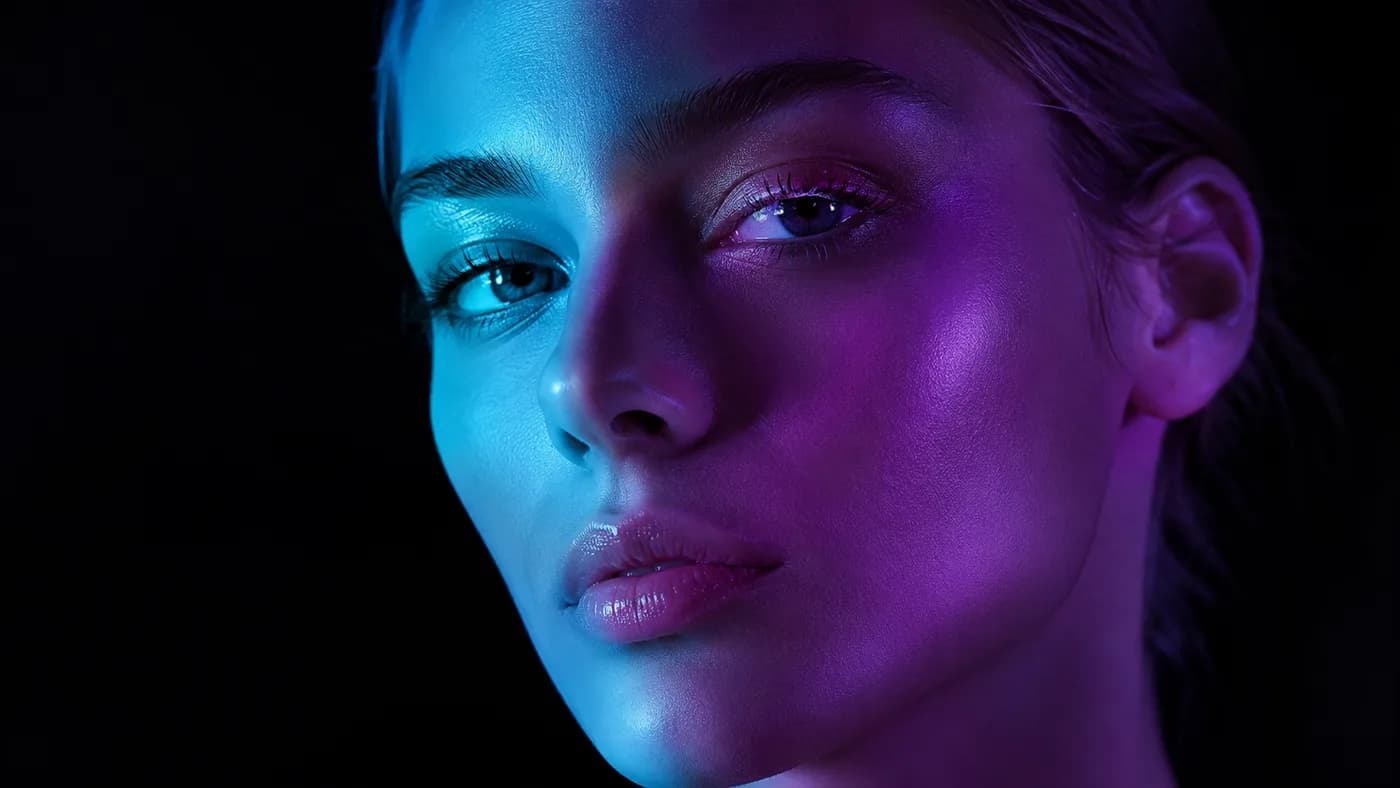
How to Look Younger in Photos: 8 Techniques Tested with AI
May 2026 · 6 min read
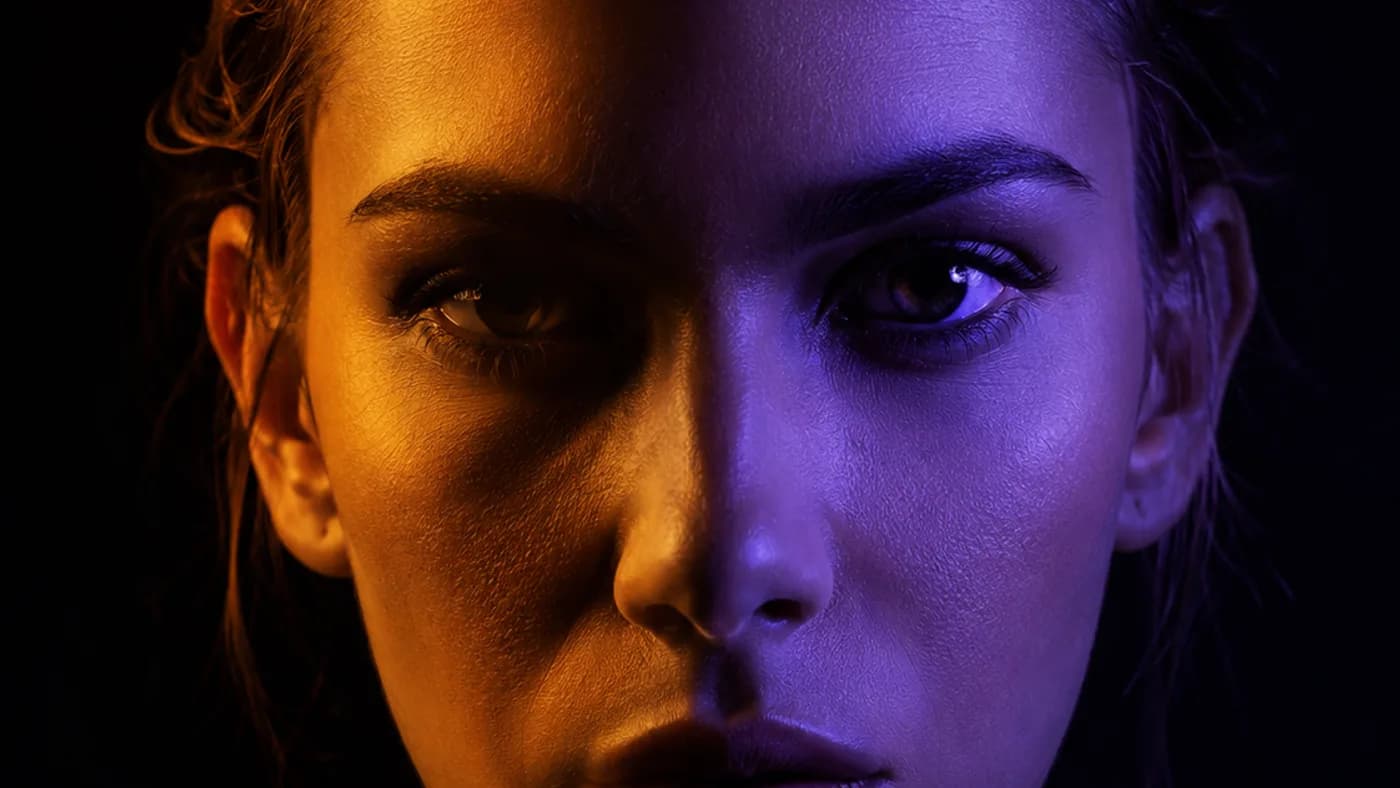
What Makes a Face Look Older? 7 Factors AI Aging Tools Detect
May 2026 · 7 min read
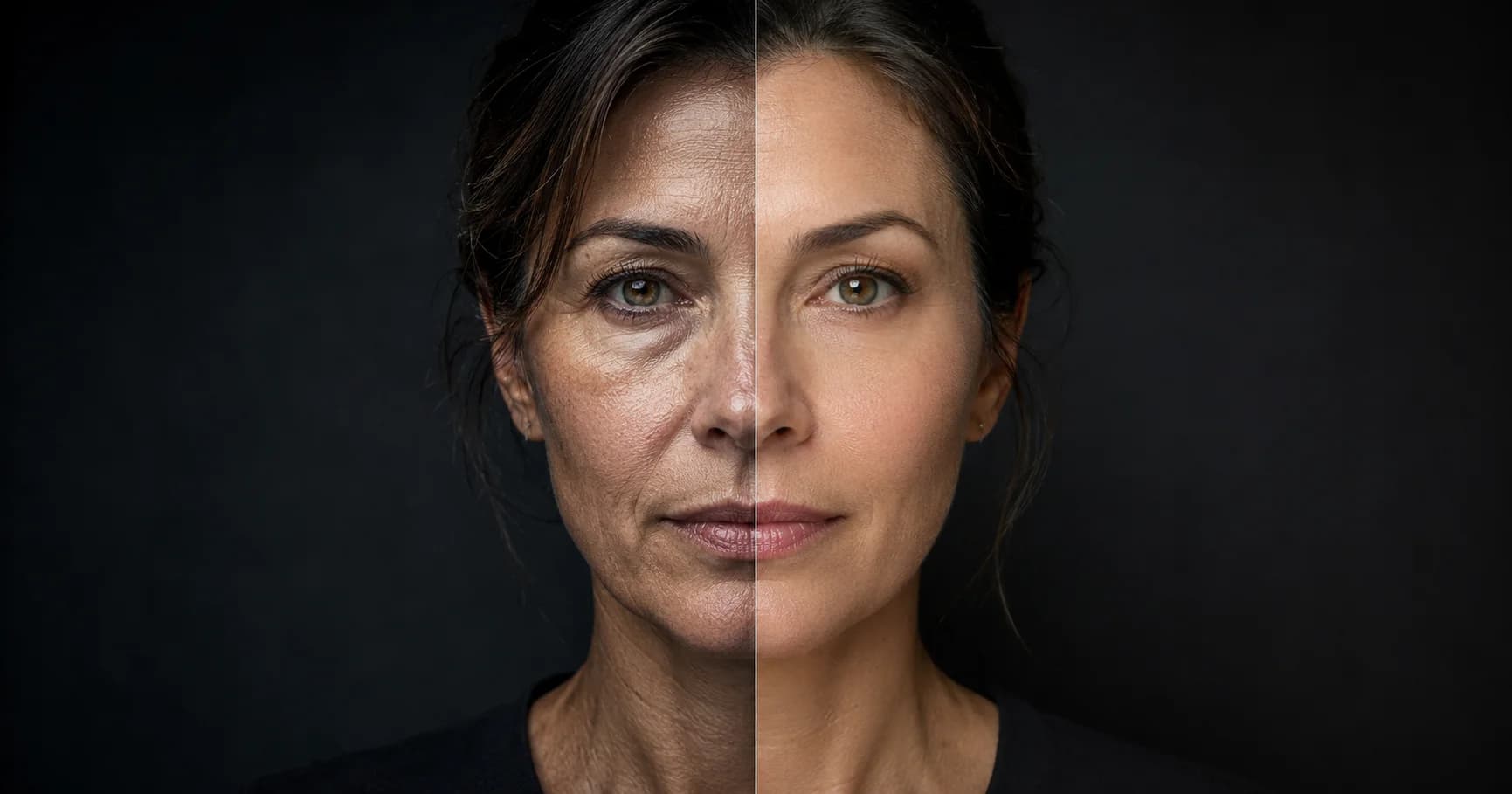
Why Do I Look Older Than My Age? The Science Behind Perceived Age
May 2026 · 7 min read
Apparent Age vs Chronological Age: What Makes a Face Look Older or Younger
June 2026 · 8 min read