What Causes Eye Bags and How Do They Make You Look Older?
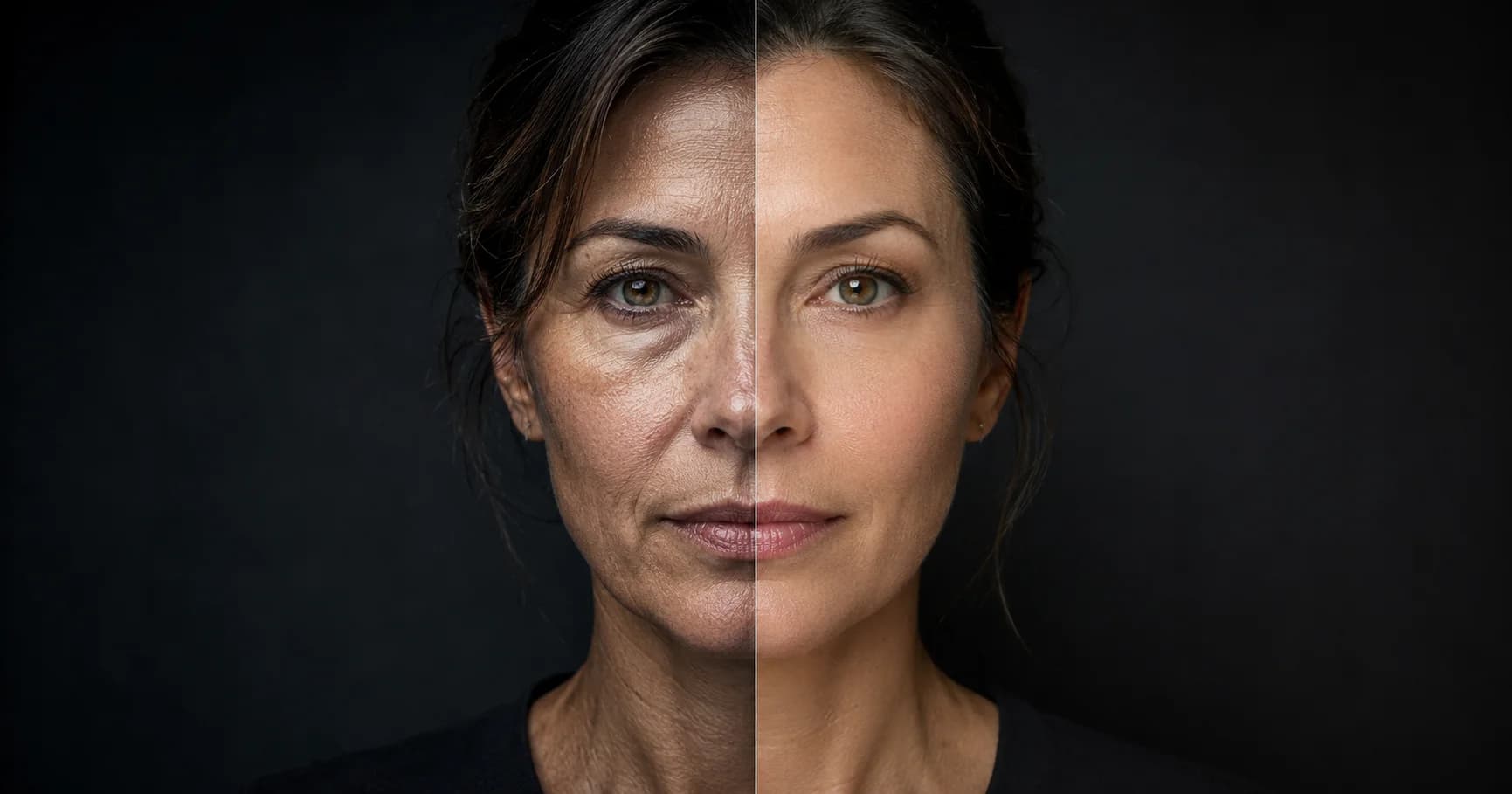
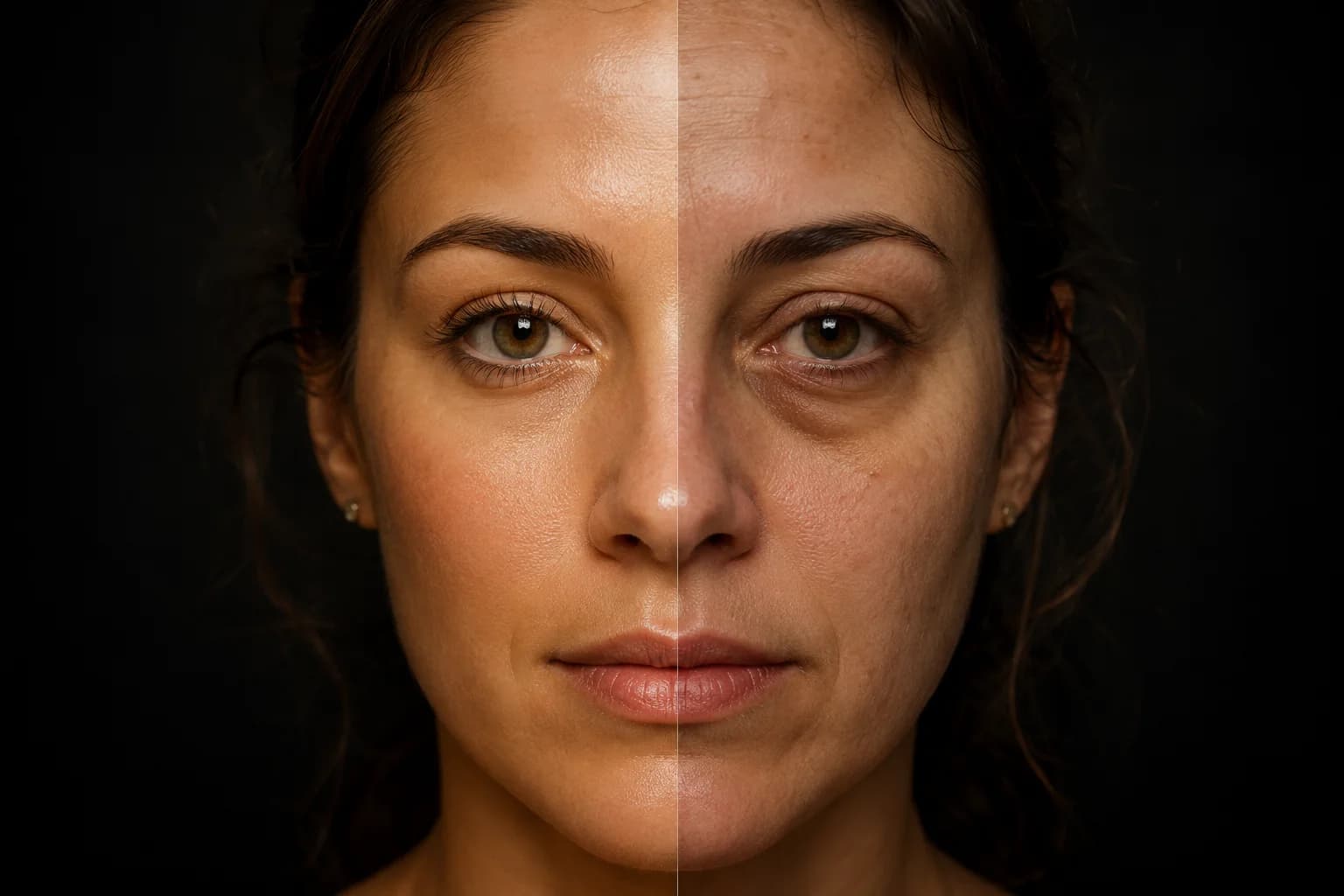
Eye bags — the soft puffiness or shadowing beneath the lower eyelid — are one of the single most powerful age signals on the human face. Research on perceived age consistently identifies the under-eye area as one of the first features observers use to estimate age, and one of the areas where the gap between looking older and looking younger is most concentrated. Yet despite being so visible, the causes of eye bags are widely misunderstood. Most people treat them as a single condition when they are actually produced by at least three distinct mechanisms — each with different causes and different responses to intervention.
This article is for informational and educational purposes only and does not constitute medical, dermatological, or psychological advice. Consult a qualified professional before making changes to your health or skincare routine.
Three Separate Causes of Eye Bags
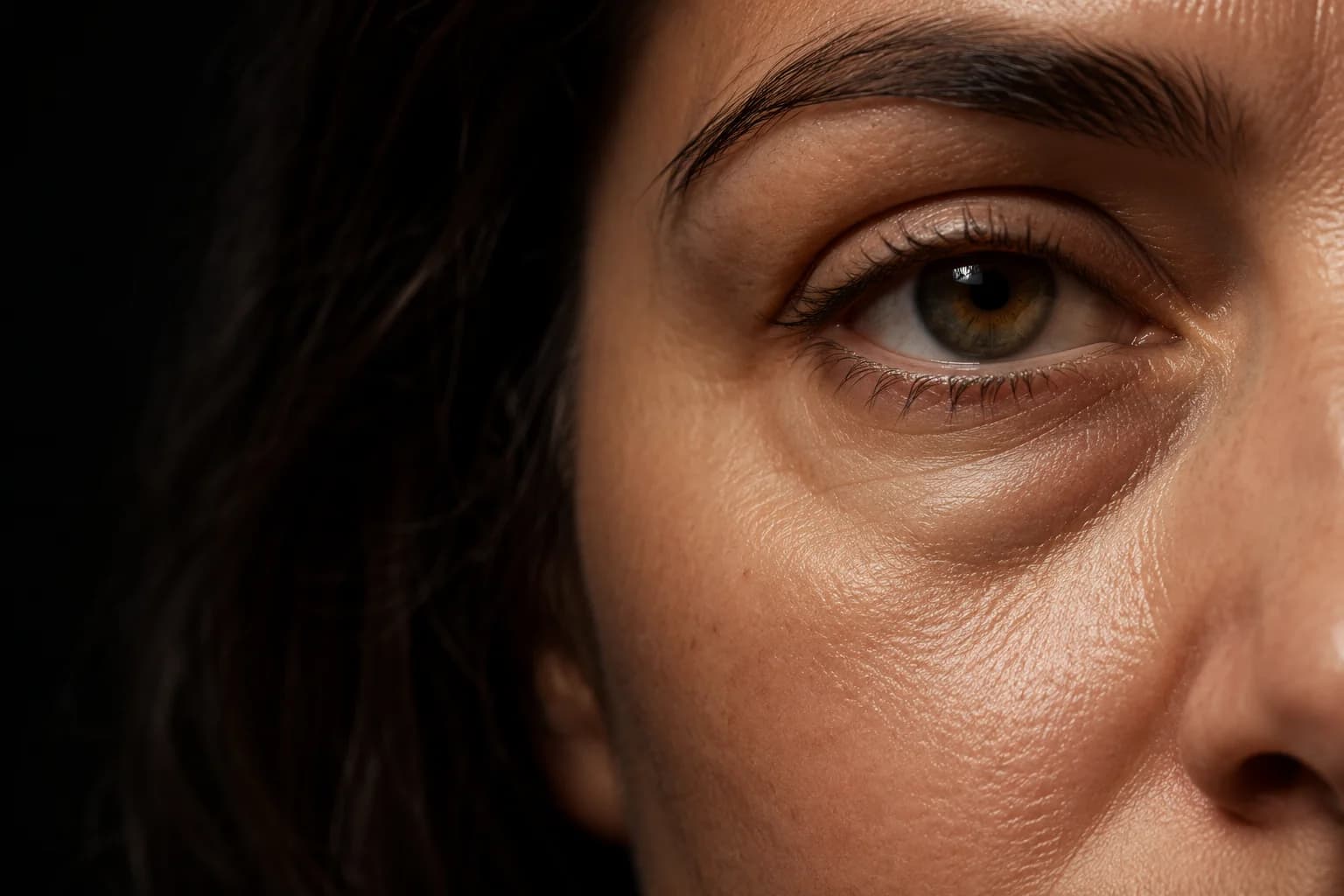
Structural fat prolapse: the lower eyelid contains three fat compartments that are normally held in place by the orbital septum — a thin membrane attached to the lower orbital rim. With age, this membrane weakens and stretches, allowing the fat compartments to bulge forward. This produces the firm, rounded under-eye bulge that is most visible in direct frontal lighting and does not change significantly with sleep or hydration. This is the structural form of eye bags and is primarily addressed surgically.
Fluid accumulation: the periorbital lymphatic system removes fluid from around the eye during sleep and normal movement. When lymphatic drainage is impaired — by sleep deprivation, high sodium intake, alcohol, allergies, or horizontal sleeping position — fluid pools in the loose subcutaneous tissue of the lower eyelid, producing soft, squishy puffiness that varies throughout the day. This type is worst in the morning and reduces with upright activity and movement.
Skin and fat deflation: as the cheek fat pad descends with age, it creates a hollow (the tear trough) between the lower eyelid and the cheek. This hollow does not involve a true eye bag — it is a shadow created by the transition from eyelid to hollow cheek. It is often treated as an eye bag when it is actually volume loss below the eyelid rather than tissue above it.
Why Eye Bags Make You Look Older
The under-eye area is one of the clearest age markers because the changes it undergoes are progressive, predictable, and visible even in photos taken from a distance. Fat prolapse and orbital septum laxity both increase with age. Periorbital skin loses collagen and thins, making the underlying vasculature more visible (contributing to dark circles). The lymphatic system becomes less efficient with age, worsening fluid retention.
In observer studies, eye bags are consistently identified as one of the top-three facial features used to estimate age — alongside skin texture and the depth of nasolabial folds. A 2010 study found that under-eye appearance was rated as the most heavily weighted single feature in age perception judgments.
The appearance impact extends beyond age perception. Prominent eye bags are associated with tiredness, stress, and poor health in observer ratings — the same associations that sleep deprivation produces in facial perception research. Faces with pronounced eye bags are rated as less approachable and less energetic, regardless of expression.
Are Eye Bags Genetic?
The predisposition to structural fat prolapse is significantly genetic. The thickness of the orbital septum, the volume of the periorbital fat compartments, and the rate at which the septum weakens are all influenced by genetics. People whose parents developed prominent under-eye bags early tend to follow a similar timeline.
Ethnicity also plays a role. Some East Asian facial anatomies feature a periorbital fat distribution that produces visible lower eyelid fullness from early adulthood — this is a structural characteristic, not a pathological change. The tear trough shadow depth also varies significantly by face shape and bone structure, both of which are genetically determined.
Genetics sets the predisposition — but lifestyle significantly determines when and how severely that predisposition expresses. A person with a genetic tendency toward eye bags who sleeps consistently well, maintains low sodium intake, and manages allergies will typically develop them less severely and later than the same person with poor sleep and high inflammatory load.
Sleeping on your back on a slightly elevated pillow reduces morning periorbital fluid accumulation by improving overnight lymphatic drainage — a simple change with visible morning-face results.
Advertisement
What Makes Eye Bags Worse
Sleep deprivation is the most reliably documented acute worsening factor — see the dedicated article on how sleep affects your face for the full mechanism. Alcohol causes vasodilation and increases vascular permeability around the eye, worsening both dark circles (from blood pooling visible through thin periorbital skin) and puffiness (from fluid leakage).
High sodium intake causes systemic fluid retention that concentrates in the loose tissue of the eyelids due to gravity and anatomy. Allergies and seasonal rhinitis cause inflammatory mediators to increase local vascular permeability, directly worsening both under-eye puffiness and dark circles. UV exposure accelerates the thinning of periorbital skin, making the underlying fat compartments and vasculature more visible over time.
Dehydration is counterintuitively also a trigger — when the body is dehydrated, it retains fluid in subcutaneous tissue as a compensatory mechanism, which can worsen the appearance of puffiness despite the overall lack of hydration.
How AI Apparent Age Tools Measure the Under-Eye Area
AI age estimation models trained on apparent age ratings weight the under-eye area heavily because it is one of the features observers weight most heavily. The specific signals measured are eye area brightness (darker under-eye areas lower the score), eye openness (puffiness that pushes the lower lid upward reduces apparent eye openness), and the overall luminosity of the periorbital region.
Running the Guess My Age tool on photos taken at different times of day — morning versus evening, after good sleep versus poor sleep — gives you a concrete numerical demonstration of how much the under-eye area affects perceived age in your specific face. Most people find the difference measurable and larger than expected.
Frequently Asked Questions
What causes eye bags?
Three distinct mechanisms: (1) structural fat prolapse — the orbital septum weakens with age, allowing lower eyelid fat compartments to bulge forward (firm, permanent-looking bags); (2) fluid accumulation — poor lymphatic drainage from sleep deprivation, allergies, alcohol, or high sodium causes fluid to pool in the loose under-eye tissue (soft, variable bags worst in the morning); (3) volume loss — fat deflation below the lower lid creates a tear trough shadow that looks like a bag but is actually hollow. Each requires different interventions.
Are eye bags permanent?
Structural eye bags from fat prolapse are permanent without surgical intervention (lower blepharoplasty). Fluid-accumulation eye bags are largely temporary and reduce throughout the day and with lifestyle improvements (sleep, hydration, reduced sodium, allergy management). Tear trough hollows are structural but can be addressed with volume restoration. Most people have a combination of permanent structural changes and variable lifestyle-driven fluctuations.
Do eye bags make you look older?
Yes — significantly. Observer studies consistently rank the under-eye area among the top three features used to estimate age. Prominent eye bags increase perceived age ratings and are associated with tiredness, stress, and poor health in observer judgments. The under-eye area is the region where appearance gains from improved sleep and lifestyle habits are most immediately visible.
Can you get rid of eye bags without surgery?
Fluid-type eye bags respond well to lifestyle changes: consistent 7–9 hours of sleep, reduced sodium intake, allergen management, reduced alcohol, and sleeping on your back with a slightly elevated pillow. Cold compresses reduce morning puffiness acutely. Structural fat prolapse bags do not respond to topical products or lifestyle changes — they require surgical consultation if they are a significant concern.
Lena Whitmore
Science Writer · Facial Analysis & Appearance Psychology
Lena covers the science of smiles, facial aging, and AI-powered biometrics. She writes evidence-based guides grounded in peer-reviewed research, with a focus on making appearance science accessible and actionable. All tools on Smile Tracker run locally in your browser — your photo is never uploaded anywhere.
Put it to the test
See your results with AI
Upload a photo and get your AI-estimated apparent age and Youthful Energy Score — free, private, instant.
Try Guess My Age Free →Advertisement
Sources