How Lack of Sleep Ages Your Face (And How Quickly It Happens)
The phrase 'beauty sleep' gets dismissed as a cliché — but the science behind it is precise, replicated, and more dramatic than most people expect. Controlled studies have shown that just two nights of restricted sleep produce measurable increases in perceived age, decreases in attractiveness ratings, and visible changes to skin quality that observers can reliably detect. Sleep is not a passive rest state — it is an active repair period for the skin, eye area, and facial tissue. Understanding exactly what happens during those hours, and what is lost when they are cut short, makes the sleep-appearance connection feel far less like folklore.
This article is for informational and educational purposes only and does not constitute medical, dermatological, or psychological advice. Consult a qualified professional before making changes to your health or skincare routine.
What the Research Actually Measured
The most cited study on sleep and appearance, published in the British Medical Journal in 2010 by Axelsson and colleagues, photographed participants after normal sleep and after 31 hours of sleep deprivation. Independent raters assessed the photos for health, attractiveness, and tiredness without knowing which condition produced each image. Sleep-deprived faces were rated as significantly less healthy, less attractive, and more tired — and raters said they would be less willing to interact socially with the sleep-deprived individuals.
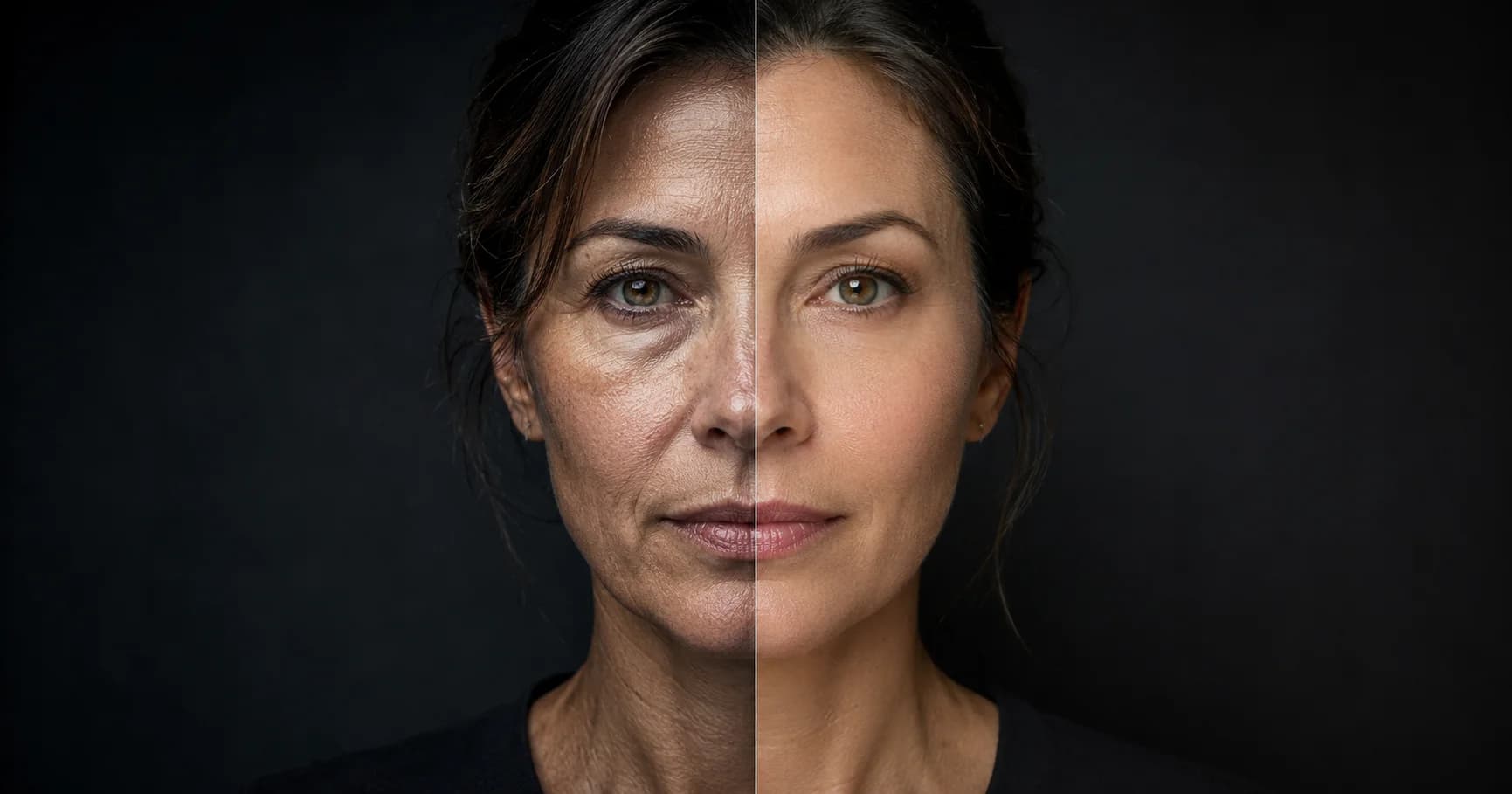
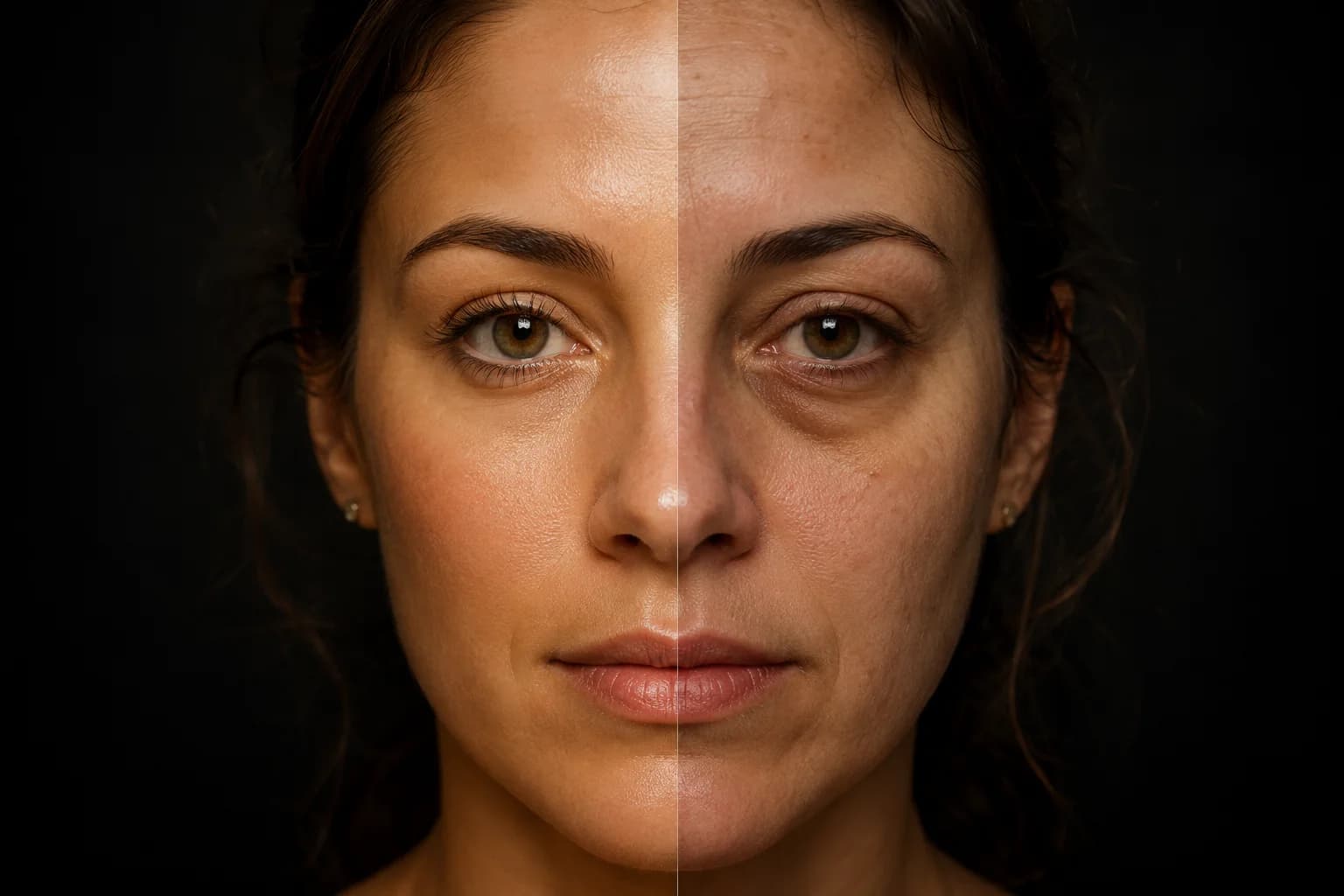
A 2013 follow-up by Sundelin and colleagues identified the specific facial cues observers used to make these judgments: drooping eyelids, redder and more swollen eyes, darker under-eye circles, paler skin, more visible lines around the mouth, and a more downturned mouth. These cues were reliably detected by observers after just two nights of sleep restriction.
Crucially, these changes were not just about looking tired — they specifically registered as looking older and less healthy. Sleep deprivation produces appearance changes that overlap precisely with the visual signals of aging, which is why poor sleepers are consistently rated as older than their chronological age.
“Sleep-deprived people were rated as less healthy, less attractive, and more tired — and others were less willing to socialise with them.”
What Sleep Actually Does for Your Face
Sleep is when the body releases the majority of its daily growth hormone output — approximately 70–80% of total daily growth hormone is secreted during the first few hours of deep slow-wave sleep. Growth hormone drives cellular repair throughout the body, including the synthesis of new collagen in the dermis and the repair of UV-damaged skin cells. Cutting sleep short reduces growth hormone output and thereby reduces the nightly repair cycle that maintains skin structure.
The immune system's anti-inflammatory activity peaks during sleep. Chronic sleep restriction elevates systemic inflammatory markers — particularly IL-6 and TNF-alpha — that accelerate collagen degradation and impair skin barrier function. This is the mechanism behind the dull, rough skin texture that appears after repeated poor nights of sleep.
Lymphatic drainage of the face also occurs primarily during horizontal rest. The periorbital lymphatic system removes fluid and metabolic waste from around the eyes during sleep. When sleep is insufficient or sleep quality is poor, this drainage is incomplete — the under-eye area retains fluid and metabolic byproducts that produce puffiness, darker circles, and the swollen-lid appearance that raters identify as the clearest fatigue signal.
The Specific Facial Changes Caused by Poor Sleep
Under-eye area: periorbital puffiness from incomplete lymphatic drainage, combined with increased vascular permeability that darkens the skin under the eye through blood pooling. Dark circles become more visible because both contributing mechanisms — pigmentation and vascular show-through — are worsened by sleep loss.
Skin tone: cortisol rises significantly with sleep deprivation, and elevated cortisol reduces skin barrier function and increases trans-epidermal water loss. The result is skin that looks dull, uneven, and lacks the luminosity that well-hydrated, well-oxygenated skin produces. Raters consistently identify pallor as one of the primary sleep-fatigue cues.
Expression and muscle tone: sleep deprivation reduces facial muscle tone — eyelids appear heavier and the corners of the mouth tend to rest lower. This downturning of the mouth corners is one of the most reliably detected fatigue cues in observer studies, because it overlaps visually with the mouth position associated with sadness and age.
Sleeping on your back reduces facial fluid accumulation compared to side or front sleeping, which presses the face into a pillow and partially impedes lymphatic drainage.
Advertisement
How Quickly Does Sleep Deprivation Show on Your Face?
The Sundelin 2013 study showed detectable changes after just two consecutive nights of restricted sleep (five hours per night). A 2015 study by Oyetakin-White and colleagues found that people who self-reported poor sleep quality showed measurably worse skin aging scores, higher fine-line counts, and slower recovery from UV exposure — across a chronic time horizon rather than an acute two-night period.
The acute changes (puffiness, pallor, dark circles) are largely reversible with recovery sleep. The chronic changes — accelerated collagen loss, impaired barrier function, cumulative UV damage from compromised repair — accumulate over months and years and are less reversible. This is the distinction between looking tired after one bad night and looking older after years of insufficient sleep.
AI apparent age estimation is sensitive to both. A test on a well-rested versus poorly rested face will show a measurable apparent age difference from the acute changes alone. Chronically poor sleepers show a persistent gap between their chronological and apparent age that does not resolve with a single good night.
What Good Sleep Does for Your Appearance Over Time
Consistent 7–9 hours of quality sleep is arguably the most cost-effective appearance intervention available. It requires no products, no procedures, and no specialised knowledge — just consistent prioritisation. The mechanisms are direct: maximum growth hormone output drives nightly collagen synthesis; full lymphatic cycles maintain eye-area appearance; cortisol stays suppressed, protecting skin barrier function; and the skin's UV repair mechanisms operate at full efficiency.
The long-term compounding effect is significant. A 2015 study found that good sleepers had 30% better skin recovery from UV exposure than poor sleepers of the same age. Over a decade of consistent good sleep versus five-hours-per-night sleep, the cumulative difference in collagen density, skin evenness, and periorbital appearance is substantial.
If you want to objectively track the impact of sleep on your appearance — both the acute effect of a good night versus a bad one, and the long-term effect of sustained improvement — taking standardised photos and running them through the Guess My Age tool under consistent conditions gives you a data-driven before-and-after rather than a subjective self-assessment.
Frequently Asked Questions
Does lack of sleep make you look older?
Yes — measurably. Controlled studies show that just two nights of restricted sleep produce increases in perceived age that independent observers can reliably detect. Sleep deprivation worsens under-eye circles, increases periorbital puffiness, reduces skin luminosity, and lowers facial muscle tone — all signals that observers associate with age and poor health. Chronic poor sleep accelerates collagen loss through reduced growth hormone output and elevated cortisol.
How quickly does sleep deprivation affect your face?
Acute changes (puffiness, dark circles, pallor) are detectable after just one to two nights of poor sleep. Research by Sundelin and colleagues (2013) confirmed that observers could reliably identify specific facial cues of sleep deprivation after two consecutive nights of five hours of sleep. These acute changes are largely reversible with recovery sleep. Chronic changes from months or years of poor sleep are less reversible.
What does sleep deprivation do to your skin?
Sleep deprivation reduces growth hormone output (which drives collagen synthesis), elevates cortisol (which degrades collagen and impairs skin barrier function), impairs lymphatic drainage (causing puffiness and dark circles), and reduces the nightly UV-damage repair cycle that maintains skin quality. Chronic poor sleep produces measurably worse skin aging scores, higher fine-line counts, and slower recovery from sun exposure compared to good sleepers of the same age.
How many hours of sleep do you need for good skin?
Research consistently supports 7–9 hours as the range for full physiological recovery including skin repair. The most important sleep for appearance is the first 3–4 hours, when growth hormone output peaks during slow-wave sleep. Fragmented sleep that prevents reaching deep slow-wave phases reduces growth hormone output even if total sleep duration is adequate.
Lena Whitmore
Science Writer · Facial Analysis & Appearance Psychology
Lena covers the science of smiles, facial aging, and AI-powered biometrics. She writes evidence-based guides grounded in peer-reviewed research, with a focus on making appearance science accessible and actionable. All tools on Smile Tracker run locally in your browser — your photo is never uploaded anywhere.
Put it to the test
See your results with AI
Upload a photo and get your AI-estimated apparent age and Youthful Energy Score — free, private, instant.
Try Guess My Age Free →Advertisement
Sources