Are Big Foreheads Attractive?
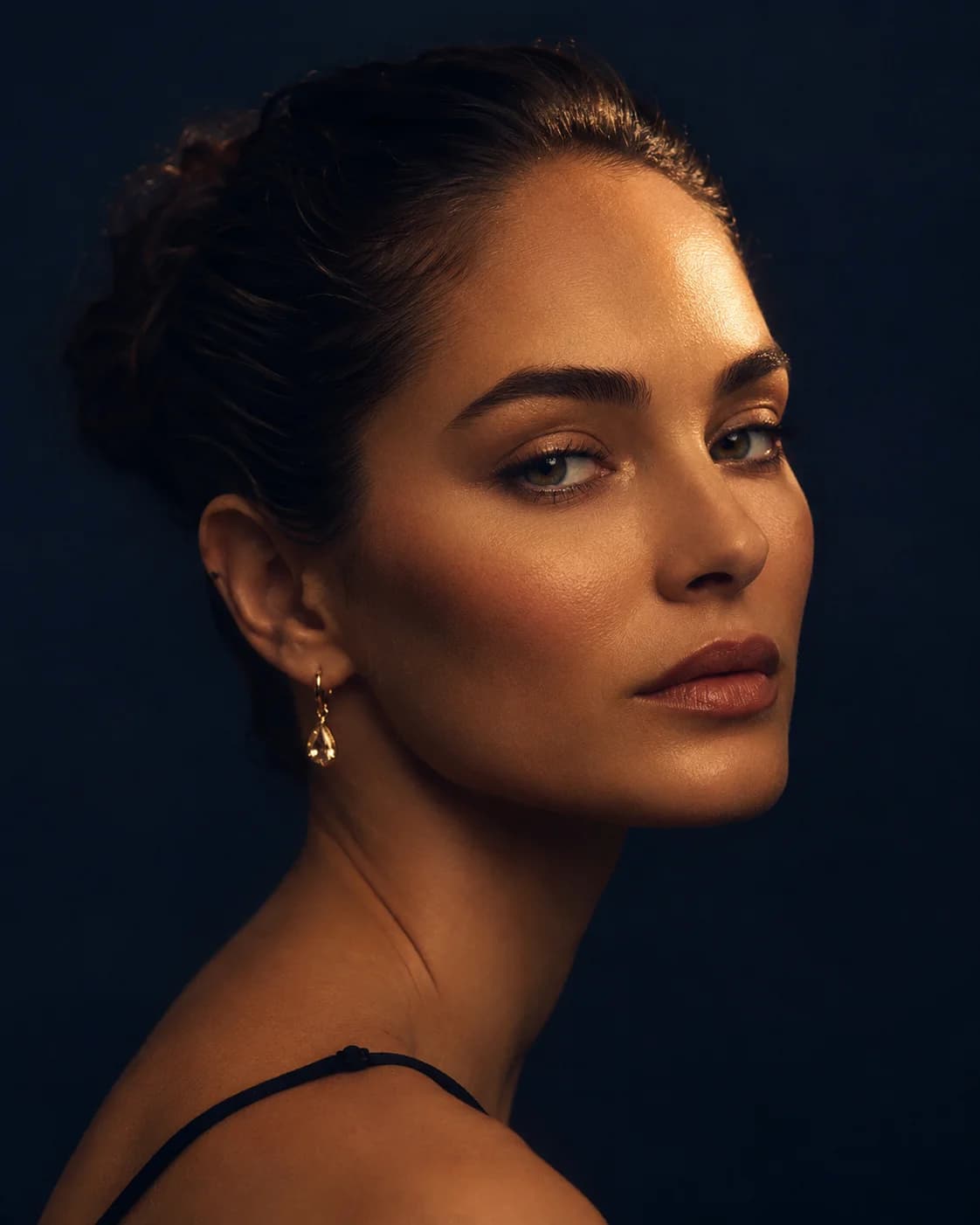
A big forehead can look attractive when it fits the rest of your face. A small one can too. What matters is whether the upper third lines up with the middle and lower thirds, not a single ideal size. Forehead proportions still affect how balanced and intelligent a face looks, and hairstyle changes how large that upper third appears.
The Forehead in Facial Proportions
Classical aesthetic proportion systems divide the face into three equal horizontal zones: the upper third (hairline to brow), the middle third (brow to nose base), and the lower third (nose base to chin). The forehead comprises the entire upper third. When this zone is proportionate — roughly equal to the middle and lower thirds — the face reads as balanced and harmonious.
Deviation from equal thirds in either direction is perceived as a harmony violation. A forehead significantly larger than the lower two thirds creates a top-heavy visual imbalance. A very low forehead creates the opposite — a face that appears bottom-heavy or with features concentrated in the lower half.
Anthropometric studies of attractive faces find that the ideal upper-third-to-face-height ratio sits between 0.28 and 0.35 — roughly equal to the lower two thirds combined. This range is wide enough that most people fall within it; extreme deviations are relatively uncommon.
Does a Large Forehead Affect Attractiveness?
Research shows the effect of forehead size on attractiveness is moderate but real, and heavily mediated by other facial proportions. A larger forehead on a face with a strong lower face (defined jaw and chin) is perceived as less disharmonious than the same forehead on a face with a smaller lower face. The key is the balance between upper and lower thirds.
Cultural context also matters. High foreheads were idealised in Renaissance Europe, and they remain associated with intellectual and aristocratic aesthetics in some cultural frameworks. The association between a higher forehead and perceived intelligence has been found in multiple modern studies as well.
The most consistent finding is that forehead proportions affect face shape perception before they affect raw attractiveness. A higher forehead makes a face appear more oval or elongated. A lower forehead makes it appear rounder. Since oval is the most broadly attractive face shape in preference studies, a moderate forehead height tends to produce a positive proportional effect.
Hairline Shape and Its Effects
The shape of the hairline matters as much as forehead height. A straight hairline creates a square or rectangular upper face impression. An M-shaped or V-shaped hairline adds visual interest but also draws attention to the hairline itself. A rounded hairline creates the most oval upper face impression.
Hairline recession in men fundamentally changes forehead perception. Early recession typically increases perceived forehead height, which can either improve or disrupt facial thirds balance depending on the original proportions. Men with naturally high foreheads often find that moderate hairline recession changes their face very little; those with originally proportionate thirds experience a more noticeable disruption.
Hairline symmetry is also relevant: an asymmetric hairline reads as a mild facial asymmetry and can affect overall harmony perception. This is more visible in men with receding hairlines where the asymmetry is prominent.
Advertisement
Perceived Intelligence and the Forehead
The association between high foreheads and intelligence is documented across multiple independent studies. Research using morphed faces found that adding forehead height increased ratings of perceived intelligence, while reducing it decreased them — across both male and female faces.
The evolutionary origin of this association is likely connected to neoteny — the retention of juvenile features into adulthood. Infants and young children have proportionally large foreheads relative to face size as the brain develops faster than the face. High foreheads in adults may trigger a subliminal association with these developmental cues, which are also associated with approachability.
Practically, a proportionally higher forehead carries a nuanced signal: it may reduce some dimensions of aggressive attractiveness while enhancing perceived intellect and approachability. For professional and academic contexts, this is often a net positive.
How to Work With Your Forehead Proportions
Hairstyle is the primary tool for visual adjustment of forehead proportions. For a larger forehead, styles with volume at the sides rather than top, and with hair brought onto the forehead (bangs, fringe, or forward-swept styles), reduce perceived forehead height. For a smaller forehead, styles with more volume at the top and hair swept back increase perceived height.
Makeup contouring can shade the forehead to reduce its visible area. Bronzer or contouring powder applied to the hairline and upper forehead reduces the visual contrast that defines the forehead edge, creating the impression of a lower hairline.
Facial hair on the chin and jaw can help rebalance a long upper face by adding visual weight to the lower third, making the facial thirds appear more proportionate even if the absolute forehead size remains unchanged.
Styling your hair forward onto the forehead reduces its perceived size. Swept-back styles with volume at the top increase it. Both are instantly reversible tools.
Forehead and the Facial Thirds Score
In the Rate My Face tool, the facial thirds metric directly measures the proportion of your upper face relative to the middle and lower face. This metric is calibrated to score proportional balance — with equal thirds receiving the highest score and significant deviations producing lower scores.
If your facial thirds score is your lowest metric, forehead proportions are worth examining in relation to your overall face balance. Photo angle and hair styling both influence this score, so testing different photos before drawing conclusions about your underlying proportions is worth the effort.
Frequently Asked Questions
Are big foreheads attractive?
Yes, when the forehead fits the rest of the face. A moderate-to-high forehead is often read as intelligent and approachable. A forehead that is much taller than the middle and lower thirds looks top-heavy. Small vs large matters less than that balance.
What is the ideal forehead size?
Classical aesthetic proportion guidelines place the ideal upper third at roughly equal to the middle and lower thirds. Anthropometric studies find an upper-third ratio of 0.28–0.35 of total face height. Most people fall within this range; the majority of forehead-related concerns are about slight deviations rather than extreme proportions.
Does forehead size affect how intelligent you look?
Yes, in controlled studies. Faces with higher foreheads are consistently rated as appearing more intelligent, independent of actual intelligence. This association is found across cultures and age groups, likely connected to the subliminal link between large foreheads and the proportions of young children whose brains develop faster than their faces.
Can a hairstyle make your forehead look smaller?
Yes. Styles that bring hair forward onto the forehead — bangs, fringe, or forward-swept styles — directly reduce the visible area of the forehead and its perceived height. Adding width at the sides with volume or waves also reduces the perception of forehead height by changing the proportional balance of width to height.
Does a receding hairline make your forehead look bigger?
Yes. Hairline recession increases the visible forehead area and typically shifts the facial thirds balance toward a higher upper third. Whether this is a significant attractiveness concern depends on the original proportions — men with naturally proportionate thirds pre-recession often experience a more noticeable proportional shift. Styling choices can partially compensate.
Lena Whitmore
Science Writer · Facial Analysis & Appearance Psychology
Lena covers the science of smiles, facial aging, and AI-powered biometrics. She writes evidence-based guides grounded in peer-reviewed research, with a focus on making appearance science accessible and actionable. All tools on Smile Tracker run locally in your browser — your photo is never uploaded anywhere.
Put it to the test
See your results with AI
Upload a photo and get your AI facial proportion analysis, symmetry measurement, and feature breakdown — free, private, instant.
Analyse My Face Free →Advertisement
Sources
Related reading
Golden Ratio Face: How to Measure Yours and What It Actually Means
May 2026 · 7 min read
What Face Shape Do I Have? How to Find Out and What It Means
May 2026 · 7 min read
High Cheekbones vs Low Cheekbones: Attractiveness and What They Signal
May 2026 · 6 min read
What Is Facial Harmony? The Science of Features That Work Together
May 2026 · 6 min read