Hooded Eyes: Are They Attractive and What Do They Communicate?
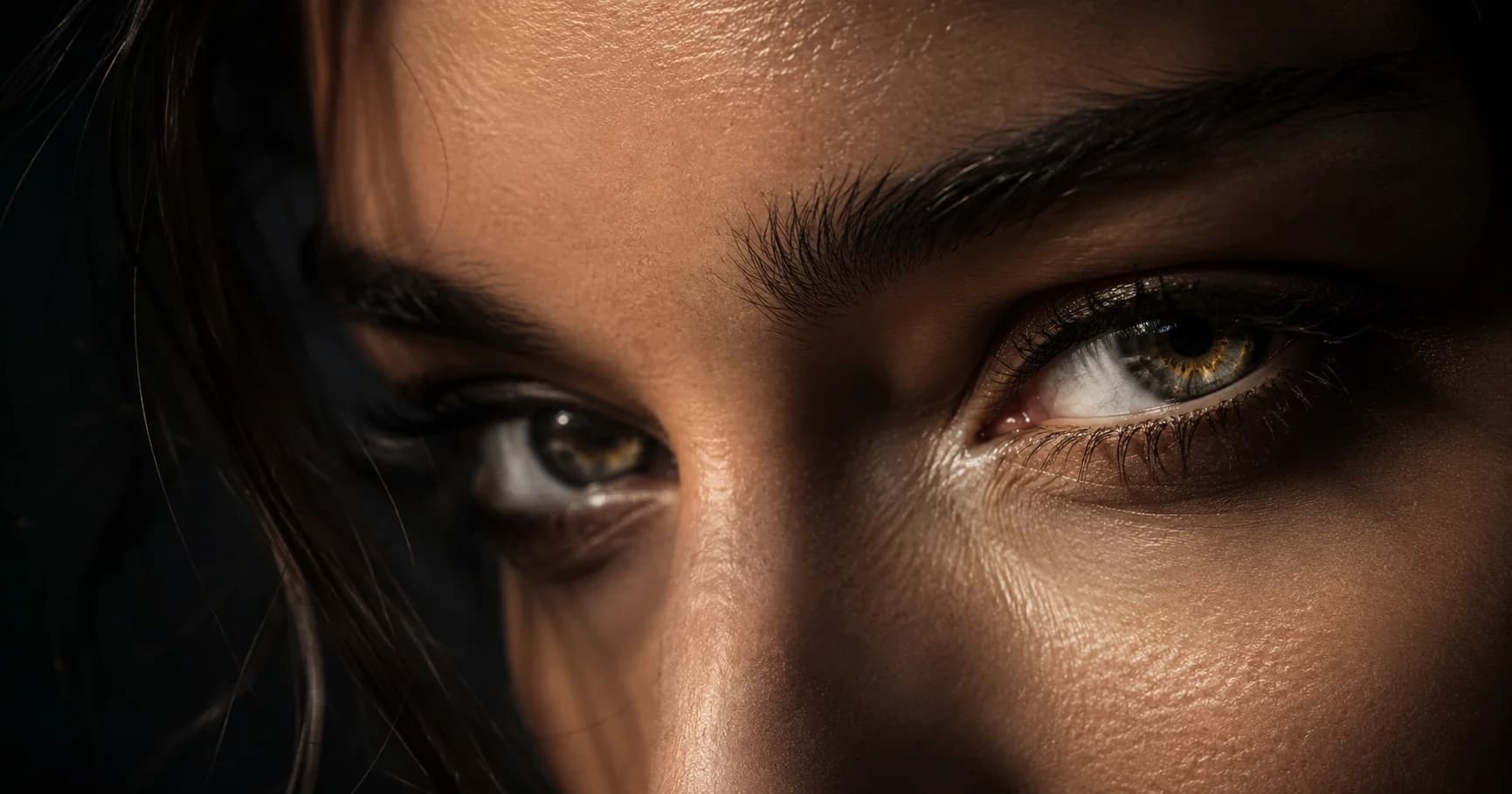
Hooded eyes — where the upper eyelid crease is hidden or partially concealed by an overhanging brow or upper lid skin — are one of the most common and distinctive eye shapes. They appear frequently in attractiveness research, are often associated with intensity and mystery in cultural contexts, and are the defining eye feature of many widely recognised faces. Yet they are also one of the most misunderstood eye shapes — frequently confused with ptosis (drooping from muscle weakness) and often presented as a cosmetic concern when they are simply a normal anatomical variation with their own aesthetic properties. Here is what the science says.
What Hooded Eyes Actually Are — Anatomy and Causes
In a non-hooded eye, the upper eyelid crease (the fold where the orbital septum attaches) sits above the iris when the eye is open, creating a visible 'platform' of lid skin between the lash line and the crease. In a hooded eye, the brow fat pad or upper lid skin descends low enough to cover or partially cover this crease — sometimes entirely concealing the upper lid platform when looking straight ahead.
Hooding occurs for several anatomical reasons. The most common is genetic — a naturally low-sitting brow, a deep orbital rim (eye socket), or a large upper lid fat pad positions the overlying tissue lower. Some ethnicities have higher rates of hooding due to the anatomy of the orbital region: Asian eye shapes often feature a single eyelid (epicanthal fold) that creates a form of hooding; deep-set Western European faces often feature brow-related hooding.
Age-related hooding is a separate category: as the brow and forehead descend with age and the upper lid skin loses elasticity, previously non-hooded eyes can develop hooding. This is distinct from congenital hooding and is the type associated with the surgical procedure blepharoplasty. True ptosis (drooping caused by levator muscle weakness) is different again and requires medical evaluation.
Are Hooded Eyes Attractive? What Research Shows
The direct research on hooded eyes and attractiveness is limited but suggestive. General eye-attractiveness research has consistently found that larger visible iris area and wider eye opening correlate positively with attractiveness ratings — measures on which hooded eyes can score lower if the hooding significantly reduces visible lid space.
However, the relationship is not simple. Several of the faces used in multi-study attractiveness research as 'high-attractiveness' stimuli have visibly hooded eyes — suggesting that hooded eyes do not meaningfully reduce overall attractiveness when the rest of the facial structure is strong. The eye shape interacts with other features: prominent cheekbones and a strong brow ridge often complement hooded eyes by providing the structural context that makes the deep-set, intense appearance read as distinctive rather than heavy.
In cultural contexts, hooded eyes are strongly associated with intensity, mystery, and a 'smouldering' quality that is considered highly attractive in many contexts. This perception may be partly because hooding creates a naturally half-lidded appearance that resembles the slightly narrowed eyes associated with attraction and relaxed confidence.
If you have hooded eyes, the most flattering photo angle is slightly above eye level — this opens the visible lid area and reduces the shadow created by the overhanging tissue.
Famous People With Hooded Eyes
Hooded eyes appear across many of the most photographed and widely considered attractive faces. Jennifer Lawrence, Brad Pitt, Taylor Swift, Blake Lively, and Margot Robbie all have some degree of upper lid hooding — in each case, it contributes to the 'intense' quality of their gaze rather than reducing their attractiveness.
This cultural association is relevant because it demonstrates that the attractiveness of an eye shape is not determined by the shape alone but by its interaction with other features and the overall impression it creates. Hooded eyes on a face with strong cheekbones, an expressive brow, and good facial symmetry typically read as striking and distinctive. The same eye shape on a face with different structural features may read differently.
The consistent appearance of hooded eyes among widely-admired faces has contributed to a shift in how the shape is discussed — from a cosmetic concern to a distinctive feature with its own aesthetic identity. Whether this reflects genuine preference change or simply normalisation through visibility is an open research question.
Advertisement
Hooded Eyes and the Duchenne Smile: An Important Interaction
One practical implication of hooded eyes is their interaction with smile expression. The Duchenne smile's primary visual marker is orbicularis oculi activation — the narrowing of the lower eyelid that produces cheek lift and eye crinkle. In people with prominent upper lid hooding, this narrowing is less visible from the front because the upper lid tissue already covers much of the visible lid area.
This means that people with hooded eyes may actually be producing a full, genuine Duchenne smile while it reads as less eye-engaged than the same smile on a less hooded face. The cheek lift and crow's feet are still present and visible — and are good indicators of genuine smiling even when lid narrowing is partially obscured by hooding.
When using an AI smile analyzer, people with hooded eyes should expect that the eye squint component may score slightly lower not because their smile is less genuine but because the visible lid narrowing that the algorithm uses as a signal is partially masked by the eye anatomy. The cheek lift and mouth curve components are unaffected by eye shape.
How to Photograph Hooded Eyes Flatteringly
Camera angle is the single most impactful variable for hooded eyes in photography. A camera positioned slightly above eye level reduces the shadow cast by the overhanging brow tissue and reveals more of the visible lid area. This is the angle used in the vast majority of professional portraits for good reason — it is universally flattering but especially significant for hooded eye shapes.
Lighting direction also matters. Side lighting from slightly above (at roughly 45 degrees to the face and 45 degrees above eye level — the classic 'Rembrandt lighting') creates shadow definition that complements a deep-set eye without darkening the lid area further. Direct frontal lighting at eye level reduces shadow and shows maximum lid visibility.
Expression matters too. Fully raised brows briefly open the visible lid area — which is why genuine surprise or excited expressions often look particularly good on hooded-eye faces. Slightly raised brows held in an interested expression rather than a flat neutral can significantly change the impression of the eye area in photos.
Frequently Asked Questions
What are hooded eyes?
Hooded eyes occur when the upper eyelid crease is partially or fully covered by an overhanging brow fat pad or upper lid skin, reducing or eliminating the visible 'platform' of eyelid between the lash line and the crease. They are a normal anatomical variation — not a medical condition — caused by genetics (naturally low brow or deep orbital rim), ethnicity (common in East Asian and deep-set Western European facial structures), or ageing (brow descent and reduced skin elasticity).
Are hooded eyes considered attractive?
Hooded eyes are associated in cultural contexts with intensity, mystery, and a 'smouldering' quality that is considered attractive. They appear frequently among widely-admired faces. Direct research on eye shape and attractiveness is limited, but the consensus is that hooded eyes do not reduce attractiveness when the surrounding facial structure is strong — they interact with features like cheekbones and brow definition to create a distinct look. The relationship between eye shape and attractiveness is contextual, not absolute.
What is the difference between hooded eyes and ptosis?
Hooded eyes are a normal anatomical variation — the overlying tissue (brow fat pad or upper lid skin) sits low due to genetics or normal ageing, covering the lid crease. Ptosis is a medical condition where the levator muscle that lifts the upper eyelid is weakened, causing the eyelid itself to droop and potentially obstruct vision. Hooded eyes do not obstruct vision and require no medical treatment. Ptosis may require surgery and should be evaluated by an ophthalmologist if vision is affected.
How do I know if I have hooded eyes?
Look straight ahead in a mirror. If you cannot see your upper eyelid crease (the fold above the movable lid), or can only see a small portion of it, you likely have hooded eyes. Another test: place your finger on your brow bone and gently lift the brow tissue upward slightly — if significantly more lid area becomes visible, the overhanging tissue is the cause of the hooded appearance. If lifting does not change the lid visibility, the hooding may be from the lid itself rather than the brow.
Do hooded eyes affect how you look when smiling?
Yes, in a specific way. Genuine (Duchenne) smiles involve the orbicularis oculi narrowing the lower eyelid — an expression that is partially masked in hooded eyes because the upper lid tissue already reduces visible lid area. This means hooded-eye smiles may appear less eye-engaged in photos than they actually are. The cheek lift and outer-eye crow's feet components of a genuine smile are unaffected by hooding and remain reliable indicators of smile authenticity.
Lena Whitmore
Science Writer · Facial Analysis & Appearance Psychology
Lena covers the science of smiles, facial aging, and AI-powered biometrics. She writes evidence-based guides grounded in peer-reviewed research, with a focus on making appearance science accessible and actionable. All tools on Smile Tracker run locally in your browser — your photo is never uploaded anywhere.
Put it to the test
See your results with AI
Upload a photo and get your AI facial proportion analysis, symmetry measurement, and feature breakdown — free, private, instant.
Analyse My Face Free →Advertisement
Sources
Related reading
How to Smile with Your Eyes: The Smize Technique Explained
May 2026 · 6 min read
What Makes a Face Attractive? The Science Behind Facial Attractiveness
May 2026 · 7 min read
How to Take a Good Selfie: Lighting, Angle, and Expression Guide
May 2026 · 6 min read
Types of Eye Shapes: Which Is Most Attractive?
June 2026 · 9 min read