What Makes a Nose Attractive? The Science of Nose Shape
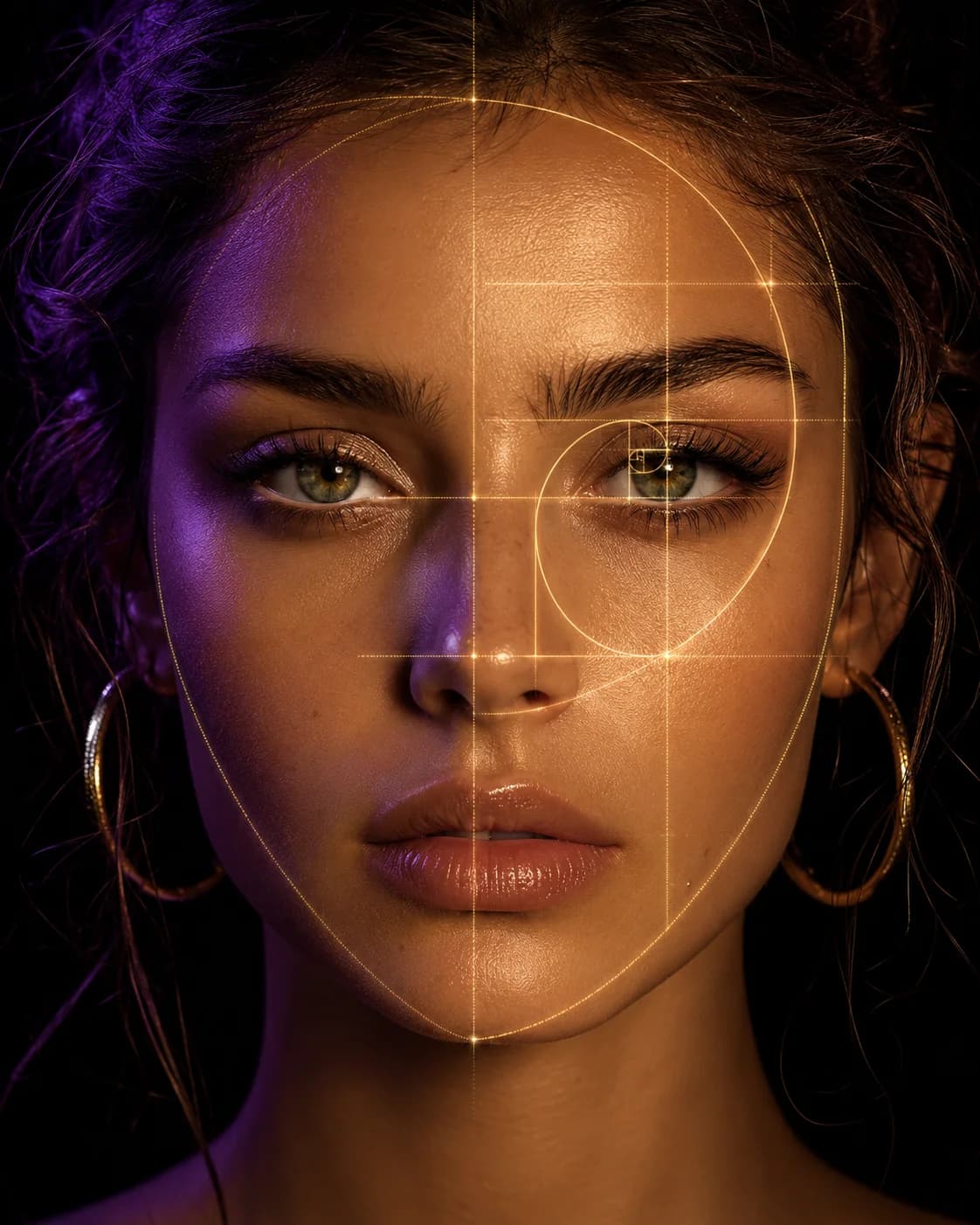
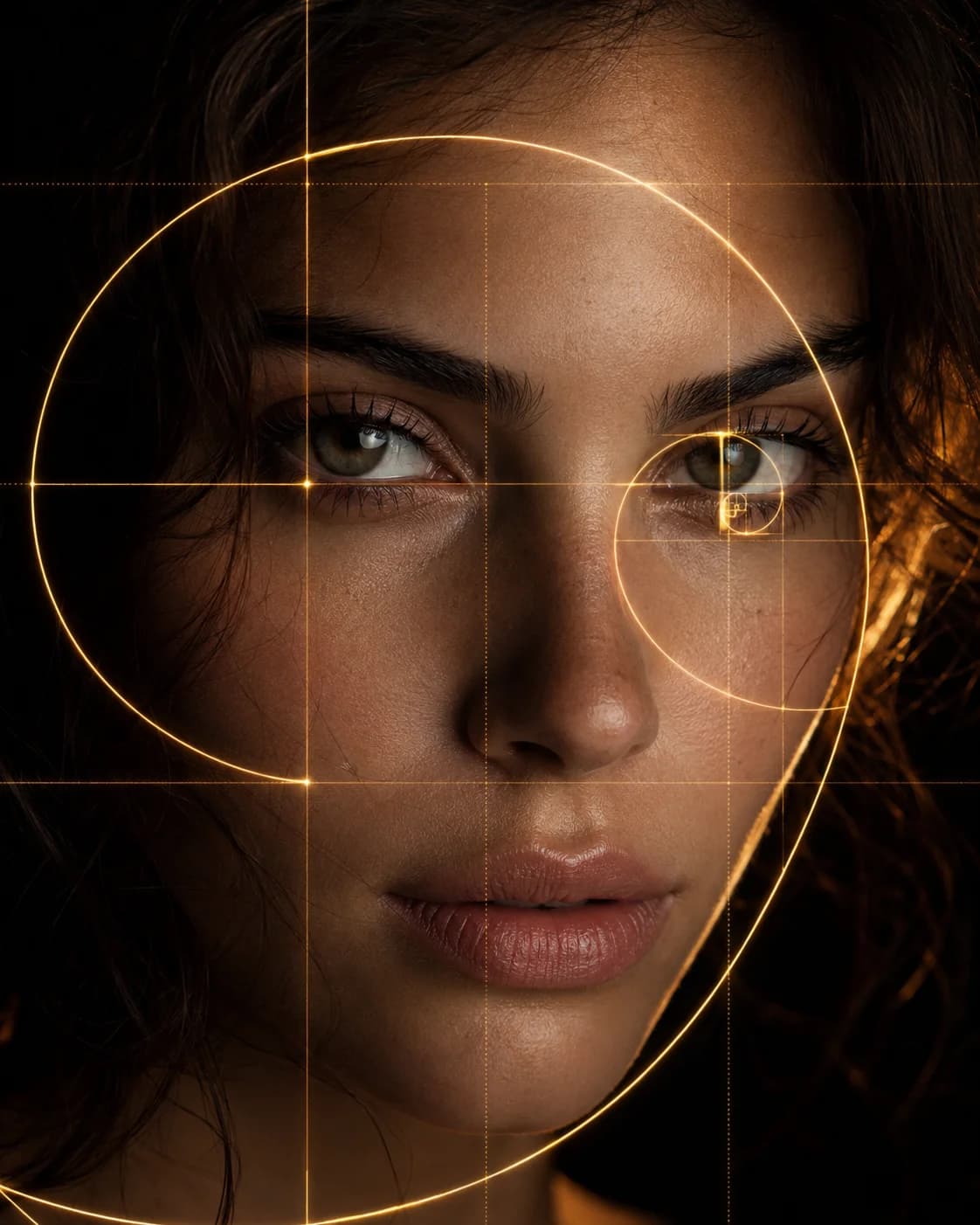
The nose occupies the visual centre of the face — it is often the first feature the eye lands on after initial face recognition. Despite being central to overall facial aesthetics, nose attractiveness research is surprisingly specific: studies consistently identify particular proportions, angles, and dimensional relationships that predict attractiveness ratings across diverse populations.
The Proportions That Define Nose Attractiveness
Rhinoplasty research has produced detailed data on which nasal dimensions correlate with attractiveness. The nasofacial angle — the angle between the nose and forehead — ideally falls between 115–135°. The nasolabial angle (between the nose base and upper lip) is ideally 90–95° in men and 95–110° in women. Nasal tip projection — how far the tip extends from the face — should ideally equal approximately 50–60% of nose length.
Width is the most commonly cited concern in nose attractiveness research. The ideal nasal base width approximates the distance between the inner corners of the eyes (the intercanthal distance), which produces what observers describe as 'proportional' nasal width. Noses significantly wider or narrower than this ratio receive lower attractiveness ratings in cross-cultural studies.
Bridge height and straightness also affect perceived attractiveness. Research shows that a straight or very slightly concave bridge profile is rated most attractive in women, while a straight or very slightly convex (Roman) bridge is rated most attractive in men — reflecting sex-specific aesthetic preferences that align with dimorphism signals.
Cultural and Individual Variation in Nose Beauty Standards
While certain proportions show cross-cultural consistency (particularly width-to-face ratio and tip projection), significant cultural variation exists in nose aesthetic ideals. Research published in the Aesthetic Surgery Journal found that British, Afro-Caribbean, East Asian, and Middle Eastern patients presented surgeons with markedly different ideal nose reference photos — reflecting genuine differences in beauty standards rather than a universal template.
This matters because much of the early rhinoplasty research — and many 'ideal nose proportion' studies — used predominantly white European faces as reference points. Research specifically examining attractiveness within different ethnic groups finds different optima for bridge height, tip shape, and nostril configuration. Attractive nose features are relative to the face they inhabit and the cultural context in which they are perceived.
“There is no universal ideal nose — there are proportions that fit each face, and those proportions are not culturally neutral.”
How Much Does the Nose Actually Affect Overall Attractiveness?
Studies measuring the nose's contribution to total facial attractiveness find a moderate but not dominant effect. A 2020 study in JAMA Facial Plastic Surgery showed that when subjects were shown faces with digitally altered noses, overall attractiveness scores changed by an average of 7–12 points on a 100-point scale — a meaningful but not overwhelming contribution compared to features like eye shape and jaw definition.
The nose's effect on perceived attractiveness is disproportionately large for faces where it departs significantly from proportional norms — very broad, very bulbous, or very asymmetrical noses attract more observer attention and reduce attractiveness ratings more than proportional deviations in other features. When within a normal proportional range, nose variation contributes relatively little to attractiveness ratings.
Face symmetry, skin quality, and eye region consistently score as higher-weighted attractiveness contributors than nasal shape in studies where features are isolated and ranked. This aligns with the practical reality that small nose changes rarely transform overall facial attractiveness as dramatically as patients sometimes hope.
Advertisement
Frequently Asked Questions
What nose shape is considered most attractive?
Research points to a straight or slightly refined bridge, a tip projection of roughly 50–60% of nose length, and a base width approximately equal to the intercanthal distance (gap between inner eye corners). However, attractiveness standards vary by culture and are most meaningfully defined relative to the proportions of the individual face — a nose that looks ideal on one face type may not be on another.
Does nose size affect facial attractiveness?
Yes, but within limits. Noses that deviate significantly from proportional width-to-face ratios reduce attractiveness ratings, but within a normal proportional range, nose size variation contributes relatively little to overall facial attractiveness scores. Other features — eye region, jaw definition, skin quality, and symmetry — contribute more to overall attractiveness ratings than nose shape in most studies.
Are bigger noses more attractive on men?
Research suggests a slight sex difference: men with more prominent nasal bridges (a Roman or straight strong bridge) are rated more attractive in some studies, consistent with the dimorphism principle that masculine features can signal higher testosterone and health. However, this preference is not universal — cultural context and individual variation are both significant.
Can non-surgical nose reshaping change nose attractiveness?
Non-surgical rhinoplasty (filler) can temporarily alter nasal profile by adding volume to camouflage bumps or lifting tip projection. It is effective for specific goals (smoothing a dorsal hump in profile, slightly elevating a drooping tip) but cannot reduce nose size or width. Results last 12–18 months. For permanent shape changes or size reduction, surgical rhinoplasty remains the only option.
Lena Whitmore
Science Writer · Facial Analysis & Appearance Psychology
Lena covers the science of smiles, facial aging, and AI-powered biometrics. She writes evidence-based guides grounded in peer-reviewed research, with a focus on making appearance science accessible and actionable. All tools on Smile Tracker run locally in your browser — your photo is never uploaded anywhere.
Put it to the test
See your results with AI
Upload a photo and get your AI facial proportion analysis, symmetry measurement, and feature breakdown — free, private, instant.
Analyse My Face Free →Advertisement
Sources