Smile Exercises: How to Train Your Facial Muscles for a Better Smile
A smile is a motor skill. Like any motor skill, it is produced by specific muscles — primarily the zygomatic major (which raises the mouth corners and upper lip) and the orbicularis oculi (which narrows the lower eyelids and raises the cheeks) — and like any motor skill, those muscles can be trained. Most people assume their smile is fixed: either they have a good one or they do not. The neuroscience and facial anatomy both disagree. Muscle memory is built through repetition of specific, correctly executed movements, and the smile is no exception. These exercises target the exact muscles that AI analysis identifies as the key differentiators between a high-scoring genuine smile and a flat or staged one.
The Two Muscles Your Smile Depends On
The zygomatic major originates at the cheekbone (zygomatic arch) and inserts at the corner of the mouth. When it contracts, it pulls the mouth corner upward and outward, producing the characteristic upward curve of a smile. It is a voluntary muscle — you can contract it on command. It is also the muscle most people default to when smiling 'on command,' producing a technically correct but often flat expression.
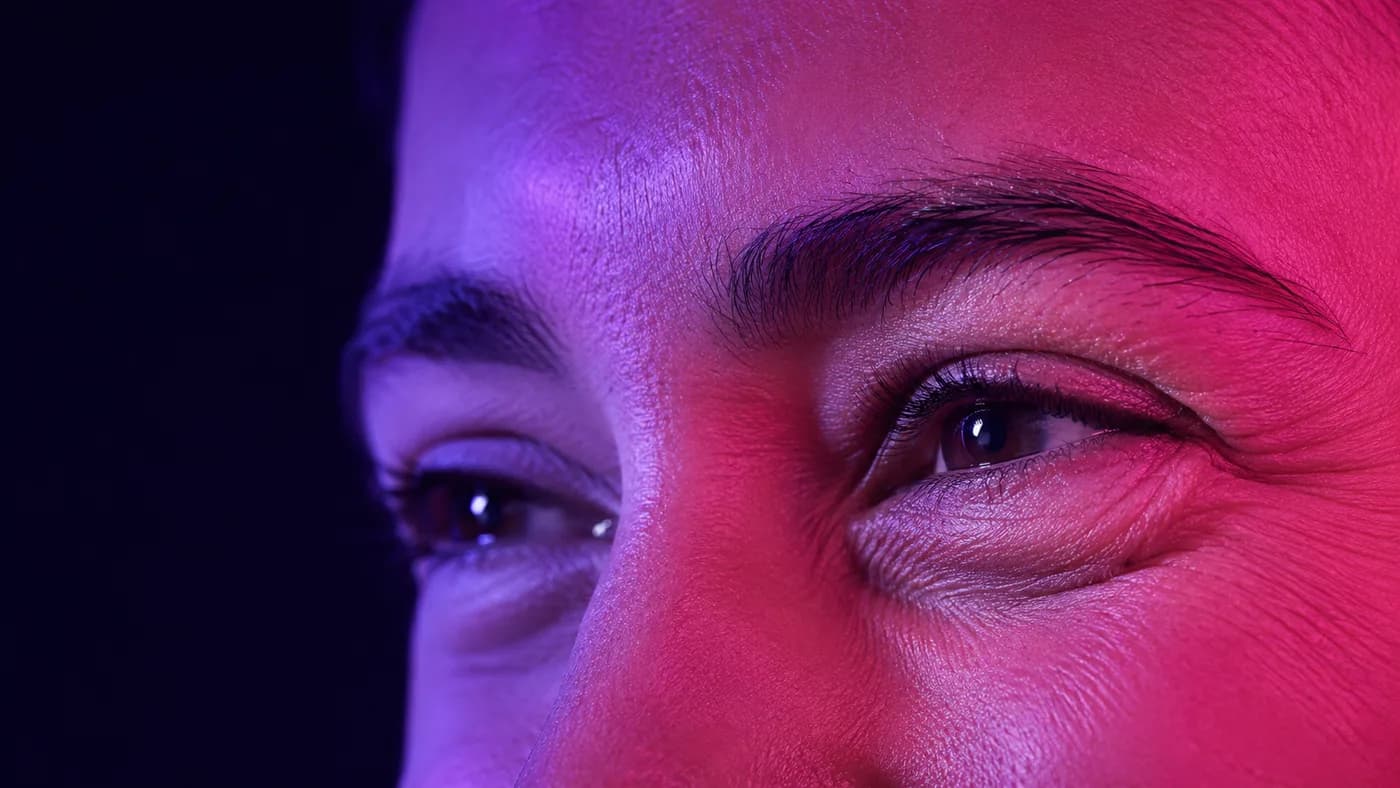
The orbicularis oculi is the ring-shaped muscle surrounding the eye. Its outer portion — the orbital portion — is responsible for the squint, cheek lift, and outer-eye crow's feet that characterise a genuine Duchenne smile. Unlike the zygomatic major, the orbital portion of the orbicularis oculi is largely involuntary — it fires automatically in response to genuine positive emotion and cannot be fully controlled by most people without specific training.
Training the smile means two things: ensuring the zygomatic major activates symmetrically and fully, and developing enough neural connection to the orbicularis oculi to invite its voluntary engagement. Neither requires equipment. Both require consistency over weeks rather than days.
Exercise 1: The Cheek Raiser (Orbicularis Oculi Isolation)
This exercise trains the orbital orbicularis oculi — the eye muscle that is the key marker of a genuine smile. Sit in front of a mirror. Without moving your mouth at all, try to raise your cheeks and narrow your lower eyelids as if you are smiling but only from the cheeks up. Your mouth stays completely flat. Your focus is entirely on the movement below your eyes and across your cheekbones.
Hold the raised position for 3 seconds, then release completely. Repeat 10 times. This is genuinely difficult at first — most people find the movement alien and involuntary. The goal is not to produce a perfect cheek raise on day one but to establish a neural pathway that gives you increasing voluntary access to this muscle over time.
After two weeks of daily practice (30 reps per session), most people report being able to initiate the cheek lift more reliably and can feel the muscle engaging in their natural smiles. This single exercise produces more improvement in genuine-looking smiles than any mouth-focused exercise because it addresses the muscle that is actually missing from most posed expressions.
Do this exercise during dead time: waiting for the kettle, before brushing your teeth, at a red light. 30 reps takes under two minutes.
Exercise 2: The Zygomaticus Stretch (Bilateral Symmetry)
Asymmetric smiles often come from uneven zygomatic major activation — one side contracts more fully than the other. This exercise corrects that. In a mirror, produce your natural smile and hold it. Study whether both mouth corners are raised equally. Most people will notice one side rises higher or sooner than the other.
Now deliberately focus attention on the weaker side. Without using your fingers, try to raise that corner to match the stronger side. Hold the symmetric position for 5 seconds. Release fully. Repeat 10 times. The initial awareness — just noticing which side is weaker — is already progress. The deliberate effort to symmetrise activates the motor learning system that will produce the change.
Combining this with the cheek raiser produces a complete bilateral exercise set. Do the cheek raiser for 10 reps, then the symmetry exercise for 10 reps, then combine them — symmetrically raised cheeks and symmetrically raised mouth corners together. The combined expression is close to a full Duchenne smile and training it in sequence builds the full movement pattern.
Film your smile (your phone's front camera works perfectly) so you can study it objectively. Most people significantly underestimate the asymmetry in their natural smile until they see it on video.
Advertisement
Exercise 3: Jaw Release and Relaxation (The Foundation Exercise)
Jaw tension is the hidden inhibitor of most people's natural smile. The masseter muscle — the primary jaw muscle — when chronically clenched, limits the free upward movement of the zygomatic major and produces a constricted, effortful-looking smile. Before any smile exercise, a jaw release makes every other movement more effective.
Open your mouth wide, as if yawning, and hold for 5 seconds. Then slowly close while keeping the jaw relaxed — no clenching. Roll your jaw gently in a circular motion, 5 times in each direction. Then take a slow nasal breath in, and breathe out slowly through the mouth while allowing the jaw to drop slightly on the exhale. You should feel the masseter soften.
Perform this sequence before any smile practice session and also before photos or social situations where you want your best smile. The difference in smile quality — measured by jaw openness and overall expressiveness — between a clenched jaw and a relaxed one is visible in photos and measurable in AI smile scoring.
Exercise 4: The Memory Anchor (Emotional Activation Training)
The single most effective smile exercise is not a muscle drill — it is emotional activation practice. The orbicularis oculi fires most reliably in response to genuine positive emotion. Training your ability to access that emotion quickly, on demand, gives you voluntary access to the eye muscle through the limbic pathway rather than the voluntary motor pathway.
Choose three specific memories that reliably produce a genuine smile in you — not categories ('happy times') but specific moments (a specific funny incident, a specific moment with someone you love, a specific absurd observation). Practice vividly recalling each one in 5 seconds or less, letting the feeling build and allowing whatever expression arises naturally.
The goal of this practice is speed and reliability — building the ability to access a genuine emotional state in the 2–3 seconds available before a photo is taken or before you greet someone. Pair this with the cheek raiser exercise and the jaw release, and you have a complete three-part system that addresses the emotional, muscular, and tension components of smile quality.
How to Track Your Progress With AI
Subjective assessment of your own smile improvement is unreliable — the mere-exposure effect means you will feel familiar with whatever face you are training, regardless of whether it has actually changed. Objective measurement is the solution.
Every two weeks, take a standardised photo: same lighting (window facing you or a ring light), same camera height (eye level), same neutral starting expression, then produce your best natural smile. Upload it to the Smile Tracker analyzer. Record your four component scores: mouth curve, cheek lift, eye squint (Duchenne marker), and jaw openness. Track these numbers over time.
Most people who practice the cheek raiser exercise and memory anchor consistently see measurable improvement in the eye squint score within 3–4 weeks. The cheek lift score tends to improve alongside the eye squint as the orbicularis oculi activates more fully. The mouth curve and jaw openness scores typically improve fastest because they involve the voluntary zygomatic major and relaxed masseter — both respond quickly to deliberate practice.
Frequently Asked Questions
Do smile exercises actually work?
Yes, for specific, measurable improvements. The zygomatic major (mouth-corner muscle) responds quickly to targeted practice — symmetry and activation depth both improve with consistent exercise. The orbicularis oculi (eye muscle) is harder to train but responds to both direct isolation practice (cheek raiser exercise) and emotional activation training over 2–4 weeks. Research on facial expression training confirms that motor learning principles apply to facial muscles as they do to other skeletal muscles.
How do you train your facial muscles for a better smile?
The three highest-impact exercises: (1) cheek raiser — isolates the orbicularis oculi by raising cheeks without moving the mouth, building voluntary access to the eye-engagement muscle; (2) bilateral symmetry drill — identifies and corrects uneven zygomatic major activation between the two sides of the face; (3) jaw release — relaxes the masseter to allow the zygomatic major to move freely. Combine with memory anchor practice (emotional activation training) for the most complete approach.
How long does it take to improve your smile?
For muscle symmetry and jaw relaxation improvements: typically 2–4 weeks of daily practice. For orbicularis oculi engagement (the eye muscle): 3–6 weeks of consistent cheek raiser and emotional activation practice before measurable improvement in most people. For the full transformation from a posed to a more genuine-looking smile: most people notice significant change by 4–8 weeks when practicing 2–3 minutes daily. AI smile score tracking makes progress objective rather than relying on subjective self-assessment.
Can you improve a fake-looking smile?
Yes — and this is specifically what smile exercises are designed to do. A fake-looking smile is almost always a zygomatic-major-only smile (mouth only, eyes uninvolved). Improving it means developing access to the orbicularis oculi, which requires both direct muscle training (cheek raiser exercise) and emotional activation practice (memory anchor drill). Both approaches build the neural pathway that allows the eye muscle to engage alongside the mouth, producing the eye involvement that distinguishes a genuine from a posed smile.
What muscles are used when you smile?
The primary smile muscles are: the zygomatic major (runs from the cheekbone to the mouth corner — contracts to raise the mouth corners upward); the orbicularis oculi orbital portion (ring muscle around the eye — contracts to raise the cheeks, narrow the lower eyelids, and produce crow's feet in a genuine smile); and the levator labii superioris (raises the upper lip, widening the mouth opening). Secondary muscles including the buccinator and risorius contribute to smile width. A full Duchenne smile activates all of these simultaneously.
Lena Whitmore
Science Writer · Facial Analysis & Appearance Psychology
Lena covers the science of smiles, facial aging, and AI-powered biometrics. She writes evidence-based guides grounded in peer-reviewed research, with a focus on making appearance science accessible and actionable. All tools on Smile Tracker run locally in your browser — your photo is never uploaded anywhere.
Put it to the test
See your results with AI
Upload a photo and get your personalized Smile Score, smile type, and eye engagement reading — free, private, instant.
Analyze My Smile Free →Advertisement
Sources