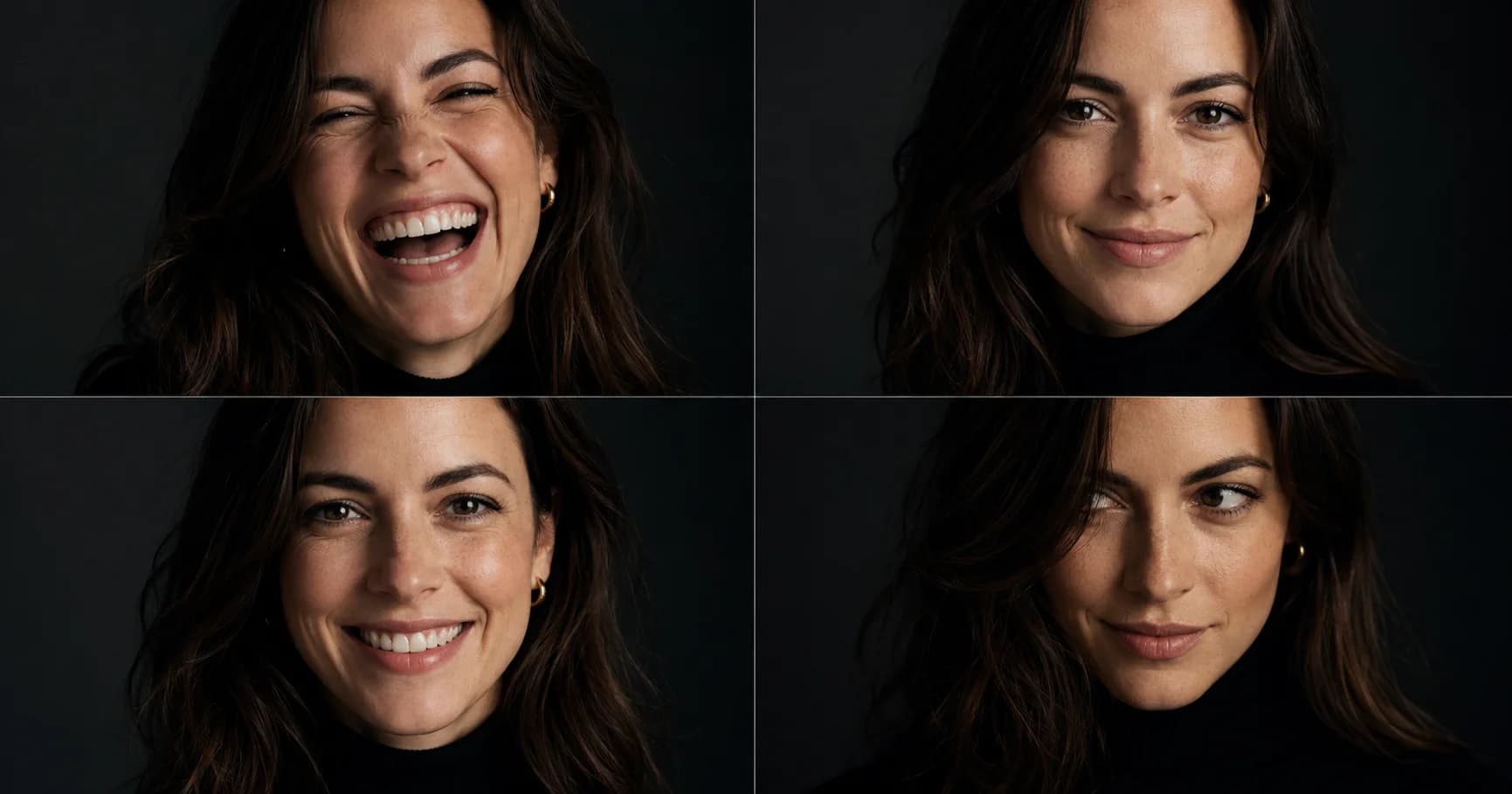
Types of Smiles and What They Mean: A Science-Backed Guide
Most people think of a smile as a single expression — something either present or absent. Research tells a more nuanced story. Psychologists Paul Ekman and Wallace Friesen identified at least 19 distinct smile types using the Facial Action Coding System (FACS), each produced by a different combination of facial muscle activations and each communicating a different emotional signal. Some smiles express genuine joy; others mask negative emotion; others are deliberate social tools. Understanding which type you are looking at — and which type you are producing — is one of the most practically useful things you can learn about human expression.
How Smile Types Are Scientifically Classified
The Facial Action Coding System (FACS), developed by Ekman and Friesen in the 1970s, classifies facial expressions by the specific muscle groups (Action Units) they activate. A smile is not a single Action Unit — it is a combination, and which muscles are included determines what type of smile it is and what it communicates.
The two most fundamental categories are Duchenne smiles (genuine, involving both the zygomatic major and the orbicularis oculi) and non-Duchenne smiles (voluntary, involving only the zygomatic major that raises the mouth corners). This distinction underlies almost all smile-type classifications — genuine smiles always involve the eyes; most performed or social smiles do not.
Recent research has expanded the taxonomy further. A 2017 study by Martin and colleagues identified that humans actually produce two distinct categories of genuine smile — reward smiles and affiliative smiles — each involving the zygomatic major but with different intensities and secondary muscle activations. The research on smile types is still active and continues to refine what was a simpler binary model.
All 19 Smile Types at a Glance
The table below covers the most documented smile types from FACS research. Each row shows the key muscles involved, the emotional state it signals, and the single most reliable visual cue for identifying it.
| Smile Type | Key Muscles | Signals | How to Spot It |
|---|---|---|---|
| Duchenne | Zygomatic major + orbicularis oculi | Genuine joy | Eyes crinkle, cheeks rise, crow's feet appear |
| Pan Am | Zygomatic major only | Polite/social | Mouth smiles, eyes stay flat |
| Reward | Zygomatic major + orbicularis oculi (full) | Peak happiness | Biggest, most symmetric, eye-engaged |
| Affiliative | Zygomatic major (mild) + slight orbicularis | Warmth, goodwill | Softer, subtler than reward smile |
| Dominance | Zygomatic major (asymmetric) | Condescending amusement | Noticeably stronger on one side |
| Contempt smirk | Unilateral zygomatic major | Superiority | Only one corner of mouth rises |
| Miserable | Duchenne muscles + distress signals | Masked distress | Eyes engage but face shows underlying sadness |
| Nervous | Zygomatic major + risorius | Anxiety | Wide, tense, often shows teeth |
| Qualifier | Brief zygomatic major | Softening bad news | Quick flash before or after negative statement |
| Embarrassed | Duchenne + head tilt | Embarrassment | Head dips, gaze averts while smiling |
| Flirtatious | Duchenne + gaze aversion | Romantic interest | Eye contact then deliberate look away |
| Dampened | Suppressed Duchenne | Hiding positive emotion | Pressed lips, subtle cheek movement |
| False | Zygomatic major (wrong timing) | Faking emotion | Appears too suddenly, drops off abruptly |
| Rueful | Duchenne + downward gaze | Self-deprecation | Looking down or away while smiling |
| Compliance | Zygomatic major (brief) | Submission or agreement | Fleeting smile after being corrected |
| Play | Open-mouthed, relaxed face | Playfulness | Mouth open wide, relaxed jaw |
| Cruel | Asymmetric zygomatic major + narrowed eyes | Schadenfreude | Appears in response to others' misfortune |
| Angry smile | Duchenne + masseter tension | Hidden anger | Smile combined with jaw clenching |
| Sad smile | Zygomatic major + depressor muscles | Sadness masked | Corners slightly pulled down even while smiling |
The Duchenne Smile: The Only Smile That Cannot Be Faked
The Duchenne smile is the gold standard of genuine smiles. Named after neurologist Guillaume-Benjamin Duchenne, who first documented it in 1862, it requires simultaneous activation of the zygomatic major (raises the mouth corners and upper lip) and the orbicularis oculi (raises the cheeks, narrows the lower eyelids, and produces crow's feet at the outer eye corners).
What makes the Duchenne smile uniquely reliable as a signal is that the orbicularis oculi cannot be activated voluntarily in most people. Studies show that fewer than 10% of people can consciously contract this muscle without genuine emotion. This means that when someone's eyes fully engage in a smile — the cheeks rise high, the lower eyelids narrow, the outer eye corners crinkle — the emotion behind it is almost certainly real.
The Duchenne smile produces the highest ratings for warmth, trustworthiness, and attractiveness of any smile type. It is also the expression that AI smile analyzers are specifically designed to detect and score — the eye engagement component (orbicularis oculi activation) is weighted heavily because it is the most reliable differentiator between genuine and performed smiles.
“The muscle around the eye is only put in play by the sweet emotions of the soul; its inertness in smiling unmasks a false friend.”
Advertisement
The Pan Am Smile: The Polite Social Smile
The Pan Am smile — named after the flight attendants who were trained to maintain a fixed, pleasant smile throughout a flight — is a deliberate, voluntary smile using only the zygomatic major. The mouth corners are raised, the lips may part, but the eyes remain largely uninvolved. No cheek lift. No eye narrowing. No crow's feet.
This is the smile people produce on command for photos, in professional contexts, and in social situations where they want to appear pleasant but are not genuinely amused or happy. It is not dishonest — it is a recognised social tool. Most people can produce it reliably, and most observers recognise it as a social rather than genuine smile, even if they cannot articulate exactly why.
The Pan Am smile tests poorly for warmth and trustworthiness compared to the Duchenne smile, but it performs better than no smile at all. In situations where a genuine smile is not available, a well-produced polite smile still signals social cooperation and positive intent.
The Reward Smile, Affiliative Smile, and Dominance Smile
The 2017 Martin et al. research identified three functionally distinct genuine smile types beyond the Duchenne/non-Duchenne binary. The reward smile signals happiness and positive experience — it is the biggest, most symmetric, most eye-engaged smile type. This is what your face does when you find something genuinely funny or when something unexpectedly good happens.
The affiliative smile is subtler — smaller mouth engagement, eyes slightly engaged but not maximally. It signals social connection and goodwill rather than peak happiness. This is the smile you give a stranger to indicate you mean no harm, or the smile you hold during a warm conversation. It does not require peak emotion to be genuine.
The dominance smile is asymmetric — typically stronger on the left side of the face (from the viewer's perspective, the smiler's right). It conveys amusement in a slightly condescending way — the smile of someone who finds a situation mildly ridiculous rather than genuinely funny. It is frequently misread in social contexts and can come across as dismissive if the receiver is not attuned to the asymmetry.
Pay attention to whether a smile is symmetric. Genuine joy smiles (reward smiles) tend to be highly symmetric. Dominance and contempt smiles tend to be asymmetric, stronger on one side.
The Contempt Smirk and Miserable Smile
The contempt smirk is a unilateral smile — only one side of the mouth turns upward, while the other side either stays flat or turns slightly down. Ekman identified it as the only universal asymmetric facial expression and specifically associated it with feelings of contempt or moral superiority. It is culturally consistent: a unilateral mouth raise reads as contempt across cultures that had no contact with each other.
The miserable smile — described by Ekman as a 'felt, miserable smile' — is a Duchenne smile that occurs while experiencing genuine negative emotion. It appears when people try to maintain composure in difficult situations, such as receiving bad news in a social context. The eyes genuinely engage (orbicularis oculi fires), but the context and secondary expressions reveal distress beneath. It is one of the most poignant expressions in the human repertoire.
Both of these smile types are important to recognise because they are frequently misread. A contempt smirk is often interpreted as a charming half-smile; a miserable smile can be read as positive when the person is actually struggling. Reading these correctly requires attending to context and the full-face expression, not just the mouth region.
How to Tell What Type of Smile You Have
The fastest way to identify your default smile type is to photograph yourself mid-smile rather than posing for one. Set a 3-second video timer, think of something genuinely funny — a specific memory works better than a general concept — and capture your natural expression. Then pause the video at the moment your smile is fullest.
Look at three things in order. First, the eyes: do your lower eyelids rise noticeably? Do the outer corners of your eyes crinkle? If yes, your zygomatic major and orbicularis oculi are both activating — that is the Duchenne marker, the most important signal. If the eyes are relatively flat while the mouth is smiling, your default is closer to a Pan Am.
Second, check symmetry. Hold the image up and mentally divide the face down the centre. Is the smile equally strong on both sides? Genuine reward smiles are highly symmetric. Dominance smiles and contempt smirks are noticeably lopsided. If one side of your mouth consistently rises more than the other, that is worth noting — it can read as dismissive or sarcastic to observers even when you intend warmth.
Third, look at the upper face. Are your brows slightly relaxed and raised, or are they flat or furrowed? Genuine positive smiles tend to involve a very slight, involuntary brow raise. A furrowed brow alongside a mouth smile is one of the classic markers of a masked negative emotion.
The easiest self-test: take a video of yourself laughing at something genuinely funny — not smiling for a camera. Pause at peak expression. That is your Duchenne smile. Compare it to your posed photo smile. The difference between the two tells you exactly what to work on.
Which Smile Type Looks Best in Photos?
Photographers and portrait researchers agree on this consistently: the Duchenne smile is the most photogenic smile type by a clear margin. The reason is structural — the simultaneous activation of the zygomatic major and orbicularis oculi lifts the midface, narrows the lower eyelids, creates cheek definition, and produces the crow's feet at the eye corners that read as warmth and authenticity. All of these changes photograph extremely well because they add three-dimensional depth to a face that a camera flattens.
The Pan Am smile photographs noticeably worse despite looking acceptable in real life. In person, context and movement help observers read a social smile as positive. In a static photograph, the uninvolved eyes create a disconnect that reads as slightly hollow or performative. This is why people often say they look 'fake' in photos even when they feel like they are smiling genuinely — they are producing a Pan Am rather than a Duchenne.
The reward smile — the fullest, most symmetric Duchenne variant — is ideal for formal portrait photography. The affiliative smile, slightly smaller and softer, works better for candid or professional headshots where peak-joy expression reads as over-the-top. The contempt smirk and dominance smile consistently photograph poorly for social and professional contexts, even when the intent behind them is positive.
What Your Smile Type Says — and How to Improve It
Knowing which smile type you most commonly produce changes your approach to improving it. If your default smile is a Pan Am (mouth only, eyes uninvolved), the development target is the orbicularis oculi — the eye muscle. Practice involves connecting to genuine emotion before expressing the smile, not just trying to 'include your eyes' as a mechanical instruction.
If your smile is asymmetric, the target is bilateral coordination. Practicing in a mirror while focusing on equal activation on both sides, combined with relaxing jaw tension on the tighter side, often produces visible improvement within weeks.
An AI smile score gives you a data-driven baseline for which components of your smile are strongest and which need development. The four signals measured — mouth curve, cheek lift, eye squint (Duchenne marker), and jaw openness — map directly to the muscle activations that distinguish the major smile types. Tracking these scores over time makes your practice targeted rather than vague.
Frequently Asked Questions
How many types of smiles are there?
Paul Ekman and Wallace Friesen identified at least 19 distinct smile types using the Facial Action Coding System. The most practically important categories are: Duchenne smiles (genuine, involving eyes and mouth), Pan Am smiles (polite social smiles, mouth only), reward smiles (peak happiness), affiliative smiles (warmth and goodwill), dominance smiles (asymmetric, condescending amusement), contempt smirks (unilateral, superiority), and miserable smiles (genuine eye engagement while experiencing distress).
What is a Duchenne smile?
A Duchenne smile is a genuine smile that simultaneously activates the zygomatic major muscle (raising the mouth corners) and the orbicularis oculi muscle (narrowing the lower eyelids, raising the cheeks, and creating crow's feet at the eye corners). Named after neurologist Guillaume Duchenne (1862), it is considered the only truly genuine smile because the orbicularis oculi cannot be voluntarily activated in most people — it fires spontaneously in response to real positive emotion.
Can you tell if a smile is fake?
Yes, reliably — though it requires attending to the eyes, not the mouth. Genuine (Duchenne) smiles involve eye narrowing, cheek lifting, and outer eye crinkling. Fake or social (Pan Am) smiles involve only the mouth corners rising with minimal eye involvement. The timing is also different: genuine smiles build and fade gradually; posed smiles often appear abruptly and drop off suddenly. Most people can detect fake smiles above chance, even without formal training.
What is a Pan Am smile?
A Pan Am smile is a polite, voluntary smile produced using only the zygomatic major muscle (which raises the mouth corners). The eyes do not engage significantly — no cheek lift, no lower eyelid narrowing. Named after airline flight attendants trained to maintain a fixed pleasant expression, it is a well-recognised social smile that signals politeness and cooperative intent without reflecting genuine happiness. Most people produce it for photos, in professional contexts, and in social situations that do not genuinely amuse them.
Why does my smile look forced or fake?
A forced-looking smile almost always means the eyes are not engaged — the orbicularis oculi is not activating. This happens when you smile on command (voluntary motor cortex only) rather than in response to genuine feeling (which fires the limbic pathway and activates the eye muscles automatically). The fix is to access genuine emotion before smiling: recall a specific funny memory, hear something that genuinely amuses you, or connect to authentic feeling rather than producing the expression mechanically.
What are all 19 types of smiles?
Paul Ekman's FACS-based research catalogued 19 smile types, including: the Duchenne smile (genuine joy), Pan Am smile (social/polite), reward smile (peak happiness), affiliative smile (warmth), dominance smile (condescending amusement), contempt smirk (superiority), miserable smile (masked distress), nervous smile (anxiety), qualifier smile (softening bad news), embarrassed smile, flirtatious smile, dampened smile (hidden happiness), false smile (faked emotion), rueful smile (self-deprecating), compliance smile (submission), play smile (open-mouthed playfulness), cruel smile (schadenfreude), angry smile (hidden anger), and sad smile (masked sadness). Each activates a distinct combination of facial muscles.
Which smile type is most attractive?
The Duchenne smile consistently rates as the most attractive smile type across research studies. It activates both the zygomatic major (mouth) and orbicularis oculi (eye area), producing cheek lift, eye crinkling, and crow's feet that signal genuine positive emotion. Studies by Harker and Keltner found that people with genuine Duchenne smiles were rated as more warm, trustworthy, and likeable than those with social (Pan Am) smiles. For photos specifically, the full reward smile — the most symmetric and eye-engaged variant — photographs the best.
How do I know what type of smile I have?
The most reliable method is to video yourself smiling spontaneously — not posing — and pause at peak expression. Check three things: (1) Eye engagement: do your lower eyelids rise and does the outer eye area crinkle? Yes = Duchenne marker. No = Pan Am or social smile. (2) Symmetry: is the smile equally strong on both sides? Asymmetric = dominance or contempt tendency. (3) Upper face: are brows slightly relaxed and raised, or furrowed? Furrowed brow with a mouth smile suggests masked negative emotion. An AI smile analyzer can also score these components individually and give you a data-based breakdown.
Lena Whitmore
Science Writer · Facial Analysis & Appearance Psychology
Lena covers the science of smiles, facial aging, and AI-powered biometrics. She writes evidence-based guides grounded in peer-reviewed research, with a focus on making appearance science accessible and actionable. All tools on Smile Tracker run locally in your browser — your photo is never uploaded anywhere.
Put it to the test
See your results with AI
Upload a photo and get your personalized Smile Score, smile type, and eye engagement reading — free, private, instant.
Analyze My Smile Free →Advertisement
Sources
Related reading
What Is a Duchenne Smile? The Science Behind a Real Smile
May 2026 · 6 min read
How to Smile Naturally in Photos: 7 Techniques That Actually Work
May 2026 · 6 min read
How to Smile with Your Eyes: The Smize Technique Explained
May 2026 · 6 min read
Nervous Smile vs Natural Smile: Why Your Smile Changes Under Pressure (and How to Fix It)
May 2026 · 8 min read