Why Do I Look Bad on Camera? The Real Reasons (and How to Fix Them)
If you look noticeably worse in camera photos than you do in the mirror, your face is almost certainly not the problem. Camera physics, lighting geometry, and a well-documented psychological effect called the mere-exposure effect combine to make your camera image a systematically distorted, unflattering version of your actual appearance. Each cause is specific and each has a direct fix. Understanding them changes how you approach every photo and video call from this point forward.
Cause 1: Wide-Angle Lens Distortion — The Biggest Culprit
Smartphone cameras use wide-angle lenses — typically equivalent to 24–28mm in full-frame terms. At selfie distance (30–40 cm), this creates a significant perspective distortion: features closest to the lens appear disproportionately large, while features further back appear smaller. Since your nose is the closest feature to the camera, it appears up to 30% wider than it actually is. Your forehead appears proportionally narrower; your chin appears to recede.
A 2022 study published in JAMA Facial Plastic Surgery found that photos taken at 30 cm with a standard smartphone made nasal width appear significantly larger than photos taken at 150 cm with the same camera. Participants who had never considered rhinoplasty reported interest in the procedure after seeing close-up selfies — before being shown the corrected images at proper distance.
The fix is straightforward: increase camera distance. Have the photographer (or set your phone) at 5 feet or more away, then zoom in rather than standing close. At this distance, the wide-angle distortion is almost entirely eliminated and facial proportions render accurately.
Never take a photo from closer than 4 feet. Zoom in with the camera, not by moving closer. This one change fixes lens distortion completely.
Cause 2: The Mere-Exposure Effect — Your Mirror Bias
You have looked at your mirror reflection thousands of times. The mere-exposure effect — first documented by psychologist Robert Zajonc in 1968 — establishes that repeated exposure to any stimulus generates preference for it. You are intensely familiar with your mirror image, which means you find it comfortable. Camera photos show the non-reversed version — the face everyone else sees — and your brain registers it as subtly 'wrong.'
This is not a flaw in the photo. It is a bias in your comparison point. The 1977 Mita, Dermer & Knight study confirmed this: people consistently prefer mirror-reversed versions of their own face, while their friends consistently prefer the non-reversed (photo) version. In other words, your camera photo looks fine to everyone who knows you. It only looks wrong to you.
Understanding this makes the psychological experience of cameras less distressing. The discomfort you feel looking at your own photos is not evidence that the photos are unflattering — it is evidence that your mirror familiarity has set an unreliable baseline.
Cause 3: Lighting Direction and Quality
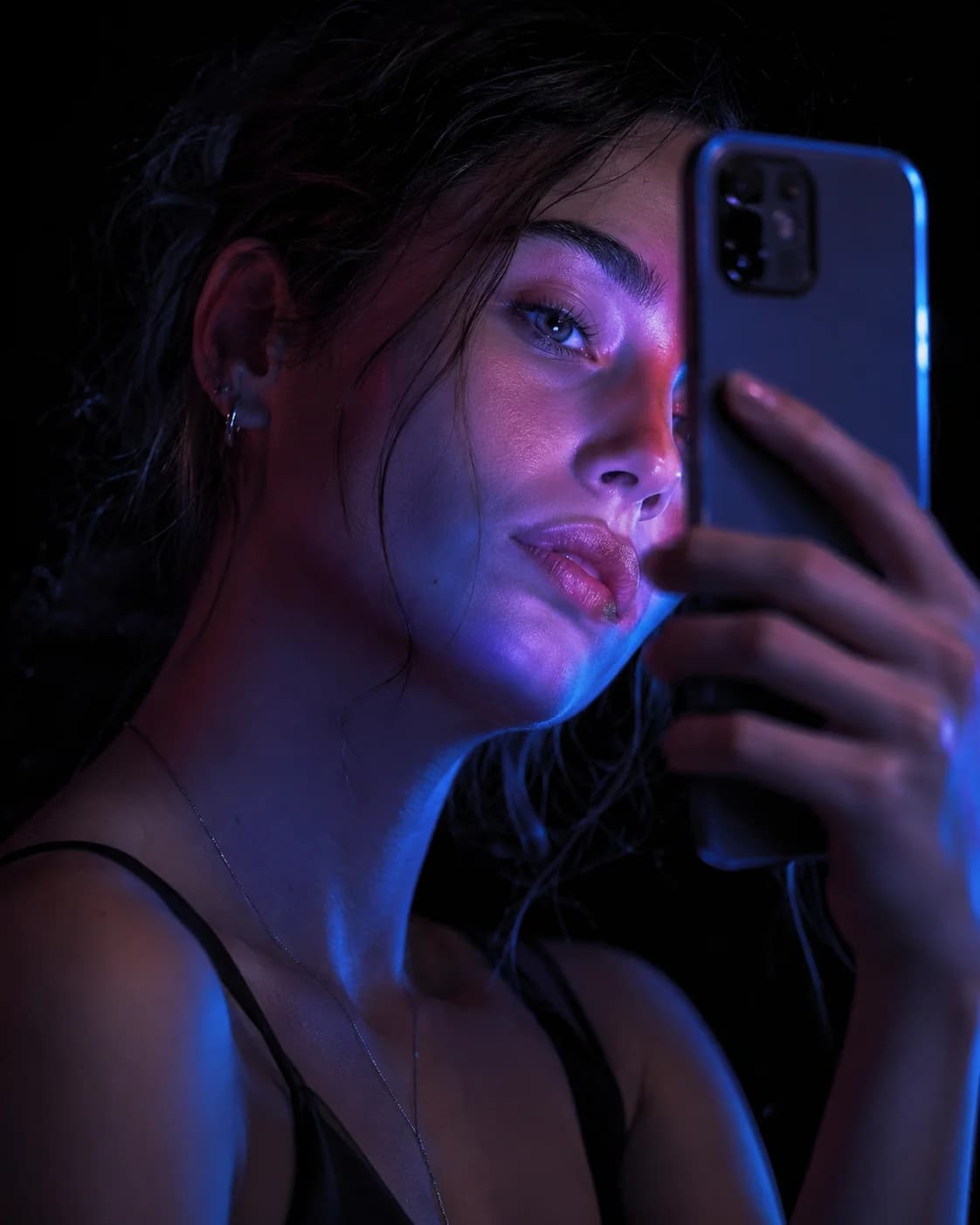
Light direction is as important as light quantity. Overhead-only lighting — the default in most offices, kitchens, and indoor spaces — casts downward shadows that fill the under-eye hollows, deepen nasolabial folds, and flatten cheekbone definition. This is the 'skull lighting' effect that makes almost everyone look five to ten years older on camera.
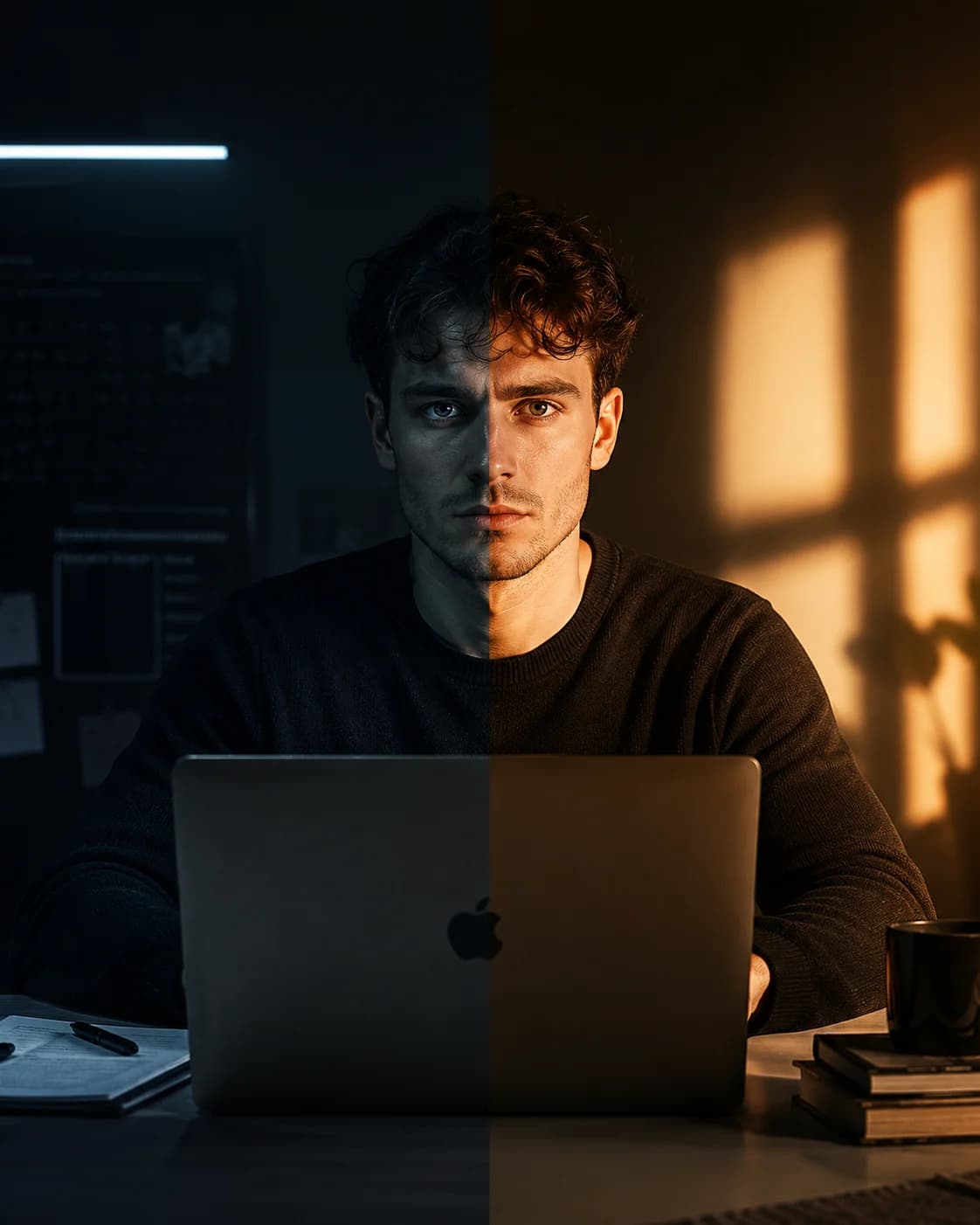
Front-facing light at or near eye level is the most flattering direction for faces. It fills shadows from the front, preserves cheekbone highlight structure, and prevents the harsh shadows that aged lighting creates. A window directly in front of you provides this naturally. Outdoors, an overcast day produces beautiful diffused frontal light with no harsh shadows at all.
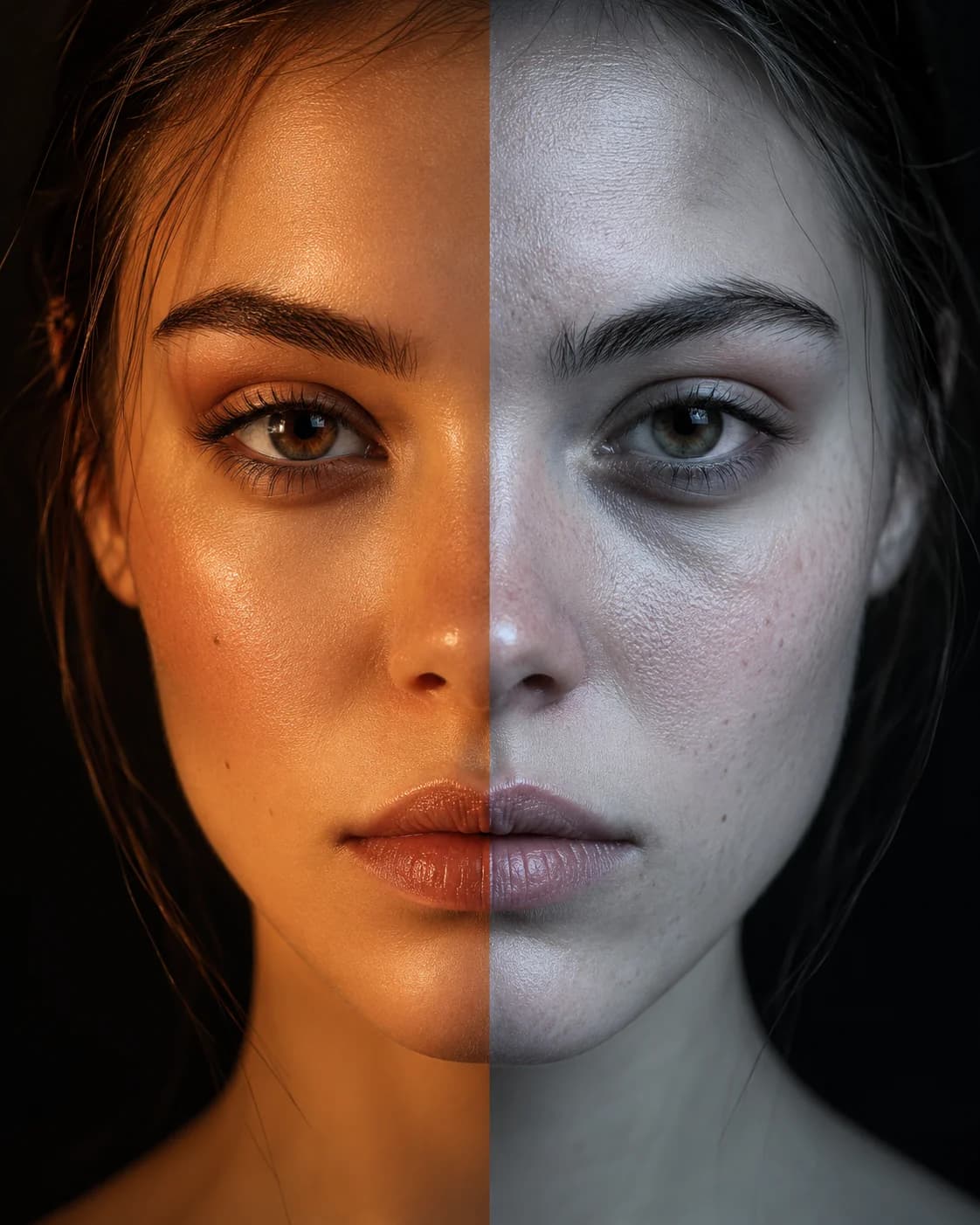
Colour temperature also matters. Indoor incandescent or warm LED lighting casts an orange tint that ages skin tone on camera. Setting any artificial lights to 5500K (daylight colour temperature) produces neutral, clean skin tones. Ring lights and LED panels used in content creation are specifically designed around this principle.
Face a window when on camera or taking photos — it costs nothing and is the highest-impact single lighting change available.
Advertisement
Cause 4: Camera Angle Relative to Your Face
Camera height relative to your face significantly changes how your facial structure reads. A camera positioned below eye level creates an upward-looking angle that shows the underside of your nose, collapses the jaw definition, and creates a foreshortened forehead. This is the angle that makes a strong face look weak and a sharp jaw look rounded.
A camera at or slightly above eye level — the angle used in professional headshots and most flattering portrait photography — maintains natural jaw definition, shows facial thirds in balanced proportion, and avoids the nostril-forward distortion of low-angle shots. The difference between a camera 8 inches below your eyes and one at eye level is visually dramatic.
For video calls, the most common setup mistake is placing a laptop on a desk and looking down into its built-in camera. The fix is to raise the laptop (books work perfectly) until the camera is level with your eyes. This single adjustment eliminates the most unflattering camera angle in everyday use.
Cause 5: Expression Timing and the Single-Frame Problem
Mirrors show continuous real-time motion; you unconsciously select your best angle and expression at all times. A camera freezes a single frame — often mid-expression, mid-blink, or in the natural pause between expressions. Human facial expressions are fluid, and the transitions between them often look nothing like the expressions themselves.
This is why candid photos frequently look worse than posed ones — not because posed is better, but because the specific fraction of a second captured varies enormously in how it represents an ongoing expression. A smile that looks warm and genuine in motion can be frozen at the moment the eyes have not yet followed the mouth, producing a strained, asymmetric expression.
The fix is to let your expression build before the shutter fires. For smiles specifically, let the feeling build from inside first — genuinely connect to the memory or humour before the expression reaches your face — rather than snapping the smile on command. An AI smile analysis can tell you specifically whether your eye engagement is matching your mouth expression, which is the key marker of a genuine versus posed smile.
How to Look Better on Camera: The Three-Minute Setup
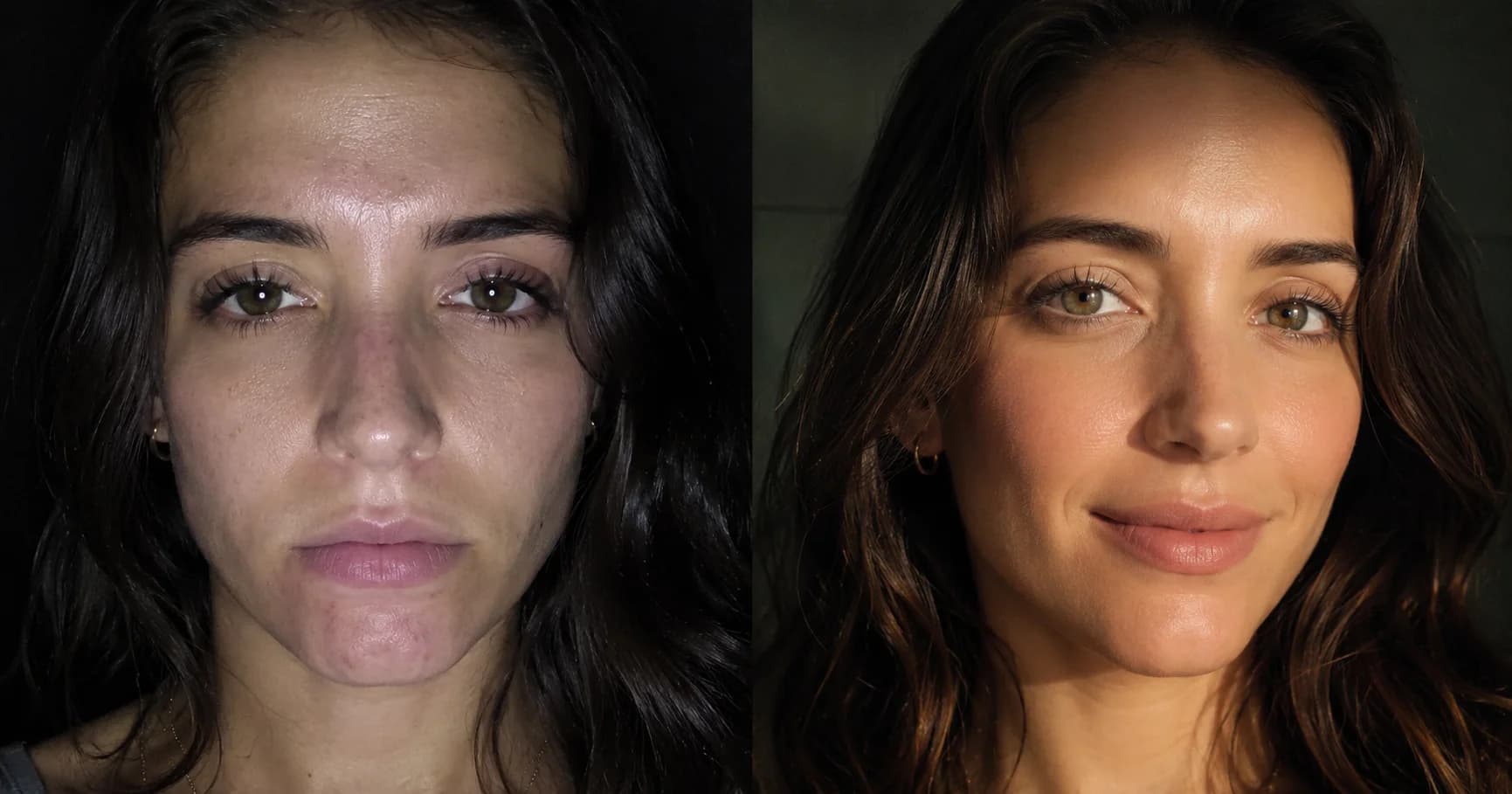
Apply these four changes and the difference will be immediate: (1) distance — camera at minimum 4–5 feet away, zoom in rather than standing close; (2) light — face a window or frontal light source at eye level; (3) camera height — eyes level with or slightly below the lens; (4) expression — let the feeling precede the expression, never smile on command.
For photos specifically, shoot in burst mode and choose the best frame rather than relying on a single shot. For video calls, take a test screenshot before any important meeting and check the angle, lighting, and expression all together. Adjust until you are satisfied, then save that setup for future calls.
If you want an objective view of how your current setup reads — before a job interview, headshot session, or important call — upload a test photo to Smile Tracker to check expression quality, or to Rate My Face to see how your current angle and lighting affect your face score. The numbers tell you what the setup is actually doing.
Frequently Asked Questions
Why do I look so much worse in photos than in the mirror?
Three main causes: lens distortion (wide-angle phone cameras at close range enlarge the nose and distort proportions), the mere-exposure effect (you are deeply familiar with your mirror image and photos look subtly wrong by comparison), and lighting/angle differences (photos are usually taken in less controlled conditions than how you present yourself to a mirror). The person looking at your photos does not have the mirror-familiarity bias, so they typically see a more normal image than you do.
Does the camera add weight to your face?
Wide-angle lens distortion at close range can make faces appear rounder and fuller than they are in real life by enlarging near features relative to far ones. Harsh overhead lighting also flattens facial structure, eliminating the cheekbone shadows that create a more defined appearance. Both effects make faces look heavier on camera. The fix is increased distance (5+ feet) and frontal lighting at eye level.
Why do I look bad on my phone camera but good in other cameras?
Phone cameras use very wide-angle lenses (24–28mm equivalent) that create significant perspective distortion at close range. Dedicated cameras with 50–85mm lenses at greater distance produce much less facial distortion. Additionally, phone cameras use aggressive computational sharpening and exposure correction that can exaggerate skin texture and contrast. Many dedicated cameras produce softer, more flattering images by default.
Is it normal to look bad in every photo?
It is extremely common, but it is almost never because your face is objectively unflattering — it is because standard photo conditions (close-range wide-angle lens, overhead lighting, low camera angle) are systematically unflattering for almost everyone. Professional photographers produce reliably good photos not because their subjects are exceptional but because they control distance, lighting, and angle. Applying the same controls to casual photography produces dramatically better results.
Lena Whitmore
Science Writer · Facial Analysis & Appearance Psychology
Lena covers the science of smiles, facial aging, and AI-powered biometrics. She writes evidence-based guides grounded in peer-reviewed research, with a focus on making appearance science accessible and actionable. All tools on Smile Tracker run locally in your browser — your photo is never uploaded anywhere.
Put it to the test
See your results with AI
Upload a photo and get your AI facial proportion analysis, symmetry measurement, and feature breakdown — free, private, instant.
Analyse My Face Free →Advertisement
Sources