Eyebrow Shape and Attractiveness: What the Research Shows
Eyebrows are among the most identity-critical features on the human face. Research has demonstrated that a face without eyebrows is harder to recognise than a face without eyes. But beyond recognition, eyebrow shape is a powerful signal of gender, emotion, health, and attraction. The science identifies specific characteristics — arch height, thickness, spacing — that consistently rate highest across controlled preference studies.
Why Eyebrows Have an Outsized Effect on Face Perception
A landmark study by Sadr and colleagues found that participants were less able to recognise famous faces without eyebrows than without eyes — despite eyebrows covering far less of the face. This reveals how heavily the brain relies on brow shape for identity processing. The implication for attractiveness is significant: eyebrows shape the entire emotional and social reading of a face, not just a local region.
The eyebrows are the primary tool for expressing dominance, approachability, trustworthiness, and gender identity. Their position relative to the brow bone, their arch shape, and their thickness all send powerful signals that observers process automatically and pre-consciously.
This makes eyebrow grooming one of the highest-leverage appearance changes available. Unlike bone structure or skin condition, brow shape is directly and precisely controllable — which is why the beauty industry dedicates an entire product category to it.
Arch Shape: The High Arch vs Flat Brow Effect
Research by Sacco and colleagues examined how eyebrow arch position influences social judgments. Brows with a higher arch were rated as more approachable, warmer, and more feminine. Flatter brows with a lower arch were rated as more dominant, serious, and masculine.
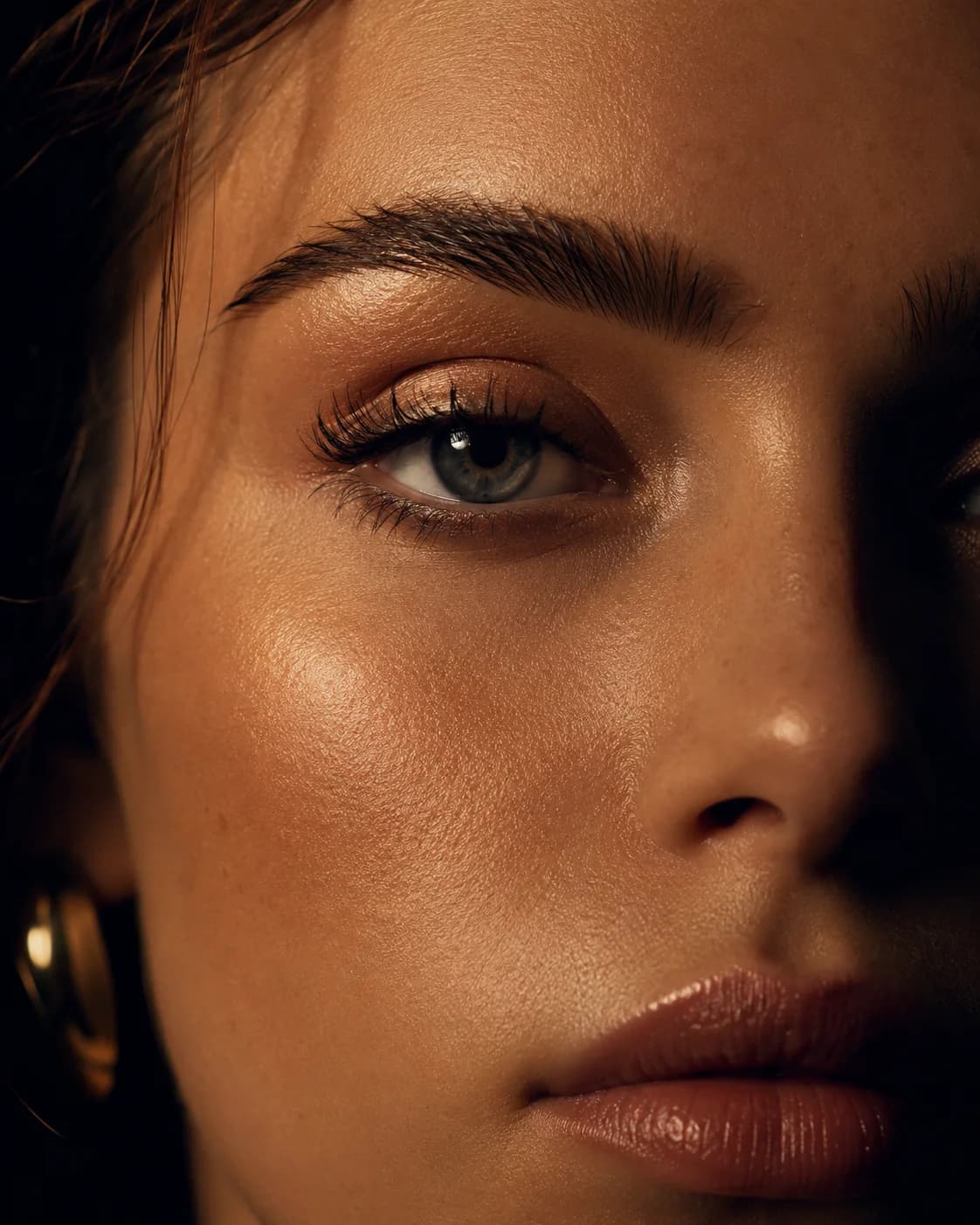
The ideal arch position for feminine attractiveness peaks above the outer third of the eye — roughly above the outer iris. This position lifts the perceived eye area, creates an expression of alert openness, and signals alertness and health. Arches that peak too early (above the inner third) create an expression that reads as perpetually surprised or anxious.
For masculine attractiveness, a lower, straighter brow reads as more dominant and confident. The same arch that maximises female attractiveness would read as overly feminised on a male face — which is why gender-appropriate brow grooming differs significantly.
For women: the arch should peak above the outer iris. For men: a straighter, lower brow reads as more dominant — avoid over-arching.
Thickness: What the Research Finds
Studies find that moderate-to-thick natural brows consistently rate higher for attractiveness and perceived health than very thin brows. Thin brows are associated with aging — brows naturally thin and lighten with age — and this association reduces perceived youth and vitality.
Extremely thick, ungroomed brows also rate lower than groomed full brows: the groomed vs ungroomed signal matters as much as the thickness itself. The current research consensus points toward naturally full brows that are groomed to shape rather than plucked to thinness.
The trend for eyebrow thickness has oscillated between thin and thick over the past century. The underlying science has remained consistent: moderate density, intentionally shaped, reads as healthiest and most attractive across age groups and cultures.
Advertisement
Spacing and Symmetry
Eyebrow spacing — the gap between the inner edges — is a key attractiveness variable. The ideal inner brow position is roughly above the inner corner of each eye. Brows too close together create an expression of permanent concern or aggression. Brows too widely spaced create an expression of surprise or naivety.
Symmetry between brows is highly rated, but research shows minor asymmetry is normal and acceptable. What observers detect is not micro-millimetre differences but visible imbalance — one significantly higher than the other, or noticeably different in shape. Grooming consistency between both brows matters more than perfect geometry.
Because the brows visually frame the eye area, their position influences how eye alignment is perceived in photographs even if the underlying eye position is symmetrical. This means brow grooming directly affects how your face scores on eye alignment metrics.
Eyebrow Grooming as an Attractiveness Multiplier
Among all grooming behaviours, eyebrow grooming produces some of the largest per-unit-effort attractiveness gains. A study comparing groomed and ungroomed versions of the same faces found that eyebrow shaping produced larger attractiveness improvements than hairstyle changes for the same face — despite requiring far less time and cost.
The mechanism is partly framing: well-shaped brows direct attention toward the eyes and create a lifted, open expression that reads as healthy and alert. They also signal social investment — the implicit message that the person maintains their appearance consistently.
For practical impact, brow grooming is accessible, reversible, and repeatable. It is the single appearance investment that produces measurable attractiveness returns for almost everyone who tries it.
Professional eyebrow shaping once to establish the ideal shape, then maintaining it yourself, is one of the highest-ROI appearance investments available.
How Eyebrows Affect Your Face Score
In AI-based face analysis, eyebrow position and shape influence several landmark measurements. The brow arch position affects how the facial thirds are calculated — specifically the mid-face zone from brow to nose. Brow position also affects perceived eye alignment and the apparent eye spacing ratio.
If your Rate My Face score shows lower eye alignment or facial thirds scores, brow shape and position are the first non-surgical variables to explore. Because brow grooming changes the visual anchor points of the upper face, it can shift these perceived metrics meaningfully in photographs and in person.
Frequently Asked Questions
What is the most attractive eyebrow shape?
Research points to a moderately arched brow peaking above the outer iris for feminine attractiveness, and a lower, straighter brow for masculine attractiveness. Both should be groomed to shape rather than plucked to thinness. The specific ideal varies by face shape: high arches suit rounder faces, while softer arches suit longer faces.
Do thicker eyebrows look more attractive?
Generally yes, within limits. Studies find that moderate-to-full natural brows consistently rate higher for attractiveness and youth than thin brows, partly because brow thinning is associated with aging. Very thick ungroomed brows rate lower than groomed full brows — the groomed signal matters as much as the thickness itself.
How much do eyebrows affect attractiveness?
More than most people realise. Eyebrows are more important for face recognition than eyes — the brain relies on brow shape heavily for identity processing. For attractiveness specifically, studies find that eyebrow grooming produces larger attractiveness gains than hairstyle changes for comparable effort.
What eyebrow shape makes eyes look bigger?
A high arch peaking above the outer iris visually lifts the eye area and creates the perception of larger, more open eyes. Combined with a clean space between the brow and eyelid, this is the most effective shape for maximising perceived eye size. Flat or very low brows compress the eye area and make eyes appear smaller.
Do eyebrows grow back after over-plucking?
Yes, for most people — though repeated over-plucking over years can permanently damage follicles and reduce regrowth density. Most over-plucked brows recover to reasonable density within 3–6 months after stopping. The best strategy is to stop plucking completely for 10–12 weeks, then get a professional shaping based on what has grown back.
Lena Whitmore
Science Writer · Facial Analysis & Appearance Psychology
Lena covers the science of smiles, facial aging, and AI-powered biometrics. She writes evidence-based guides grounded in peer-reviewed research, with a focus on making appearance science accessible and actionable. All tools on Smile Tracker run locally in your browser — your photo is never uploaded anywhere.
Put it to the test
See your results with AI
Upload a photo and get your AI facial proportion analysis, symmetry measurement, and feature breakdown — free, private, instant.
Analyse My Face Free →Advertisement
Sources