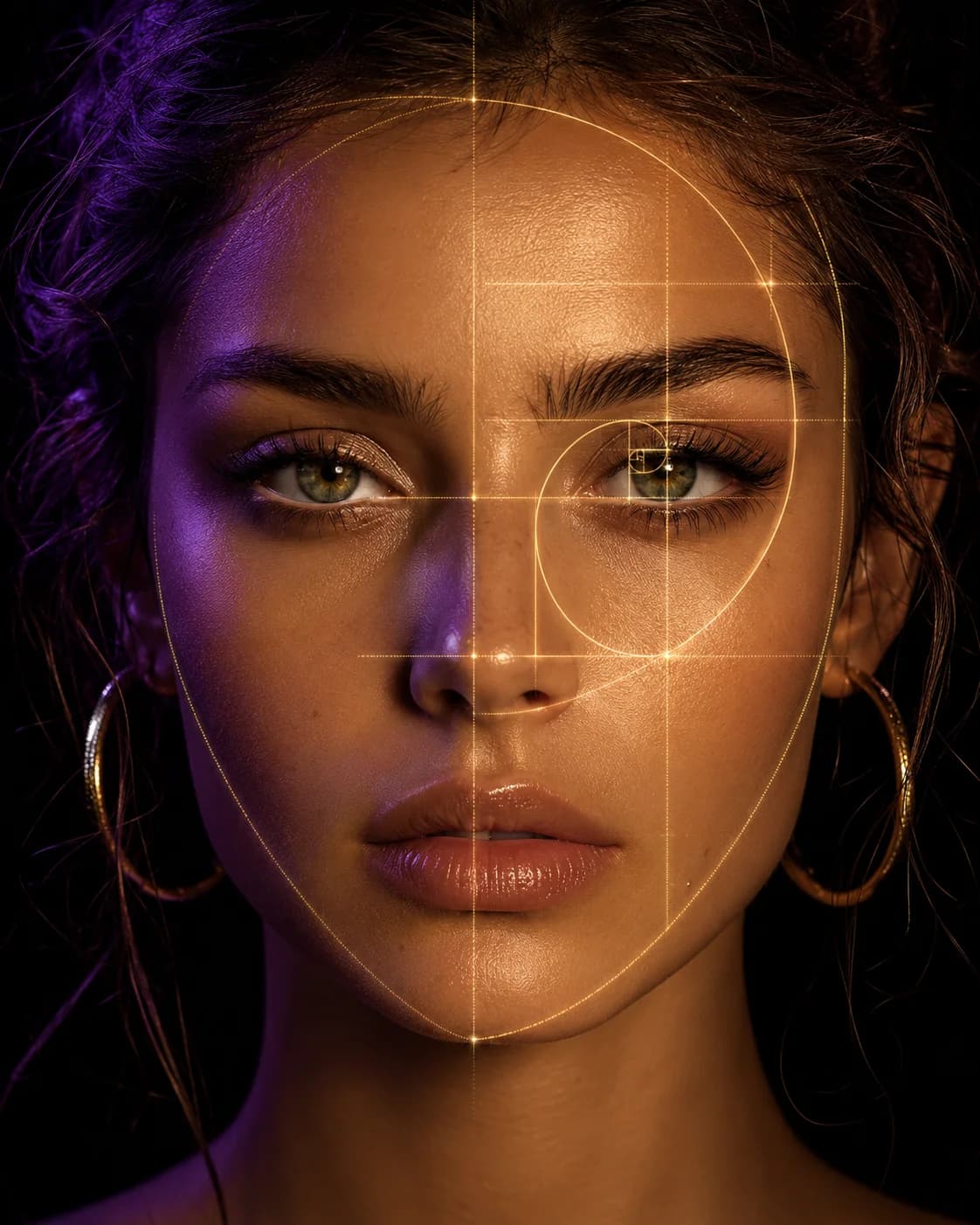
Hunter Eyes vs Prey Eyes: What Is the Difference and Which Is More Attractive?
Hunter eyes and prey eyes have become widely discussed terms in appearance communities, with millions of people trying to identify which type they have and whether it affects how attractive they look. The terms are informal — they do not appear in peer-reviewed anatomy or psychology — but the underlying features they describe are real, measurable, and genuinely linked to attractiveness perception. This article separates the science from the community mythology, explains what the anatomy actually is, and gives you an honest picture of what eye shape means for facial attractiveness.
What Hunter Eyes and Prey Eyes Actually Mean
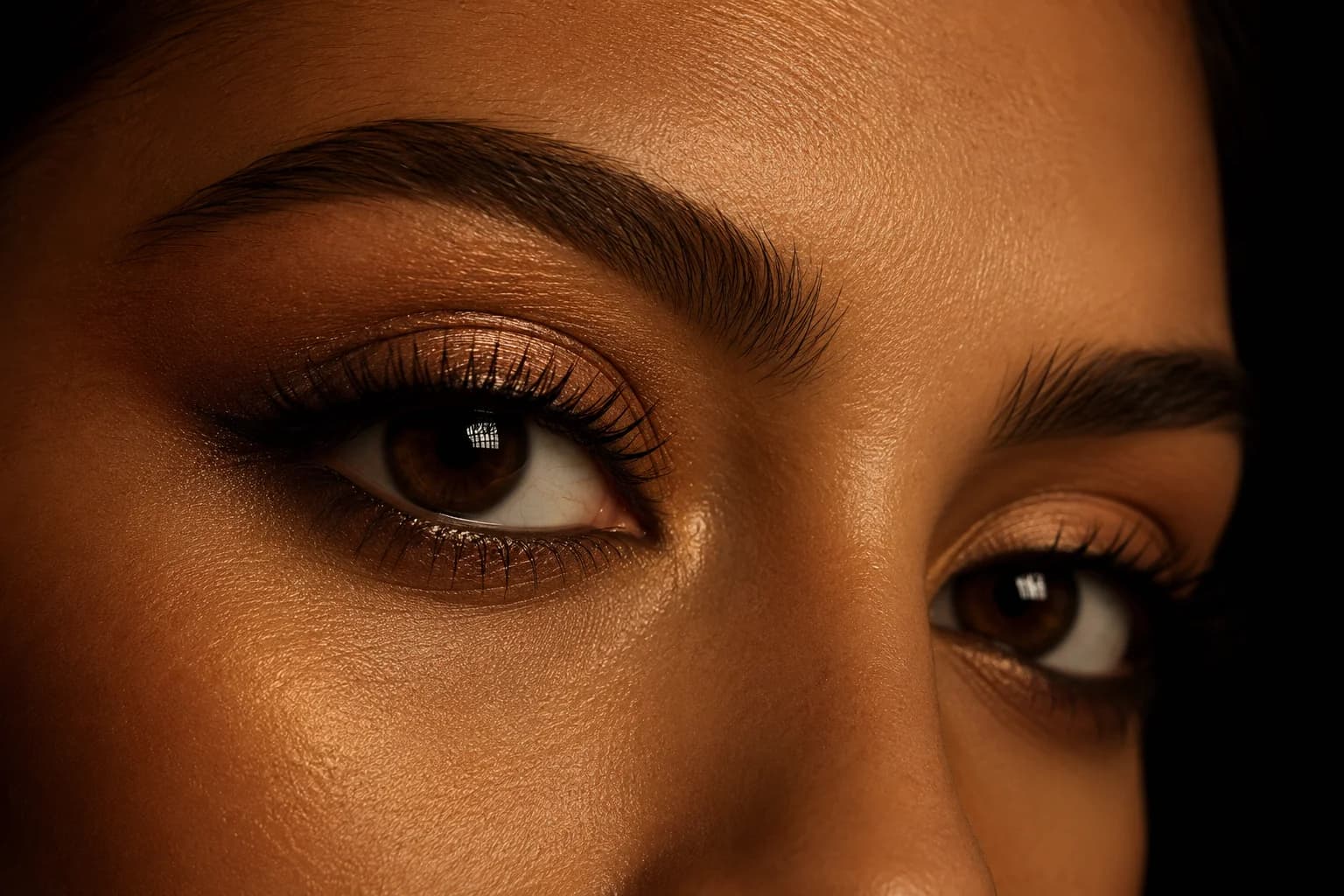
The terms originated in online appearance communities and describe a spectrum of eye positioning and shape. Hunter eyes refers to eyes that are deep-set, slightly narrow in vertical aperture (the opening between upper and lower lid), with a positive or neutral canthal tilt, and positioned well within the orbital socket rather than protruding. The overall impression is of an intense, focused, slightly hooded gaze.
Prey eyes refers to the opposite end of the spectrum: wide-open, protruding, large vertical aperture, often with a neutral or negative canthal tilt, and positioned more forward in the orbit. The impression is of a rounder, more wide-eyed, less intense gaze.
These are informal community terms describing real anatomical variables — orbital depth, vertical palpebral aperture (the opening height of the eye), canthal tilt, and scleral show (how much white of the eye is visible). None of these is inherently attractive or unattractive; their perceived attractiveness depends on context, the rest of the face, and the cultural setting.
The Anatomy Behind Hunter Eyes
Hunter eyes as described online correspond primarily to three anatomical features: deep-set orbits (the eye socket is deep, so the eye sits further back), a smaller vertical palpebral aperture (the distance between the upper and lower eyelid is narrower, giving a more hooded or narrowed appearance), and a positive canthal tilt (outer eye corner elevated above inner corner).
Deep-set eyes are influenced by the prominence of the brow ridge and the depth of the orbital socket — both primarily genetic and skeletal features. The vertical aperture is influenced by the levator palpebrae superioris muscle (which lifts the upper lid) and the degree of upper lid hooding. Canthal tilt is determined by the lateral orbital rim position and canthal tendon tension.
These three features together create the intense, slightly narrowed gaze the community describes as 'hunter.' They are not rare — many widely admired faces share these features — but they are also not universal markers of attractiveness. A deep-set eye on a face without strong brow and cheekbone support can appear sunken rather than intense.
What Attractiveness Research Actually Says
Peer-reviewed attractiveness research does not use the terms hunter or prey eyes, but it has studied the underlying variables. Large eyes (larger scleral show, wider vertical aperture) are consistently rated as more attractive in female faces across most cross-cultural studies — partly due to their association with youth and fertility signalling. This contradicts the community preference for 'hunter' (narrower aperture) eyes in female faces.
For male faces, the picture is more nuanced. Research on sexual dimorphism finds that features associated with testosterone influence — including brow prominence, deeper orbits, and slightly narrowed eyes — are rated as dominant and strong, but not always as most attractive. A 2025 Nature study found preferences for slightly feminised male faces in many populations, which cuts against the hunter-eye maximalism promoted in some communities.
The honest conclusion: both eye types have genuine attractiveness associations depending on the gender, cultural context, and the rest of the face. The binary hunter/prey framing significantly oversimplifies what is a spectrum of features each with their own attractiveness profile.
“Large eyes — relative to face size — are consistently rated as attractive in female faces cross-culturally, likely due to neotenous (youth-signalling) associations.”
Advertisement
How to Assess Your Own Eye Type
Rather than placing yourself in a binary hunter/prey category, measure the actual variables. First, canthal tilt: is your outer eye corner higher, level, or lower than the inner corner? Second, palpebral aperture: hold a ruler to the mirror and measure the vertical opening of your eye at its widest point — typical range is 8–12mm, with larger openings reading as more open/round and smaller reading as more hooded/intense.
Third, orbital depth: press gently at the outer corner of your brow bone. If the eyeball feels close to the surface, your orbits are shallow (more prey-type). If there is significant depth before you feel the eyeball, your orbits are deep (more hunter-type). Fourth, scleral show: can you see white below the iris when looking straight ahead? Significant lower scleral show is associated with a more wide-eyed, round appearance.
An AI face analysis gives you objective measurements of the eye region including canthal angle and proportional eye size relative to the face — more precise than mirror estimation and consistent across different assessments.
No single eye type is universally more attractive. Focus on the features you can influence — camera angle, lighting, expression — rather than fixating on fixed anatomy.
What You Can Actually Change (and What You Cannot)
The structural features driving eye type are mostly skeletal and therefore not changeable without surgery. Orbital depth, brow ridge prominence, and canthal tendon position are all bone-deep. However, several modifiable factors significantly affect how your eye type reads.
Sleep quality directly affects periorbital puffiness and under-eye appearance — both of which alter the apparent shape of the eye area. Body fat percentage influences periorbital fat pad volume. Brow grooming and position affect how the brow ridge frames the eye, either emphasising or softening orbital depth. Camera angle changes the apparent depth and tilt of the eye area dramatically.
The most efficient approach is to understand your eye type accurately, identify which modifiable factors are working for or against you, and optimise those — rather than pursuing surgical changes based on a community trend that may not reflect peer-reviewed attractiveness science.
Frequently Asked Questions
What are hunter eyes?
Hunter eyes is an informal term from appearance communities describing eyes that are deep-set within the orbital socket, have a smaller vertical opening (narrower lid aperture), and often have a positive canthal tilt (outer corner elevated). They create an intense, focused, slightly hooded gaze. The term is not used in anatomy or psychology research, but the features it describes — orbital depth, palpebral aperture, and canthal tilt — are real and studied.
Are hunter eyes more attractive than prey eyes?
It depends on gender and context. For male faces, deep-set eyes with positive canthal tilt are associated with dominance and strength signals in attractiveness research. For female faces, peer-reviewed research generally shows that larger, more open eyes (closer to what communities call prey eyes) are rated as more attractive due to neotenous (youth-signalling) associations. The hunter/prey binary significantly oversimplifies what is a spectrum of features with context-dependent attractiveness effects.
How do I know if I have hunter eyes?
Check three things in a mirror: (1) canthal tilt — is your outer eye corner higher than the inner corner? (positive tilt is a hunter-eye feature); (2) orbital depth — do your eyes appear to sit back within the socket, with the brow bone prominently framing them? (3) lid aperture — is the vertical opening of your eye relatively narrow, creating a slightly hooded or intense look? All three present together is what communities describe as hunter eyes.
Can you get hunter eyes without surgery?
The structural anatomy (orbital depth, canthal angle, brow ridge) cannot be changed without surgery. However, appearance can be influenced by: camera angle (slightly elevated camera emphasises orbital depth and positive canthal tilt); sleep quality (reduces periorbital puffiness that softens the eye area); brow position and grooming (a well-defined, slightly lower brow emphasises orbital framing). These are genuine improvements to how the eye area photographs, even if they do not change the underlying structure.
Lena Whitmore
Science Writer · Facial Analysis & Appearance Psychology
Lena covers the science of smiles, facial aging, and AI-powered biometrics. She writes evidence-based guides grounded in peer-reviewed research, with a focus on making appearance science accessible and actionable. All tools on Smile Tracker run locally in your browser — your photo is never uploaded anywhere.
Put it to the test
See your results with AI
Upload a photo and get your AI facial proportion analysis, symmetry measurement, and feature breakdown — free, private, instant.
Analyse My Face Free →Advertisement
Sources