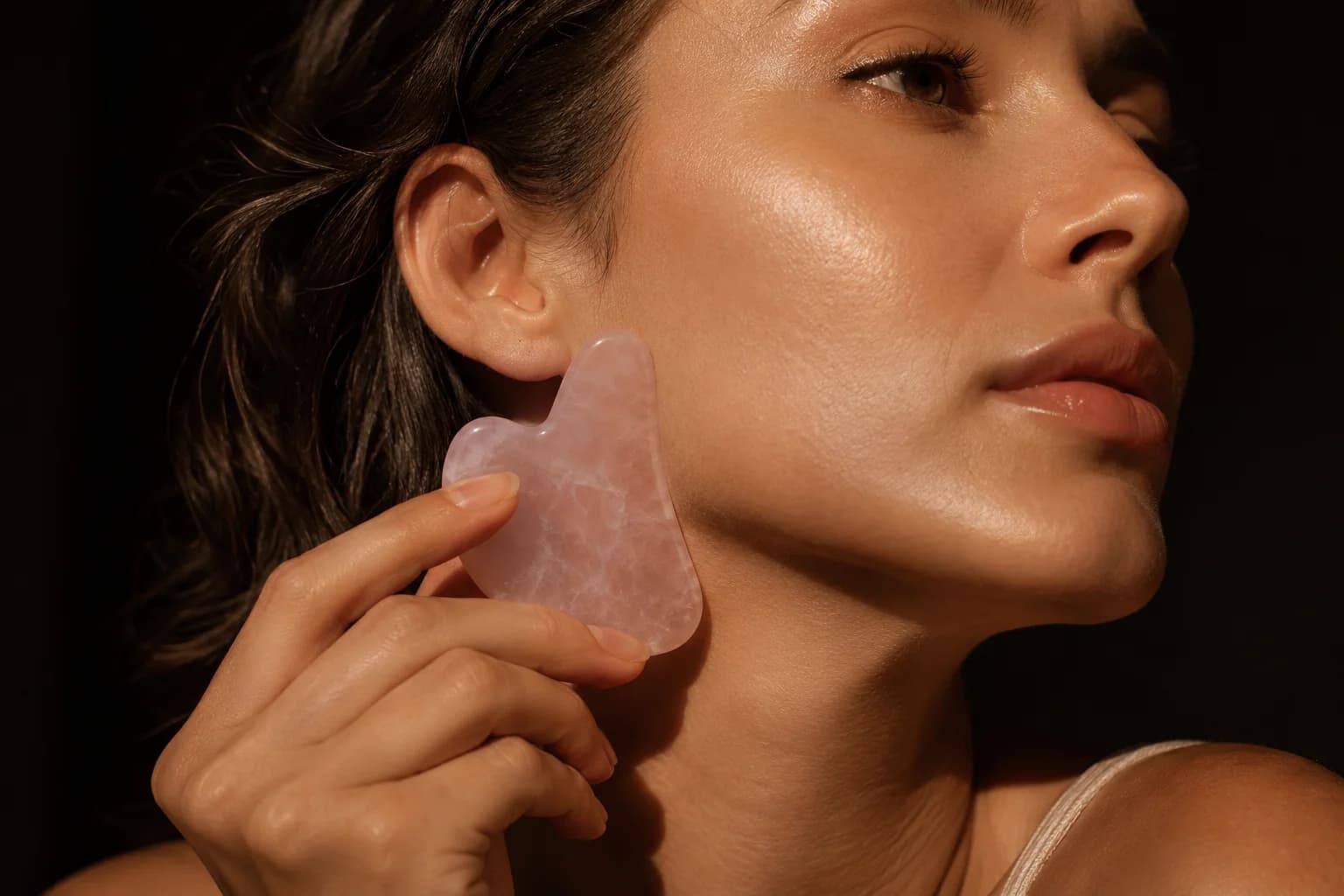
Gua Sha: Does It Actually Sculpt Your Face?
Gua sha — the rose quartz or jade scraping tool that flooded social media — promises to define your jawline, depuff your face, and sculpt your cheekbones. But separating viral before-and-afters from peer-reviewed biology requires a closer look at what the tool actually does to your skin and tissue.
This article is for informational and educational purposes only and does not constitute medical, dermatological, or psychological advice. Consult a qualified professional before making changes to your health or skincare routine.
What Gua Sha Actually Does to Your Face
Gua sha (pronounced gwah-shah) is a traditional Chinese medicine technique that involves firmly scraping a smooth-edged tool across the skin to stimulate blood flow and move lymphatic fluid. When applied to the face with light pressure, the mechanism shifts from the aggressive back-scraping of traditional practice to a gentler massage that targets the superficial lymphatic network sitting just beneath the skin.
The lymphatic system has no pump — unlike blood, lymph fluid relies on muscle movement and manual pressure to circulate. Facial lymph nodes sit at the jaw, below the ears, and along the neck. When fluid accumulates in facial tissue (from sleep, salt, alcohol, or inflammation), gentle gua sha strokes toward these nodes can accelerate drainage. The result is real: reduced morning puffiness and a temporarily sharper facial contour.
What gua sha cannot do is melt fat or remodel bone. The sculpted jawline effect seen immediately after use is largely lymphatic drainage combined with mild tissue manipulation — not structural change. Any apparent volume reduction in the cheeks reflects moved fluid, not lost fat cells.
Use gua sha first thing in the morning when lymphatic fluid has pooled overnight — this is when drainage effects are most visible.
What the Evidence Actually Supports
Clinical research on facial gua sha is limited but directionally consistent. Studies on lymphatic facial massage — the closest analogue to facial gua sha — show measurable reductions in facial oedema volume, particularly around the eyes and lower face. A review in the Journal of Cosmetic Dermatology found that manual lymphatic drainage techniques reduced facial puffiness measurably within 30 minutes of application.
Gua sha also stimulates microcirculation. The light petechiae (redness) that can appear after firm strokes indicates increased blood flow to the skin surface, which may improve skin tone and brightness over time with consistent use. Some practitioners report improvements in muscle tension and jaw tightness — which makes anatomical sense given that the masseter and temporalis muscles respond to pressure.
The honest summary: gua sha is an effective tool for lymphatic drainage and temporary depuffing, a reasonable adjunct to a skincare routine for circulation, and completely ineffective as a fat-loss or bone-remodelling tool. Expectations calibrated to these realistic effects will not be disappointed.
“Massage-based lymphatic drainage is among the few non-invasive techniques with consistent evidence for temporary facial volume reduction.”
How to Use Gua Sha Correctly
Technique matters significantly. Always apply a facial oil or serum first — dry skin and gua sha creates friction that can cause micro-tears. Use light pressure on the face (much lighter than traditional body gua sha), always moving strokes upward and outward toward lymph node drainage points at the jaw and ear. The most effective sequence: neck first to open drainage pathways, then jawline, then cheekbones, then brow.
Frequency of 3–5 times per week is the most commonly recommended protocol. Daily use is generally fine for most skin types. Results from lymphatic drainage are visible within minutes but fade within hours — consistency builds familiarity with technique and may improve baseline circulation over weeks, but there is no cumulative structural fat-loss effect from repeated use.
Stone type (jade vs. rose quartz vs. stainless steel) has no meaningful effect on outcomes — the mechanism is mechanical pressure and direction, not the material's supposed energy properties. Refrigerating the stone before use adds a mild vasoconstrictive effect that can further reduce puffiness.
Finish every gua sha session with downward neck strokes — this clears the lymph nodes and prevents fluid from pooling at the jaw.
Advertisement
The Bottom Line on Gua Sha Results
Gua sha is not a scam, but the before-and-afters circulating online are almost always taken immediately post-use — when temporary lymphatic drainage effects are at their peak. No tool, including gua sha, produces permanent facial sculpting without addressing fat distribution, skin laxity, or bone structure.
For people who carry noticeable fluid in their face (puffy mornings, high-sodium diet, inflammatory conditions), gua sha can provide genuinely noticeable and satisfying results on a daily basis. For people without significant facial fluid retention, the effect will be subtle. Either way, incorporating it into a morning skincare routine is low-cost and low-risk.
Frequently Asked Questions
Does gua sha actually slim your face?
Gua sha can temporarily reduce facial puffiness by stimulating lymphatic drainage, which makes the face appear slimmer immediately after use. This effect is real but temporary — lasting hours, not days. Gua sha cannot reduce facial fat cells or remodel bone structure, so it does not permanently slim the face.
How long does it take to see gua sha results?
Lymphatic drainage effects are visible within 5–10 minutes of use. Skin tone improvements from improved circulation may become noticeable after 4–8 weeks of consistent use. Permanent structural changes to the face do not occur from gua sha use — any results beyond temporary depuffing require other interventions.
Can gua sha define your jawline?
Yes — temporarily. Gua sha strokes along the jawline move lymphatic fluid toward the ear and neck drainage points, reducing the soft tissue puffiness that blurs jawline definition. The effect is most pronounced in the morning. For more lasting jawline definition, factors like body fat percentage, muscle development, and bone structure are the determining variables.
Is there any science behind gua sha?
Yes, within specific limits. There is solid evidence that manual lymphatic drainage (the mechanism behind facial gua sha) reduces facial oedema. There is also evidence for improved microcirculation from the technique. What lacks scientific support is the claim that gua sha permanently sculpts facial structure or reduces fat.
Lena Whitmore
Science Writer · Facial Analysis & Appearance Psychology
Lena covers the science of smiles, facial aging, and AI-powered biometrics. She writes evidence-based guides grounded in peer-reviewed research, with a focus on making appearance science accessible and actionable. All tools on Smile Tracker run locally in your browser — your photo is never uploaded anywhere.
Put it to the test
See your results with AI
Upload a photo and get your AI facial proportion analysis, symmetry measurement, and feature breakdown — free, private, instant.
Analyse My Face Free →Advertisement
Sources