What Makes Lips Attractive? The Science of Lip Shape
Lips are one of the most visually prominent features of the lower face and play a significant role in both attractiveness perception and expression reading. Research across facial aesthetics, evolutionary psychology, and plastic surgery has identified specific proportions, shapes, and volume characteristics that consistently predict high lip attractiveness ratings — and the findings are more nuanced than simply 'bigger is better'.
The Proportions That Define Attractive Lips
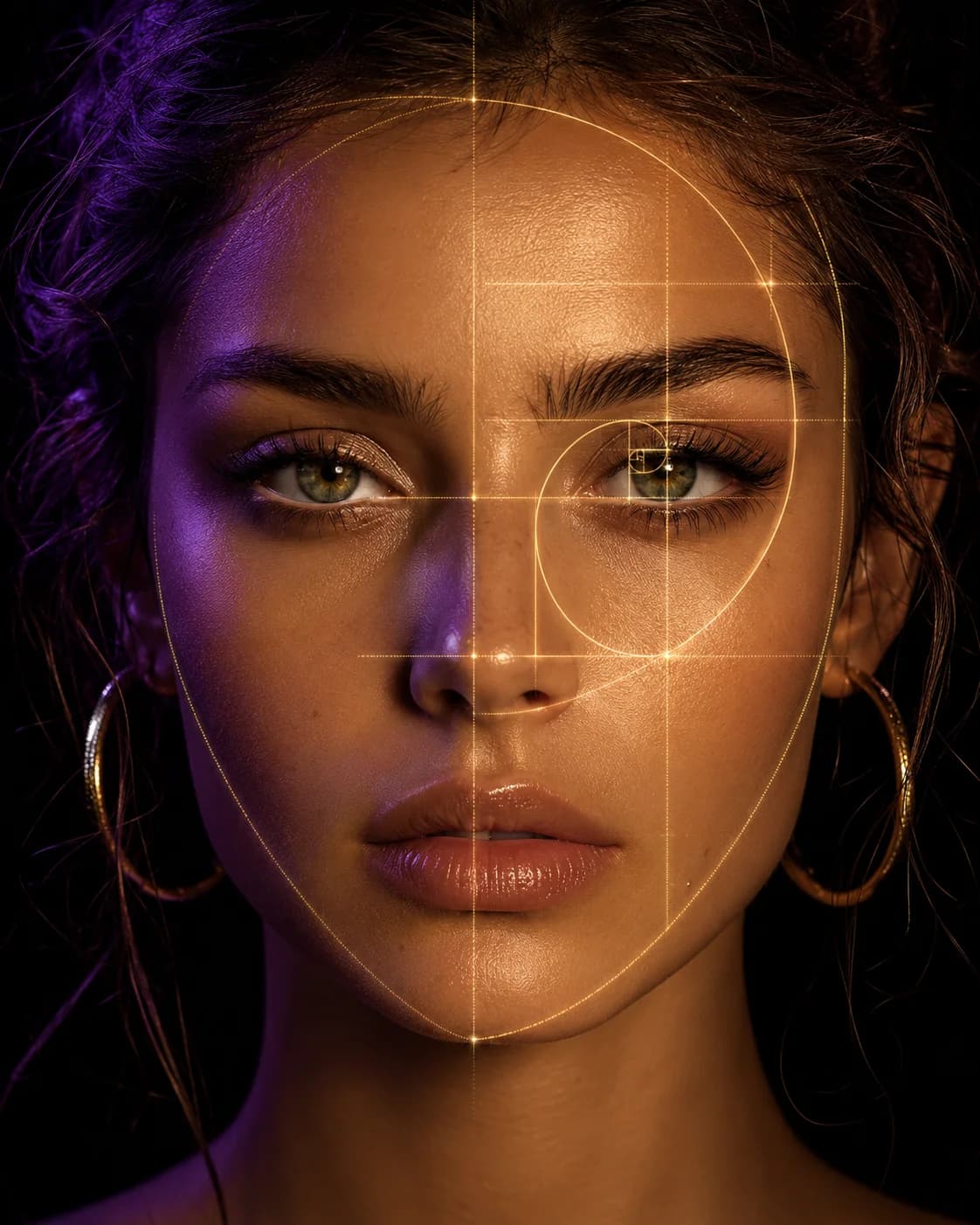
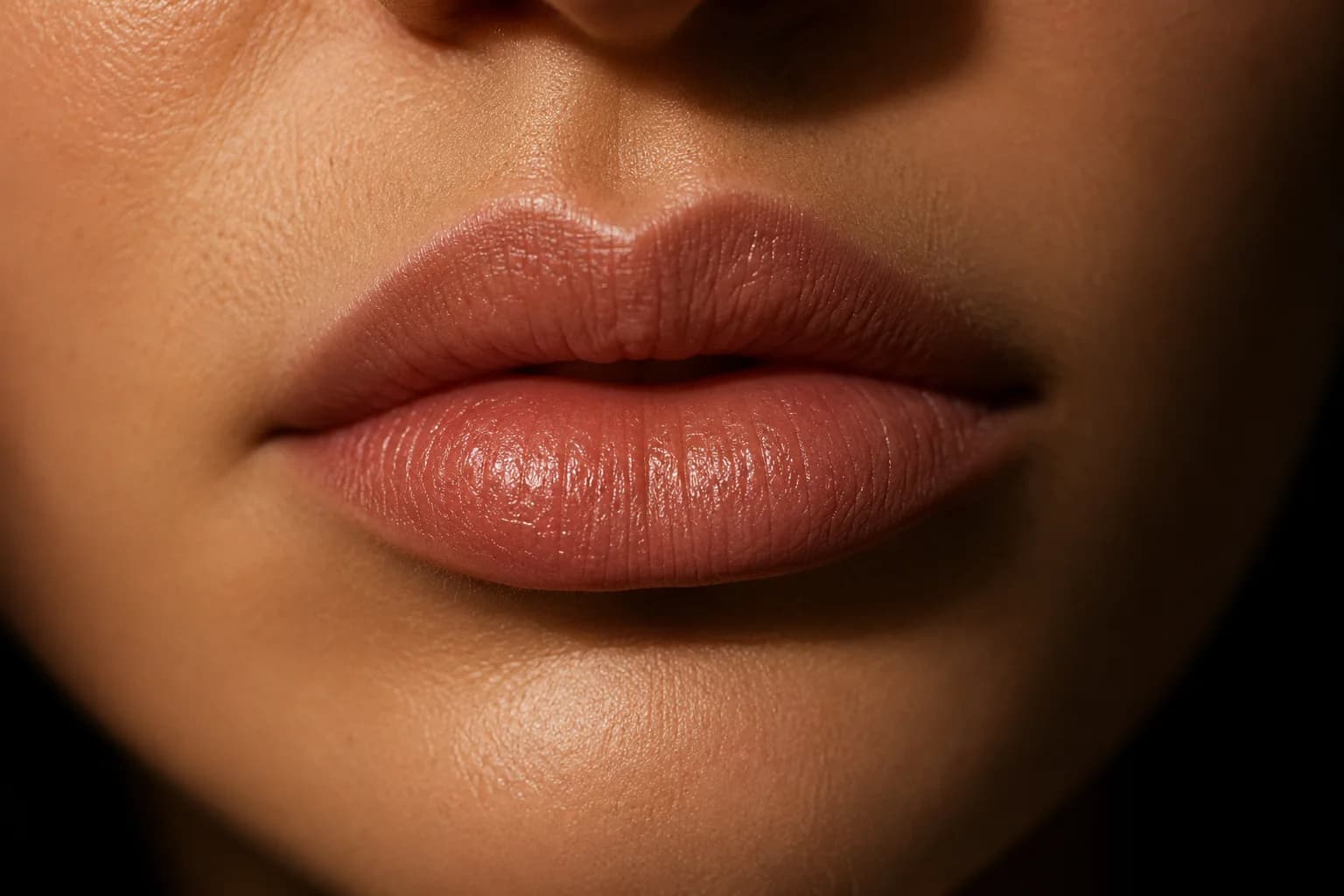
The most widely cited ideal in lip aesthetics is the ratio between upper and lower lip volume. Research published in JAMA Facial Plastic Surgery found that a lower-to-upper lip ratio of approximately 1.6:1 — where the lower lip is notably fuller than the upper — received the highest attractiveness ratings across observer groups. This ratio corresponds closely to the golden ratio and produces what most people describe as a naturally full, balanced lip appearance.
The philtrum — the vertical groove between the nose base and upper lip — interacts critically with lip attractiveness. A well-defined philtrum creates clear upper lip structure and enhances the Cupid's bow (the double curve of the upper lip border). Research shows that a pronounced Cupid's bow independently elevates lip attractiveness ratings, as it creates visual definition and shadow contrast that highlights lip shape.
Lip width relative to face width also matters. Studies show that lips spanning approximately 50% of the lower face width are rated most attractive — lips that are too narrow relative to face width appear pinched, while lips that are very wide relative to the face appear disproportionate. Vertical lip height (how tall the lips are) contributes less to attractiveness ratings than volume and width proportion.
The attractiveness of lips is always judged in context of the whole face — proportions that look ideal on one face shape may not translate to another.
Lips as a Biological Signal
From an evolutionary perspective, lips serve as a reliable signal of youth, hormonal health, and reproductive fitness. Lip fullness and colour are oestrogen-sensitive — higher oestrogen levels during peak fertility years produce fuller, more evenly pigmented lips. Research in Evolution and Human Behavior found that lip volume and redness are among the features male observers use to estimate female age and reproductive status, often subconsciously.
Lip colour is a separate but related attractiveness signal. Naturally reddish or pink lips indicate good circulation and oxygenation, both markers of health. Studies have shown that lip redness independently elevates attractiveness ratings, which partly explains why lip products that enhance colour have been used across virtually every human culture throughout recorded history.
For men, thinner lips are associated with higher testosterone and are perceived as more masculine — creating a clear sex dimorphism. Research shows that the full-lip attractiveness premium is much larger for women than men, where moderate lip fullness is preferred over extreme volume.
How Lip Shape Changes With Age
Lips thin measurably with age due to collagen loss, reduced fat in the lip body, and resorption of the underlying bone. The upper lip is particularly affected — the Cupid's bow flattens, philtrum elongates, and upper lip height increases as vermilion (the red part) thins. These changes begin gradually in the late 20s and accelerate through the 40s.
The corners of the mouth also drift slightly downward with age due to the combined effect of skin laxity, muscle pull from the depressor anguli oris, and volume loss in the perioral area. This is why ageing mouths often take on a subtle downward set even at rest — and why a genuine upward smile has such a powerful de-ageing effect on the lower face.
Sun protection and collagen-supporting skincare (retinoids, vitamin C) applied to the perioral area can slow the rate of lip ageing. Avoiding repeated pursing motions (smoking, drinking through straws habitually) reduces the formation of vertical lip lines that further reduce lip attractiveness over time.
Advertisement
What Can Actually Improve Lip Attractiveness
Hyaluronic acid lip filler is the most effective and reversible clinical intervention for lip volume and shape. When performed by an experienced injector following natural proportions, results closely mimic the oestrogen-driven fullness of peak-youth lips. The most natural outcomes respect the 1:1.6 upper-to-lower ratio and avoid overfilling the upper lip relative to the lower — the most common error that produces an 'overdone' appearance.
Non-clinical options with meaningful evidence include lip-plumping products containing mild irritants (cinnamon, capsaicin, hyaluronic acid) that temporarily increase blood flow and surface moisture — producing a modest but real 10–15% volume increase lasting a few hours. Overdrawn lip liner used to extend beyond the natural lip border is a makeup technique with centuries of use that effectively mimics fuller proportions without any product.
Frequently Asked Questions
What lip shape is considered most attractive?
Research consistently finds that a lower lip approximately 1.6 times fuller than the upper lip, a well-defined Cupid's bow on the upper lip, and a width spanning roughly 50% of the lower face width receive the highest attractiveness ratings. Natural reddish-pink lip colour and clear philtrum definition also contribute independently to lip attractiveness scores.
Do bigger lips always look more attractive?
Not always. Research shows a curvilinear relationship — lips that are moderately full score highest, while very thin lips and extremely overfilled lips both score lower. The most important factor is proportion: the ratio between upper and lower lip and the relationship of lip width to face width matters more than absolute volume. Overfilled upper lips in particular consistently score lower in attractiveness studies.
Why do lips thin with age?
Lips thin with age due to three converging mechanisms: collagen loss reduces the structural support of the lip tissue, bone resorption in the maxilla and mandible reduces the underlying framework, and the subcutaneous fat within the lip body gradually diminishes. The upper lip is most affected, with the Cupid's bow flattening and the vertical height of the upper lip increasing as the vermilion thins.
How does smiling affect lip attractiveness?
A genuine smile dramatically enhances lip appearance — it widens and lifts the lips, increases lip redness through blood flow, and reveals teeth, which add brightness to the lower face. Research shows that smiling faces are rated as significantly more attractive than the same face in a neutral expression, with much of that effect concentrated in the mouth region. A natural smile is one of the most powerful lip enhancers available.
Lena Whitmore
Science Writer · Facial Analysis & Appearance Psychology
Lena covers the science of smiles, facial aging, and AI-powered biometrics. She writes evidence-based guides grounded in peer-reviewed research, with a focus on making appearance science accessible and actionable. All tools on Smile Tracker run locally in your browser — your photo is never uploaded anywhere.
Put it to the test
See your results with AI
Upload a photo and get your personalized Smile Score, smile type, and eye engagement reading — free, private, instant.
Analyze My Smile Free →Advertisement
Sources