Open Mouth vs Closed Mouth Smile: Which One Looks Better in Photos?
Whether to show your teeth in a smile is one of the most asked questions in portrait photography — and one where people get genuinely conflicting advice. Some photographers insist on open smiles; others argue a closed smile looks more natural and controlled. Social media has recently shifted the conversation again, with many people deliberately choosing closed-mouth smiles for a more composed, editorial look. The science on this question is more nuanced than either extreme suggests — and the answer depends on factors most people have not considered.
What Research Says About Teeth-Showing Smiles
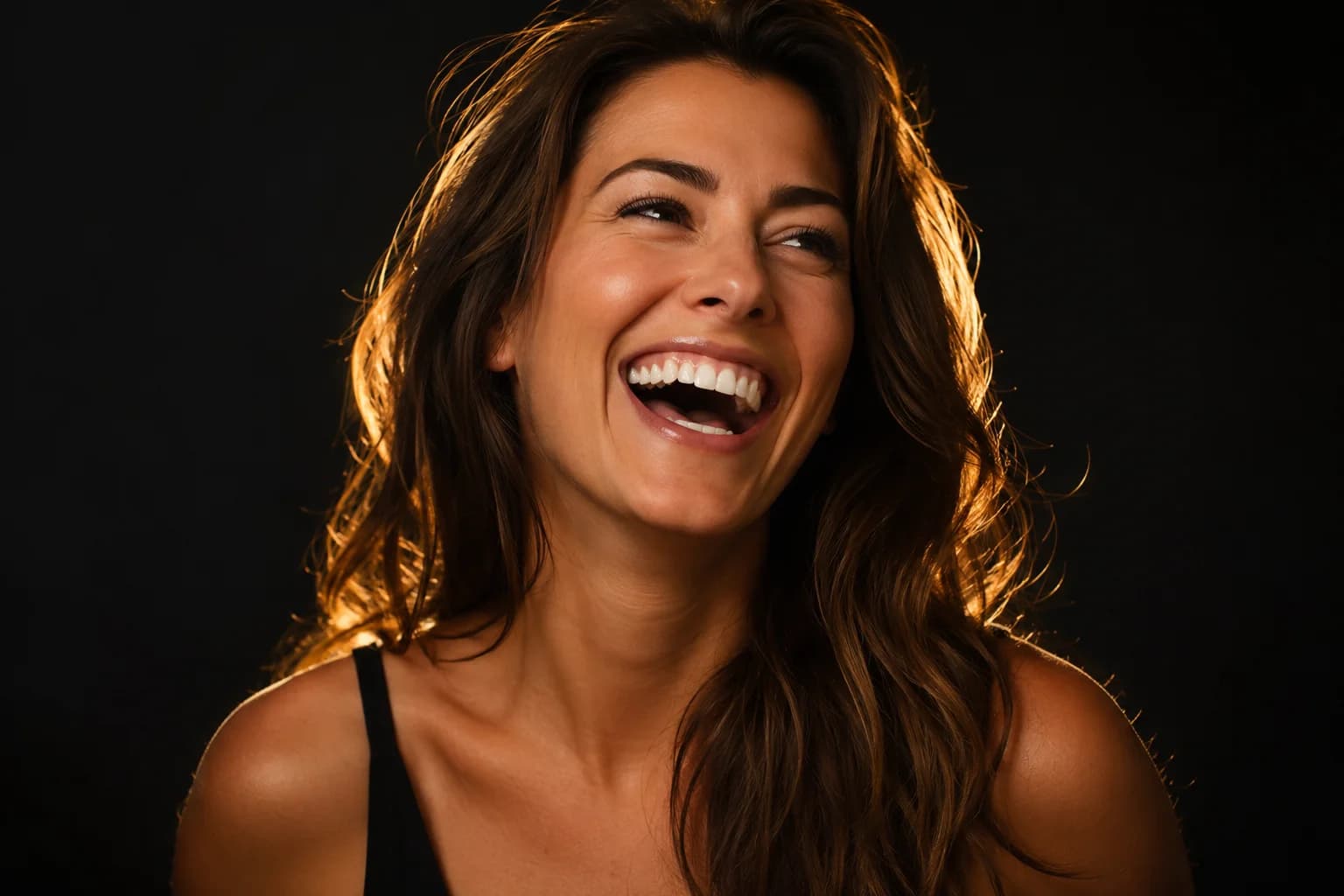
Multiple studies across the 1980s and 1990s established that broader smiles — those with more visible teeth — are consistently rated as warmer, friendlier, and more approachable than closed-mouth smiles. Reis and colleagues (1990) found that smile intensity (which correlates with the degree of teeth showing) predicted both attractiveness and perceived emotional positivity. Otta and colleagues (1994) found that smiles with visible teeth were rated as more genuine and more inviting than pressed-lip smiles.
The mechanism is straightforward: showing teeth while smiling is a high-intensity expression that requires significant zygomatic major activation. It tends to co-occur with full eye engagement (the orbicularis oculi firing) — which is the marker of a genuine Duchenne smile. This is why open-mouth smiles in photos tend to read as more authentic — they involve more of the face.
However, this effect depends on smile quality. An open-mouth smile that shows teeth but lacks eye engagement reads as forced — a wide mouth with flat eyes. A closed-mouth smile with full eye engagement can read as genuine and warm. The teeth are not the determinant; the eyes are.
When a Closed Mouth Smile Wins
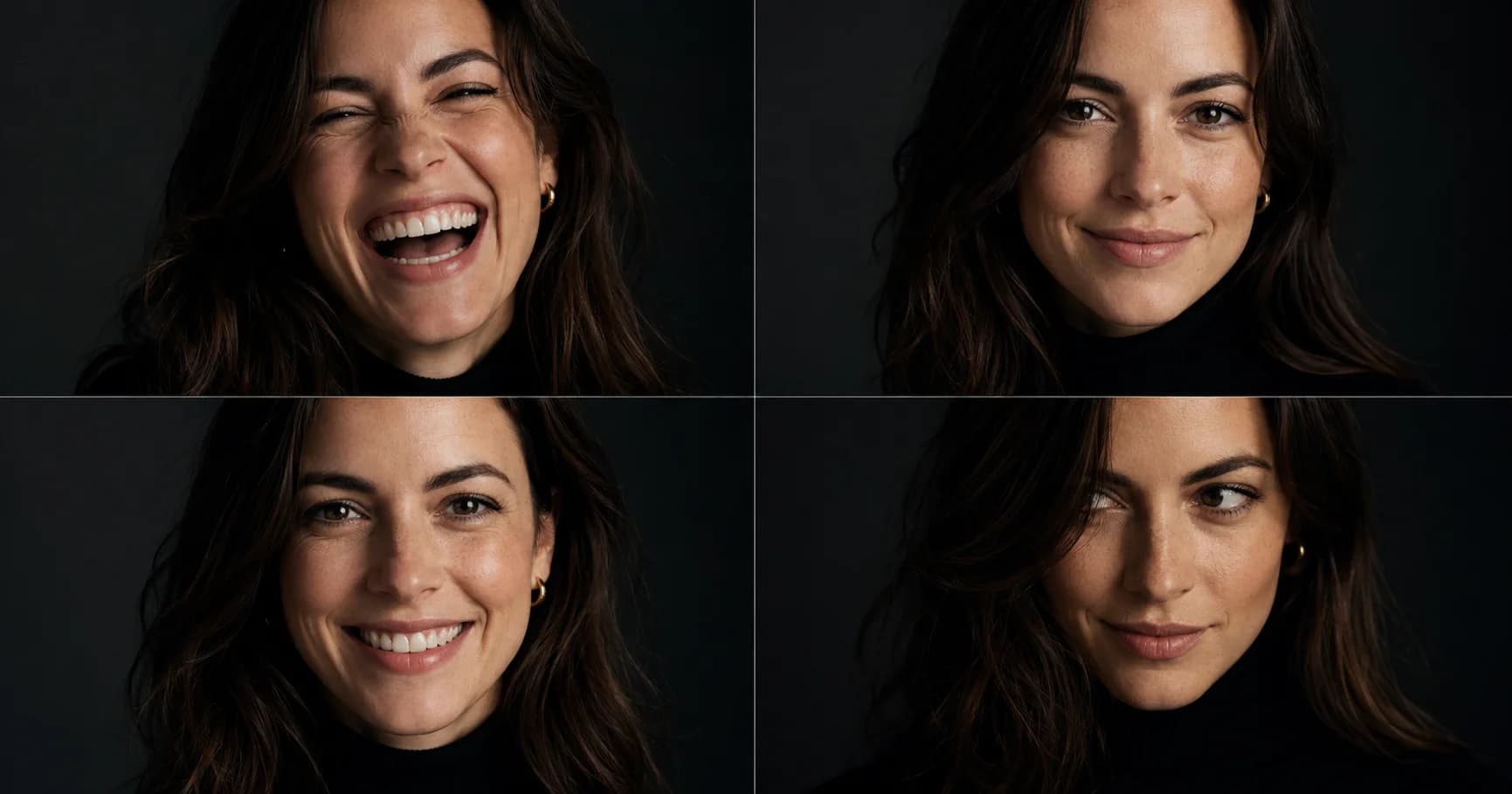
A closed-mouth smile is not automatically a lesser expression. In professional and formal contexts — LinkedIn headshots, professional headshots, corporate portraits — a composed closed-mouth smile often reads as more confident and controlled than a broad open smile. The signal shifts from 'warm and approachable' toward 'composed and assured.'
Closed smiles also avoid the primary photographic pitfall of open smiles: the mid-transition freeze. A broad open smile is only at its best at the peak of the expression — the fraction of a second when teeth are showing, eyes are crinkled, and cheeks are fully raised. Catching that frame reliably is harder than it looks. A closed-mouth smile is less expression-dependent and more forgiving of single-frame capture.
Closed smiles also give more control over the lower face. People who are self-conscious about their teeth or the shape of their mouth opening can produce a polished expression without those concerns entering the frame. The closed smile is, in this sense, a higher-floor option: it rarely produces a terrible photo, even if it also rarely produces the warmth ceiling of a great open smile.
For professional contexts (LinkedIn, headshots), a closed or slightly-open smile produces consistently strong results. For social and candid contexts, a genuine open smile — driven by real feeling, not a command — reads as warmer and more engaging.
The Social Media Shift: Why Closed Smiles Are Trending
Since approximately 2023–2024, a visible shift has occurred in how public figures and influencers present smiles on social media. The broad open smile — dominant in selfie culture for years — has been displaced in many editorial and aspirational contexts by a softer, more controlled closed or barely-open expression. This shift is partly aesthetic (aligning with high-fashion editorial photography norms) and partly driven by changes in facial filler trends.
Research published by Upworthy and cited in beauty publications noted that lip fillers and dental work have changed how some people physically smile — the modified oral anatomy producing different smile mechanics than an unaltered mouth. Some filler recipients find open-mouth smiling produces an expression they find less natural, shifting their preference toward closed expressions.
Neither approach is objectively superior. The best smile for photos is the one that produces genuine eye engagement — which requires genuine feeling, not a deliberate choice about teeth. If your authentic best smile shows teeth, suppress it for the sake of looking 'editorial' and you will likely lose the eye engagement that made it good.
Advertisement
What AI Smile Analysis Reveals
AI smile scoring measures four components: mouth smile curve (the upward arc of the mouth corners), cheek lift (zygomatic major and cheek fat pad elevation), eye squint (orbicularis oculi activation — the Duchenne marker), and jaw openness (the vertical distance of the mouth opening). Open-mouth smiles typically score higher on jaw openness and, when genuine, on cheek lift and eye squint. Closed-mouth smiles can score well on smile curve and cheek lift but often score lower on jaw openness by definition.
The component that matters most for a high overall score is eye squint — the Duchenne marker. A closed-mouth smile with full eye engagement will outscore an open-mouth smile with flat eyes on nearly every measure that matters for perceived genuineness.
Testing both on the Smile Tracker tool gives you objective data on which produces your highest score in your specific face — rather than following generic advice that may not apply to your smile's particular strengths.
Frequently Asked Questions
Is it better to smile with your mouth open or closed in photos?
Research shows open-mouth smiles with visible teeth are rated as warmer, friendlier, and more genuine — because showing teeth requires higher expression intensity that tends to co-occur with genuine eye engagement. However, the key variable is eye engagement (Duchenne marker), not teeth. A closed-mouth smile with fully engaged eyes can outscore an open-mouth smile with flat eyes. For professional contexts, a composed closed smile often reads better than a broad open one.
Why does my smile look better closed?
Several possible reasons: (1) your open smile may be captured mid-expression rather than at peak — burst mode improves this; (2) your open smile may not have full eye engagement, making it look forced; (3) single-frame capture is less forgiving of open smiles, which have a narrower peak expression window; (4) your natural closed smile may simply be genuinely warm if it involves eye engagement. Comparing AI scores of both can tell you which components are stronger in each.
Does smiling with teeth look more attractive?
Generally yes, but with important conditions. Teeth-showing smiles are rated as warmer and more approachable in research. However, the attractiveness benefit comes from the full expression — cheek lift, eye engagement, and genuine intensity — that open smiles typically produce when authentic. A forced open smile without eye engagement is rated less positively than a genuine closed smile. The teeth themselves are not what drives the attractiveness rating; the completeness of the expression is.
Why do I look weird when I smile with my teeth?
The most common cause is mouth-leading the expression — showing teeth before the eyes and cheeks have engaged. This produces the teeth with flat eyes look that reads as forced. Try letting the feeling (real amusement or warmth) build first, then let the smile follow naturally rather than producing it on command. Burst mode photography captures the full range of your expression and lets you choose the peak frame rather than relying on a single commanded shot.
Lena Whitmore
Science Writer · Facial Analysis & Appearance Psychology
Lena covers the science of smiles, facial aging, and AI-powered biometrics. She writes evidence-based guides grounded in peer-reviewed research, with a focus on making appearance science accessible and actionable. All tools on Smile Tracker run locally in your browser — your photo is never uploaded anywhere.
Put it to the test
See your results with AI
Upload a photo and get your personalized Smile Score, smile type, and eye engagement reading — free, private, instant.
Analyze My Smile Free →Advertisement
Sources