
Perfect Smile Ratio: The Science of an Ideal Smile
The perfect smile ratio is not one number — it is a set of proportional relationships between smile width, tooth display, lip balance, and eye engagement that aesthetic dentistry and facial analysis have refined over decades. Research by Ackerman and others identifies measurable targets: smile width roughly matching the distance between pupils, upper teeth visible between 75 and 100 percent of the time during full smile, gum display minimal, and lip corners rising symmetrically. No single smile hits every ideal simultaneously, and cultural preferences vary. But understanding these ratios gives you a framework for evaluating your own smile, identifying what to improve, and measuring progress with objective AI tools rather than vague mirror impressions.
The Key Ratios That Define Smile Aesthetics
Smile width ratio: the distance between mouth corners at full smile should approximate the inter-pupillary distance (distance between pupil centres). Wider smiles read as warmer and more confident; narrower smiles can appear restrained or tense. Most attractive smiles in research fall within 90–110% of pupil distance.
Tooth display ratio: at maximum smile, ideally 75–100% of upper central incisors are visible, with lower teeth hidden behind the lower lip. Excessive gum display above 2–3mm (gummy smile) or insufficient tooth show both reduce aesthetic scores in clinical evaluations.
Lip symmetry ratio: left and right mouth corners should rise to equal heights. Asymmetric smile elevation is immediately noticeable and affects perceived authenticity. Duchenne smiles add eye engagement — cheek lift and lower lid narrowing — which is rated independently of mouth geometry but equally important for warmth.
Golden Ratio and the Smile
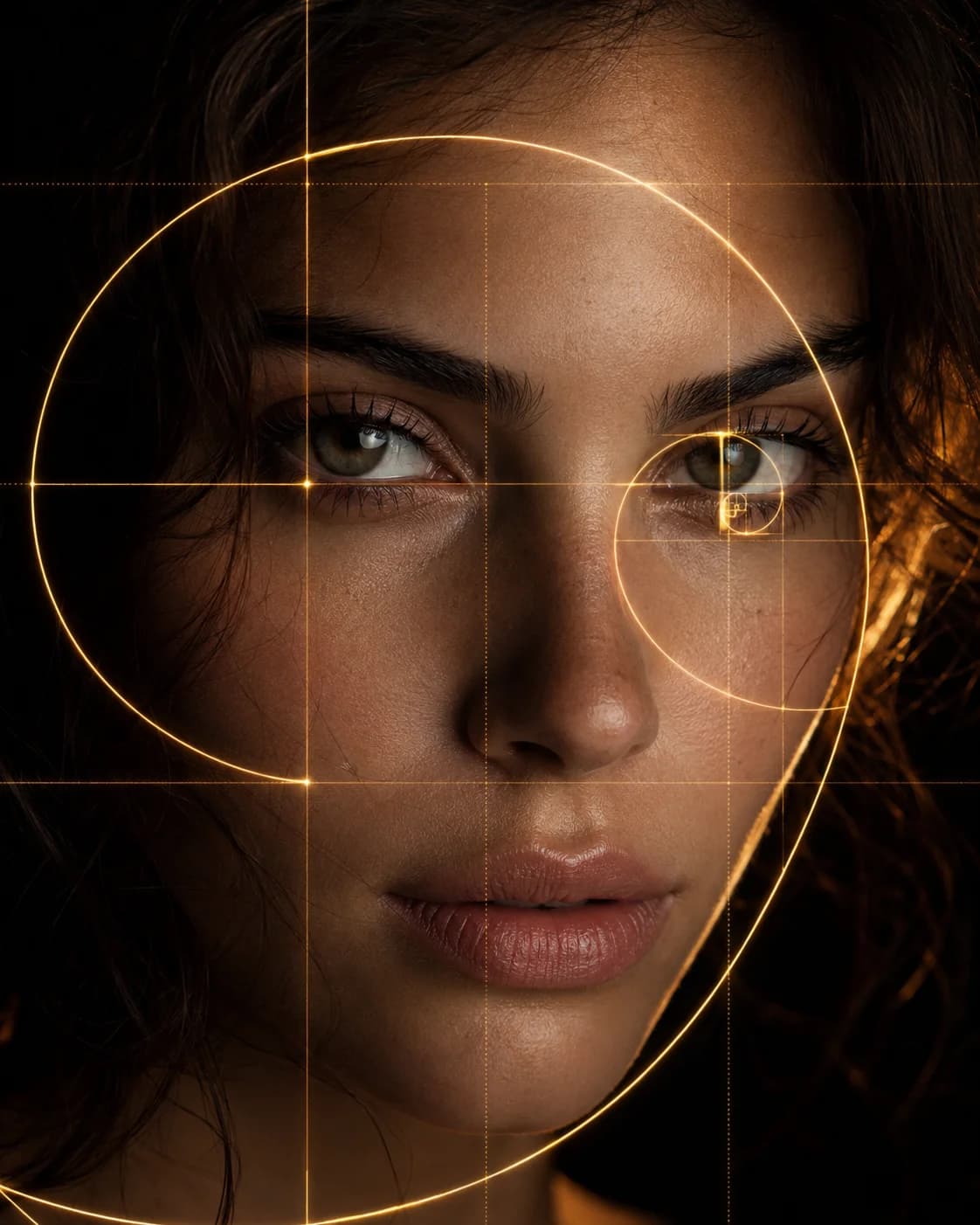
The golden ratio (approximately 1.618:1) appears in facial aesthetics discourse frequently, though its application to smiles is more heuristic than rigid law. In smile design, practitioners use golden ratio principles to proportion tooth width — central incisors widest, lateral incisors roughly 62% of central width, canines tapering further.
Face-wide golden ratio relationships connect the smile to broader harmony: mouth width relative to nose width, smile height relative to lower face third. A smile that is proportionate within the lower facial third integrates better with overall attractiveness than an isolated 'perfect' mouth on an otherwise unbalanced face.
AI tools measure these relationships through landmark geometry. MediaPipe detects mouth corners, lip contours, and eye positions simultaneously, enabling ratio calculations without manual measurement.
What Affects Your Smile Ratio in Practice
Dental architecture is foundational. Tooth size, alignment, and arch width determine maximum achievable smile width. Orthodontics and veneers can shift ratios substantially; lip competence (whether lips close fully at rest) affects tooth display at moderate smile intensity.
Muscle habits shape dynamic ratios. Some people smile with mouth-only movement (voluntary pathway) producing adequate width but no eye engagement. Others activate full Duchenne patterns — cheek rise, eye narrowing, symmetric corner elevation — scoring higher on authenticity even with slightly narrower mouth opening.
Photography conditions alter apparent ratios. Wide-angle lenses stretch mouth width; telephoto compresses it. Low camera angles make lower teeth more visible; high angles hide upper tooth display. For accurate assessment, use a frontal photo at eye level with natural expression.
Think of a genuine happy memory before smiling for analysis — Duchenne activation improves both ratio scores and authenticity ratings.
Advertisement
How AI Measures Smile Proportions
Smile Tracker's AI Smile Analyzer uses MediaPipe blendshapes and 478 landmarks to score four signals: smile intensity (mouth corner elevation and width), smile type (Duchenne vs social vs posed), eye engagement (orbicularis oculi activation), and jaw relaxation. These combine into an overall Smile Score.
While not labelled 'perfect smile ratio' explicitly, the underlying geometry maps to the same proportional principles aesthetic research defines. Mouth corner positions relative to eye landmarks approximate smile width ratio. Blendshape values for mouth stretch and cheek puff indicate tooth display potential.
The advantage of AI measurement is consistency. The same smile photographed ten times under identical conditions produces the same score — eliminating the subjective variation of human rating.
Improving Your Smile Ratio Naturally
Train Duchenne activation: practice raising cheeks and narrowing lower lids before mouth movement. This improves eye engagement scores and creates the cheek lift that frames the smile attractively.
Relax the jaw: clenched masseter muscles restrict mouth corner travel, narrowing effective smile width. Exhale fully before smiling to release jaw tension.
Use memory-triggered expression: recall specific happy memories rather than performing 'smile for camera.' Authentic activation produces better proportional balance than forced grinning.
Dental consultation for structural limits: if tooth display is insufficient due to small teeth or excessive gum, cosmetic dentistry can shift ratios within biological constraints. Lip repositioning procedures address gummy smile cases.
Measure Your Smile With AI
Curious how your smile scores on proportional and authenticity metrics? Upload a photo to our free Smile Analyzer. You will receive a Smile Score, smile type classification, eye engagement reading, and personalised tips — all processed locally in your browser.
Compare results over time as you practice Duchenne techniques and jaw relaxation. Most users see measurable improvement in eye engagement within two to three weeks of daily practice.
Combine with our Face Analyser for symmetry and proportion context, and read our smile tips guide for the complete improvement framework.
Frequently Asked Questions
What is the perfect smile ratio?
Research identifies several ideal proportions: smile width matching inter-pupillary distance (90–110%), 75–100% upper tooth visibility at full smile, minimal gum display, symmetric corner elevation, and Duchenne eye engagement. No single smile achieves every ideal perfectly.
Can AI measure smile ratio?
Yes. AI landmark detection calculates mouth width relative to eye spacing, smile intensity via blendshapes, and eye engagement via cheek and lid movement. Smile Tracker's analyzer scores these dimensions as a composite Smile Score.
Is a wider smile always better?
Not necessarily. Smile width should be proportionate to face width and inter-pupillary distance. Excessively wide smiles can appear strained. Authenticity and eye engagement matter as much as width.
What is a gummy smile ratio problem?
Gummy smile shows more than 2–3mm of gum above upper teeth at full smile. It is a common aesthetic concern addressable through orthodontics, lip repositioning, or botox to upper lip elevator muscles depending on cause.
How do I improve my smile ratio?
Practice Duchenne smiling with genuine memory triggers, relax jaw tension before smiling, train orbicularis oculi with daily mirror exercises, and address structural dental limits with professional consultation if needed.
Lena Whitmore
Science Writer · Facial Analysis & Appearance Psychology
Lena covers the science of smiles, facial aging, and AI-powered biometrics. She writes evidence-based guides grounded in peer-reviewed research, with a focus on making appearance science accessible and actionable. All tools on Smile Tracker run locally in your browser — your photo is never uploaded anywhere.
Put it to the test
See your results with AI
Upload a photo and get your personalized Smile Score, smile type, and eye engagement reading — free, private, instant.
Analyze My Smile Free →Advertisement
Sources
Related reading

What Is a Duchenne Smile? The Science Behind a Real Smile
May 2026 · 6 min read
Golden Ratio Face: How to Measure Yours and What It Actually Means
May 2026 · 7 min read

Teeth and Attractiveness: Does Your Smile Really Matter?
May 2026 · 6 min read

Types of Smiles and What They Mean: A Science-Backed Guide
June 2026 · 12 min read