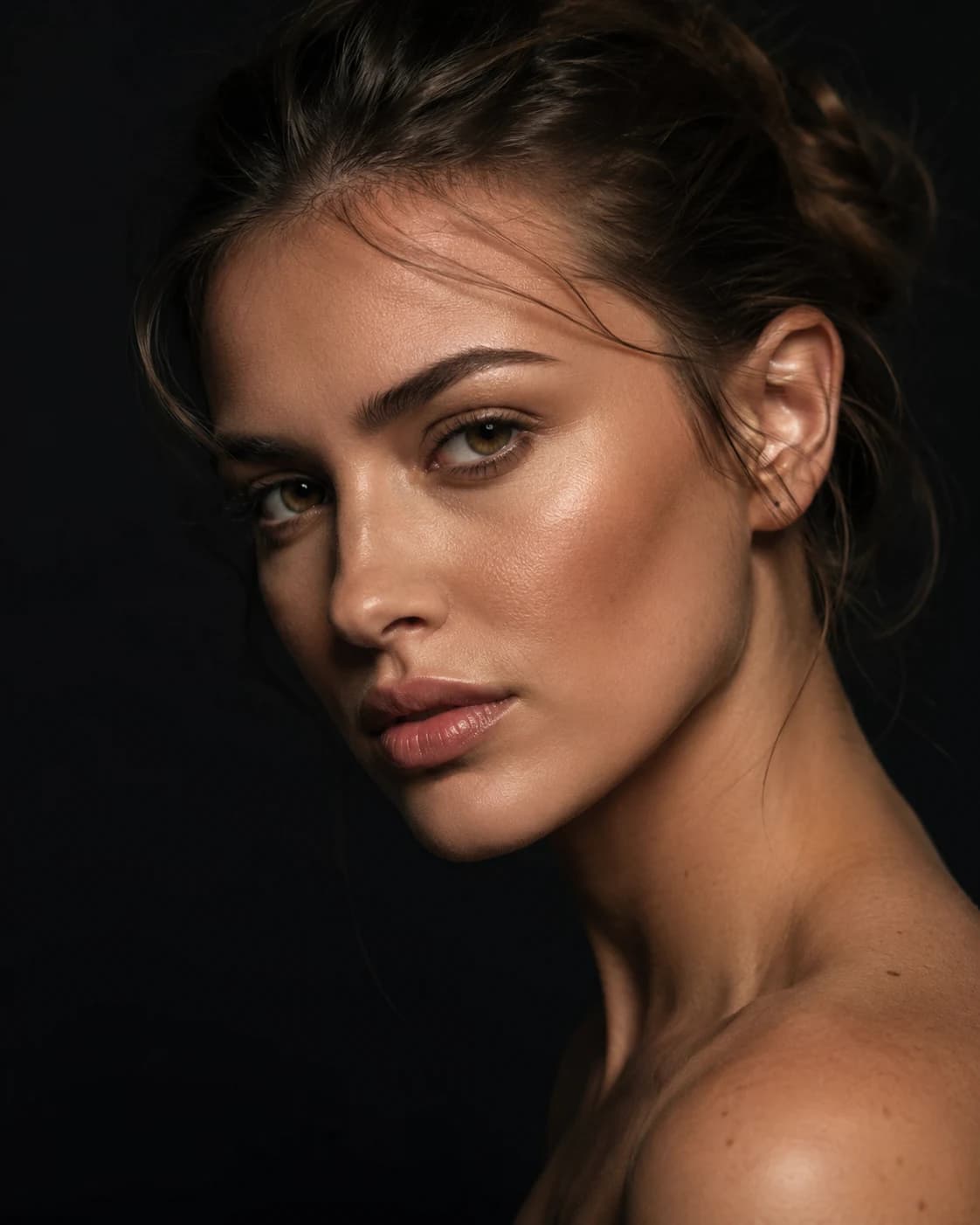
How to Make Your Face Look Slimmer: What Actually Works
A fuller, rounder face is one of the most common appearance concerns — and one of the most addressable. Some strategies produce results in minutes (camera angle, contouring, hairstyle). Others take weeks (sodium reduction, alcohol reduction, better sleep). And a few require months (exercise-driven overall body composition change). This guide covers all three timelines with the evidence behind each.
Why Faces Look Fuller or Slimmer
Facial fullness is driven by three independent factors: bone structure (the width of the zygomatic arch and mandible), soft tissue volume (fat pad size and position), and fluid (lymphatic and interstitial fluid levels). Bone structure is fixed in adults. Soft tissue volume and fluid distribution are both modifiable — and it is these two factors that almost all face-slimming strategies actually target. Understanding which cause is driving your fuller face determines which strategy will work fastest.
Research by David Puts and colleagues found that facial adiposity — the amount of visible facial fat — is a significant predictor of both perceived health and attractiveness ratings, with moderate facial adiposity scoring highest. Very full faces are associated in perception research with higher BMI and lower cardiovascular health, which is part of why facial slimming is associated with looking healthier and more attractive. However, the very thin faces of extreme caloric restriction also score poorly — loss of facial volume reads as aging and ill health.
The visual impression of facial width is partly determined by how the face is framed. Hair, hat, collar, and jawline definition all change how wide the face appears against a background. This means that face-slimming strategies that do not change any facial tissue — hairstyle, angle, clothing — can produce as dramatic an effect on how slender the face looks as strategies that actually reduce tissue volume.
Immediate Methods: Angles, Lighting, and Selfies
Camera angle is the single fastest face-slimming tool. Shooting from slightly above eye level — camera held high, chin slightly tucked — compresses the vertical dimension of the lower face and creates a slight foreshortening of the jaw and lower cheeks that reads as slimmer. This is why professional headshots almost always use a slightly elevated camera position. Shooting from below eye level does the opposite: it widens the lower face and exaggerates chin and jaw width.
The three-quarter angle (turning the face approximately 30-45 degrees to one side rather than shooting full face-on) consistently makes faces appear slimmer by reducing the visible width. A full face-on shot shows the entire width of the face at once. A three-quarter angle hides some of the far side's width behind the near side, and the slight foreshortening of the far cheek reduces apparent width further. Most people look slimmer in three-quarter shots than in full-face shots.
Lighting direction affects the perceived face width significantly. Side lighting — a light source at roughly 45 degrees to the side — creates natural shadows on the far side of the face that reduce apparent width and add depth. Front-on flat lighting (ring lights, for example) eliminates shadows and makes the face appear flatter and wider. For a slimmer appearance in selfies and photos, ensure there is a clear directional light source to one side rather than flat illumination from directly in front.
Contouring for a Slimmer Face
Contouring is the makeup equivalent of directional lighting — it creates permanent-looking shadows that redefine the face's apparent width. For face slimming, the key placements are: contour along the sides of the forehead (reducing the widest upper face point), contour in the hollow below the cheekbones (creating shadow that implies a narrower mid-face), and contour along the sides of the jaw and under the chin (reducing the widest lower face points). Highlight the centre vertical line of the face — forehead centre, nose bridge, cupid's bow, chin — to elongate the face and draw the eye vertically rather than horizontally.
The nose contour plays an indirect but real role in making the face look slimmer. A wider nose visually expands the mid-face and can make the face appear broader. Thin parallel lines of contour along the sides of the nose bridge, with a highlight line down the centre, slim the nose and by extension reduce the visual width of the central face. The effect is subtle but visible in photographs.
The most common contouring mistake for face slimming is placing the contour too high on the cheekbone, where it creates shadow at the widest point of the face rather than below it. Contour should sit in the hollow below the cheekbone — the slightly concave area that appears when you suck in your cheeks — not on the bone itself. The bone gets the highlight; the hollow below gets the contour.
Advertisement
Hairstyle Choices That Slim the Face
Hairstyles can create the illusion of a slimmer, more elongated face through two mechanisms: framing (adding vertical visual lines near the face) and concealment (covering the widest points of the face shape with hair). Long layers that fall past the cheekbones add vertical lines that draw the eye up and down rather than across. A centre or slight side part creates a vertical line down the forehead that elongates the face impression. Both work for all hair lengths.
For round and square faces — the shapes most associated with a fuller appearance — avoiding completely blunt, chin-length cuts that terminate at the widest point of the face is important. A cut that ends exactly at the jaw visually frames and emphasises jaw width. Cuts that end just above the jaw (emphasise chin definition) or fall well below the jaw (add vertical length) are more flattering for faces seeking a slimmer appearance.
Volume placement in styled hair matters enormously. Volume at the sides of the face — wide, puffed-out sections at cheek level — adds apparent face width. Volume at the top of the head elongates the face impression vertically. For a slimmer-looking face, direct volume upward (using root-lifting products or diffuser techniques) and keep the sides relatively flat. A half-up style that adds crown height while keeping the sides close to the head is one of the most broadly flattering options.
The fastest face-slimming hairstyle hack: two curtain bangs framing a centre or near-centre part. The centre part creates a vertical elongating line, and the framing soft bangs add facial framing that draws attention to the centre of the face rather than its width.
Medium and Long-Term Strategies
Reducing sodium intake is the fastest dietary intervention for a slimmer face — results within three to five days. High dietary sodium causes the body to retain water osmotically, and the face is highly visible evidence of this retention. Cutting sodium to under 2,000mg per day and increasing potassium intake (which counteracts sodium's retention effect) produces visible facial slimming within days, particularly in people coming from a high-sodium baseline. The effect is genuine tissue fluid reduction, not just visual.
Alcohol reduction produces similar fast results through a different mechanism. Alcohol is both a diuretic (causing reactive water retention) and an inflammatory vasodilator (causing fluid leakage from blood vessels into tissue). Even one heavy drinking event can produce visible facial puffiness for 24-48 hours. Reducing or eliminating alcohol produces a consistently slimmer, more defined face within a week, with the most dramatic difference visible in the morning.
Overall body composition change — reducing total body fat — does reduce facial fat over time, though the face does not slim before or faster than the rest of the body. Most people find that a 5-10% reduction in total body weight produces noticeable facial slimming. This takes months, not days, but it is the only intervention that permanently reduces the fat pad volume that determines bone-level face width. Combined with the immediate techniques above, it produces the most comprehensive result.
Frequently Asked Questions
How can I make my face look slimmer fast?
The fastest methods are: shoot photos from slightly above eye level at a three-quarter angle (immediate), apply directional side lighting (immediate), use contouring makeup on the jaw sides and cheeks (immediate), reduce sodium intake (visible within 3-5 days), and reduce or stop alcohol (visible within 1-3 days). These strategies target different causes and combine effectively.
Does losing weight slim your face?
Yes. Total body fat reduction does reduce facial fat, producing visible slimming. The face does not slim faster than the rest of the body — you cannot spot-reduce facial fat specifically. A 5-10% reduction in total body weight typically produces noticeable facial slimming. This takes weeks to months depending on caloric deficit and starting point.
What hairstyle makes a round face look slimmer?
Long layers past the cheekbones add vertical lines that elongate the face. A centre or slight side part creates an elongating vertical line. Avoid blunt chin-length cuts that frame and emphasise jaw width. Add volume at the crown rather than the sides. Curtain bangs with a centre part are particularly effective for creating a slimmer face impression.
Does sodium cause a puffy face?
Yes — high sodium intake is one of the most common causes of facial puffiness and a wider-looking face. Sodium raises osmotic pressure in extracellular fluid, drawing water from cells and blood vessels into interstitial tissue. The face shows this prominently because facial skin is thin. Reducing sodium to under 2,000mg daily produces visible slimming within three to five days.
What angle makes your face look slimmest in photos?
A three-quarter angle (face turned 30-45 degrees to one side) combined with a slightly elevated camera position (camera above eye level, slight chin tuck) consistently produces the slimmest-looking result. This angle reduces the visible width by hiding part of the far side of the face and creates natural shadows on the far cheek that add apparent definition.
Lena Whitmore
Science Writer · Facial Analysis & Appearance Psychology
Lena covers the science of smiles, facial aging, and AI-powered biometrics. She writes evidence-based guides grounded in peer-reviewed research, with a focus on making appearance science accessible and actionable. All tools on Smile Tracker run locally in your browser — your photo is never uploaded anywhere.
Put it to the test
See your results with AI
Upload a photo and get your AI facial proportion analysis, symmetry measurement, and feature breakdown — free, private, instant.
Analyse My Face Free →Advertisement
Sources
Related reading

How to Look More Attractive in Photos: 6 Science-Backed Fixes
May 2026 · 6 min read

What Face Shape Do I Have? How to Find Out and What It Means
May 2026 · 7 min read
What Causes a Double Chin and Can You Get Rid of It?
May 2026 · 6 min read

Why Does My Nose Look Big in Selfies? The Camera Science Explained
May 30, 2026 · 6 min read
Puffy Face: Why It Happens and How to Reduce It Fast
June 2026 · 7 min read

Nose Shapes: The 6 Most Common Types and How Each Photographs
June 2026 · 7 min read