Nose Shapes: The 6 Most Common Types and How Each Photographs
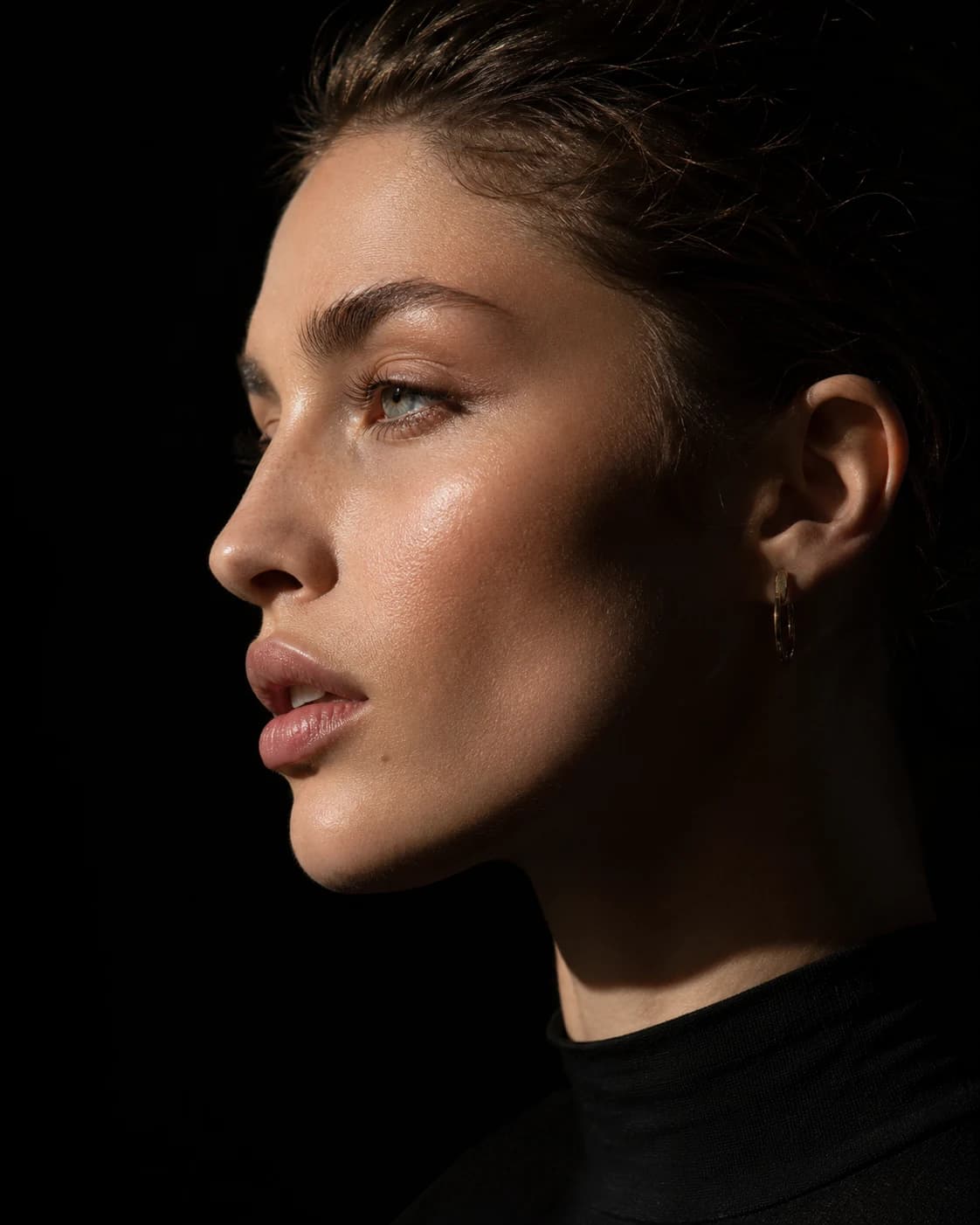
Nose shape is one of the most genetically diverse facial features — more variable across individuals than almost any other single structure. There are six commonly identified nose shapes, each with distinct characteristics in terms of bridge height, tip definition, nostril width, and projection. Knowing your nose shape helps you understand how it photographs and how different angles and lighting change its appearance.
The 6 Main Nose Shapes
The Roman nose (also called an aquiline nose) features a prominent bridge with a slight downward curve — the profile shows a convex bump or hump at or below the midpoint of the bridge. It tends to be longer and more projecting than average. In profile photography, the bridge curvature is the dominant feature. Famous examples appear frequently in classical European portraiture, where the Roman nose was considered a mark of aristocratic bearing. In modern beauty culture it has experienced significant rehabilitation as a distinctive, editorial feature.
The Greek nose features a straight, narrow bridge with no hump or curve from the profile view — the nasal dorsum is a clean straight line from the nasion (bridge root between the eyes) to the tip. It is the most commonly referenced 'classical ideal' in Western beauty standards, appearing in ancient Greek sculpture as the template for aesthetic perfection. Anatomically, it requires both a high dorsum and a refined tip to achieve the clean line — either a low bridge or a bulbous tip breaks the Greek profile.
The snub nose (or button nose) is characterised by a short bridge, an upturned tip with a nasolabial angle greater than 106 degrees (in females), and a relatively small overall projection. It reads as cute and youthful because of its resemblance to infant and child nose proportions — wide nostrils relative to projection, tilted upward tip, reduced bridge prominence. Cross-cultural research consistently rates the slightly upturned nasolabial angle as attractive in female faces, making the snub nose one of the most consistently favoured shapes in preference studies.
Three More Common Nose Types
The bulbous nose features a rounded, wider tip with less defined cartilage edges — the tip reads as a round mass rather than a pointed or refined one. The nostrils tend to be wide relative to the bridge width, and the overall nose reads as wide rather than narrow in front-facing views. In photographs, the bulbous tip often becomes more pronounced because cameras compress depth, making the rounded tip appear flatter and wider than it looks in person. Front-facing flash lighting amplifies this effect by eliminating the tip shadows that define the contour.
The hawk nose resembles the Roman nose but with a more pronounced and sharper downward hook at the tip, giving it a more dramatic, predatory quality in profile. The bridge may be straight or convex, but the defining feature is the downward rotation of the nasal tip beyond what is seen in the Roman type. In historical beauty standards it was more negatively coded, but in editorial fashion it is frequently selected precisely for its dramatic, memorable quality. It profiles dramatically in side photography.
The Nubian nose (also called a wide nose or broad nose) features a wide base with flared nostrils and a lower bridge relative to nose length. It is the most common nose morphology in sub-Saharan African, some East Asian, and some Pacific Islander populations and is one of the most genetically prevalent nose shapes globally. In front-facing photography, the wide alar base is the dominant feature. High cheekbones adjacent to a wide-base nose create a distinctive harmony that reads very differently from the nose in isolation.
| Nose Shape | Key Characteristic | Best Angle | Lighting Tip |
|---|---|---|---|
| Roman (Aquiline) | Convex bridge hump | Slight three-quarter | Side light to define bridge curve |
| Greek (Straight) | Straight dorsum line | Full profile or three-quarter | Even lighting preserves line clarity |
| Snub (Button) | Upturned tip, short bridge | Slightly elevated front-facing | Soft front light to keep it delicate |
| Bulbous | Wide rounded tip | Three-quarter to minimise tip width | Side light adds tip shadow and definition |
| Hawk | Sharp downward tip hook | Full profile for maximum impact | Profile side light for dramatic effect |
| Nubian (Wide base) | Flared nostrils, lower bridge | Three-quarter or slight turn | Side light narrows apparent base |
Why Selfies Distort Your Nose Shape
Selfies taken at arm's length (typically 12-18 inches from the face) create significant wide-angle distortion because the camera is too close. At this distance, objects closer to the lens appear proportionally larger — and the nose, being the most projecting facial feature, is always closer to the lens than the ears and the rest of the face. This creates a reliable and measurable distortion that makes the nose appear wider and more prominent relative to the face than it actually is.
A 2019 JAMA Facial Plastic Surgery study quantified this distortion: at arm's length (roughly 12 inches), the nose appeared 30% wider than it did at a standard portrait distance of five feet. This single finding explains why so many people believe their nose is a problem feature based on selfies — they have never seen an accurate representation of it. At portrait distance or greater, the nose photographs proportionally and the distortion disappears.
The fix is simple: take photos from further away and crop in, or use the telephoto lens on your phone (usually the 2x or 3x option) rather than the wide lens. Better still, have someone else photograph you from five to eight feet away — this is the distance at which your nose appears closest to how it actually looks in person and in the mirror.
Advertisement
Which Nose Shape Is Most Attractive?
Research on nose shape attractiveness is more nuanced than for most other facial features, partly because the nose is perceived as attractive or unattractive primarily in the context of the overall face rather than in isolation. A nose considered ideal in isolation may not be the most harmonious choice for a given face — facial harmony research shows that the most attractive nose is the one that balances best with the other features, rather than the one closest to any single archetype.
The most consistent finding across preference studies is that in female faces, a slightly upturned nasolabial angle (snub nose direction) is preferred, while in male faces, a straight to slightly Roman bridge with more projection is preferred. These preferences hold across cultures with some variation, suggesting a partly universal basis linked to the sex-differentiating effects of testosterone on nasal bone growth — testosterone drives a straighter, more projecting, lower nasal tip during male puberty.
Among all nose shapes, the Greek nose — straight bridge, refined tip, proportionate width — scores highest as an abstract ideal across the widest range of evaluators. However, distinctive nose shapes including Roman, hawk, and Nubian are frequently cited as beautiful and memorable precisely because they are distinctive, not because they conform to a single ideal. The most persuasive beauty research suggests that distinctiveness combined with facial harmony is a better predictor of overall attractiveness than any single feature ideal.
Photographing Your Nose Shape Flatteringly
The most universally flattering angle for photographing the nose is the three-quarter view — face turned roughly 30-45 degrees from front-facing. This angle reduces the apparent width of the nose by showing it in slight perspective rather than full-on, and it allows the bridge line to read as a defined shape rather than a flat form. For bulbous or wide-base noses, the three-quarter angle is particularly effective at creating the impression of more refinement.
Lighting direction matters enormously for nose photography. Side lighting (a light source at 45 degrees to one side) creates natural shadows along the nose sides that define the bridge and tip edges, making the nose appear more sculpted and narrower. Front-on flat lighting (common in bathroom or indoor overhead lighting) eliminates these shadows and makes the nose appear wider and flatter. If you photograph in front of a window, position yourself with the window to one side rather than directly in front.
For Roman or hawk noses where the bridge hump is the primary concern, slightly elevated camera angle (camera above eye level) foreshortens the bridge and reduces the visual prominence of the convex curve. For snub or button noses where the upturned tip is the concern, shooting from the same level rather than above minimises the nostril visibility that upward shooting emphasises.
The single most impactful photography fix for nose dissatisfaction: switch from the front selfie camera to the rear camera and have someone else take the photo from five or more feet away. This alone removes the wide-angle distortion that makes 95% of nose photography complaints feel significant.
Frequently Asked Questions
What is the most common nose shape?
Globally, the wide-base (Nubian) nose with a flatter bridge is the most common nose morphology, found predominantly in sub-Saharan African, some East Asian, and Pacific Islander populations. Among European-ancestry populations, the Roman (aquiline) and Greek (straight) noses are most common, with the Greek being the most frequently described as the regional ideal.
What nose shape is most attractive?
Research finds no single universally most attractive nose. In female faces, a slightly upturned nasolabial angle (snub nose direction) is consistently preferred across cultures. The Greek nose scores highest as an abstract ideal among Western evaluators. Ultimately, attractiveness researchers find that how well the nose harmonises with the overall face matters more than any single nose shape.
Why does my nose look bigger in selfies?
Selfie cameras taken at arm's length (12-18 inches) create wide-angle distortion that makes the nose appear up to 30% wider than it actually is, because the nose projects closer to the lens than the rest of the face. Photographed from five or more feet away — the distance at which a standard portrait is taken — the nose appears proportionally accurate.
How do I find out my nose shape?
Look at your nose from three angles: front-facing (assess width), three-quarter (assess bridge line and tip definition), and full profile (assess bridge straightness, hump presence, and nasolabial angle). Identifying which of the six types your nose most closely resembles from each angle gives you a clear picture of your nose morphology. Our face rating tool also analyses nose proportions using facial landmarks.
Can lighting change how my nose looks in photos?
Significantly. Side lighting at 45 degrees creates nose-flanking shadows that narrow and define the bridge and tip. Front-on flat lighting eliminates these shadows and makes the nose appear wider and flatter. This is one of the most dramatic lighting effects on any single facial feature — the same nose can look refined or wide depending entirely on light direction.
Lena Whitmore
Science Writer · Facial Analysis & Appearance Psychology
Lena covers the science of smiles, facial aging, and AI-powered biometrics. She writes evidence-based guides grounded in peer-reviewed research, with a focus on making appearance science accessible and actionable. All tools on Smile Tracker run locally in your browser — your photo is never uploaded anywhere.
Put it to the test
See your results with AI
Upload a photo and get your AI facial proportion analysis, symmetry measurement, and feature breakdown — free, private, instant.
Analyse My Face Free →Advertisement
Sources
Related reading

How to Look More Attractive in Photos: 6 Science-Backed Fixes
May 2026 · 6 min read
Golden Ratio Face: How to Measure Yours and What It Actually Means
May 2026 · 7 min read
What Is Facial Harmony? The Science of Features That Work Together
May 2026 · 6 min read

Why Does My Nose Look Big in Selfies? The Camera Science Explained
May 30, 2026 · 6 min read
How Lighting Affects Your Appearance: The Complete Science Guide
May 29, 2026 · 7 min read