
Why Do I Look Unapproachable? The Science Behind Resting Bitch Face
If people regularly ask whether you are angry, tired, or upset when you feel completely fine, you are not imagining the problem. Research confirms that certain facial geometries trigger automatic social signals of hostility or coldness — even when the face is completely at rest. Understanding exactly why this happens — and what is driving it — is the first step to doing something about it.
What Resting Bitch Face Actually Is (Scientifically)
In 2016, behavioural researchers Abbe Macbeth and Jason Rogers at Noldus Information Technology applied the Facial Action Coding System (FACS) — the gold-standard scientific framework for mapping muscle movements in the face — to hundreds of photos of both neutral and resting expressions. Their finding was precise: faces labelled as having resting bitch face (RBF) showed approximately 6% more emotional expression than neutral control faces, and that 6% was not anger, sadness, or disgust on its own — it was a specific blend that registered as contempt.
Contempt is unique among the seven universal emotions because it is asymmetric. It typically shows on only one side of the face: a slight lip corner pull, a subtle cheek raise on one side, a lowered brow on one side. When these microexpression residues are present at rest — even at very low intensity — observers read the face as dismissive, cold, or hostile in a fraction of a second.
The key insight from this research: RBF is not a character flaw or a mood. It is emotional leakage — low-level muscle activation patterns that resemble negative emotional expressions, involuntarily expressed in the resting state.
“It is not that these people look angry or sad. It is that their resting face resembles contempt — one of the most socially negative expressions there is.”
The Specific Features That Read as Unfriendly
Certain structural facial features consistently trigger low approachability ratings from observers — not because those observers are making a deliberate judgment, but because the features mimic the geometry of negative emotional expressions. Downturned mouth corners are the most powerful single driver: when the oral commissures (corners of the mouth) point downward at rest, observers automatically read the signal as sadness or displeasure, because that is exactly what downturned commissures look like during a genuine sad or disgusted expression.
A low or heavy brow — where the brow sits closer to the eye socket than average — mimics the brow lowering seen in anger and concern. Even a few millimetres of brow descent changes the perceived emotional state of a resting face dramatically. Research by Leslie Zebrowitz on babyfaceness showed that the inverse features (high brow, large eyes, rounded face) read as warmer and more approachable partly because they resemble positive or neutral expressions.
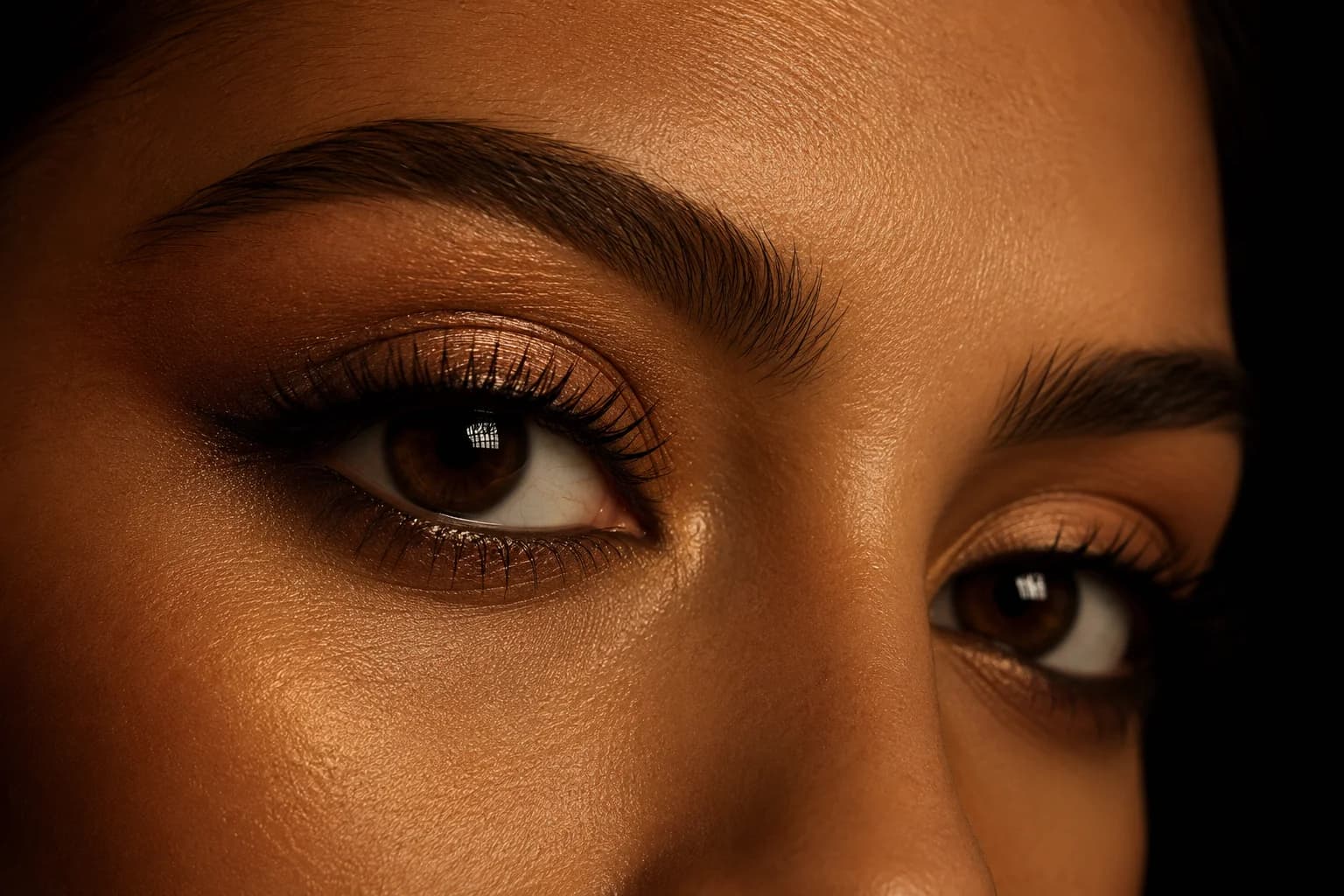
Canthal tilt — the angle of the outer corner of the eye relative to the inner corner — also plays a significant role. A negative canthal tilt (outer corner lower than inner corner) creates a drooping eye shape that reads as tired, sad, or unenthusiastic. A neutral or slightly positive canthal tilt reads as more open and alert. These structural effects are entirely independent of your actual mood or personality.
The three features most responsible for unapproachable reads at rest: downturned mouth corners, low or heavy brow, negative canthal tilt. If you have one or more of these, the reaction you get is about geometry, not personality.
How Fast People Form Unapproachability Judgements
Research by Alexander Todorov and Janine Willis at Princeton showed that people form trustworthiness and dominance impressions from a face in as little as 100 milliseconds — before conscious processing has occurred. The speed of these judgements means they are almost entirely driven by structural features, not contextual information. Your expression at rest, your brow position, your mouth corners — these are processed as signals before anyone decides whether to approach you.
What is especially important is that these rapid impressions are sticky: 100-millisecond judgements correlate highly with judgements made after unlimited viewing time. The first read is, in most social situations, the lasting read. If your resting face triggers an unfriendly impression, that impression forms before you have said a word or shown any genuine expression.
This is why the reaction can feel so unfair — and why it has nothing to do with your actual character, warmth, or emotional state. The observer's brain is pattern-matching geometric features against a library of emotional expression templates, and your face happens to match a template associated with low approachability.
Advertisement
Emotional Leakage vs Fixed Structure
It is worth distinguishing between two separate causes of an unapproachable resting face. The first is structural: bone structure, fat distribution, and genetic features that create the geometry described above regardless of muscle activation. The second is habitual muscle tension: patterns of low-level facial muscle activity that have become a default resting state over time, but are not structurally fixed.
Habitual tension patterns — such as chronic brow furrowing from concentration or stress, jaw clenching from anxiety, or downward mouth corner pull from habitual expression — contribute significantly to resting face appearance and are more modifiable than structural features. Prolonged stress or chronic tension can shift your default resting expression over months and years through muscular habit formation.
Research on facial feedback and muscle habit suggests that deliberate attention to resting muscle tension — consciously relaxing the brow, releasing jaw tension, and allowing mouth corners to sit neutrally rather than actively down-turned — can produce meaningful changes in resting face appearance over 4–6 weeks of consistent practice. This is not about forcing a smile; it is about releasing tension that is actively pulling the face into an unfriendly configuration.
Once per hour, consciously release jaw tension, unclench the brow, and let your mouth rest in a soft neutral rather than a tight down-pull. Over weeks, this resets the default resting state.
What You Can Actually Do About It
The most effective behavioural change is simply smiling more deliberately in initial social encounters. Because the unapproachability problem is almost entirely concentrated in the first few seconds of an interaction, a genuine opening smile — held for two to three seconds rather than flashing and dropping immediately — overrides the resting face impression cleanly. Research on first impressions confirms that a warm greeting expression largely resets the initial read.
For photos and situations where you cannot smile, the single most effective adjustment is a very slight lip corner lift — just enough to move the commissures from downturned to neutral. You do not need a visible smile. Moving from a downturned rest position to a neutral position removes the strongest unapproachability signal without looking artificial or performed.
Understanding that your resting face is read as a signal rather than a statement is genuinely freeing. It is not a character reflection. The people who find you intimidating are not detecting something true about your personality — they are responding to geometric patterns that happen to resemble contempt. Knowing this makes it possible to address the signal directly without taking it personally.
Does RBF Affect Men and Women Differently?
The Macbeth and Rogers research found RBF appears in approximately equal proportions across sexes, but it is perceived and commented on asymmetrically. Women with RBF are significantly more likely to be told to smile, labelled as unfriendly, or have their neutral expression socially penalised. Men with the same resting face geometry are more likely to be read as serious, authoritative, or intimidating — with neutral or even positive social outcomes in some contexts.
This asymmetry is a cultural rather than a biological phenomenon. Social expectations around female facial expressiveness are higher, meaning a neutral female resting face is more likely to be read against a positive-expression baseline. The underlying neuroscience and geometry is identical — only the social framing differs.
The experience of being told to smile without context is almost universally reported as frustrating by those who receive it — precisely because the instruction implies a personality deficit rather than identifying what it actually is: a geometric feature of their resting face. The science on RBF is a useful corrective to this framing.
Frequently Asked Questions
Is resting bitch face a real thing scientifically?
Yes. Research by Macbeth and Rogers using the Facial Action Coding System found that faces perceived as having RBF show approximately 6% more emotional leakage at rest than neutral faces — specifically, low-level contempt-like muscle activation. It is a measurable facial phenomenon, not a myth.
What facial features make someone look unapproachable?
The three biggest structural contributors are downturned mouth corners (which mimic sadness or displeasure), a low or heavy brow (which mimics anger or concern), and negative canthal tilt (outer eye corner lower than inner, mimicking a tired or unhappy gaze). Habitual muscle tension from stress can also shift resting expression over time.
Can I change how approachable my face looks?
Yes, for habitual tension patterns — which are a major contributor for many people. Consistently releasing jaw clenching, brow furrowing, and downward mouth tension over 4–6 weeks can meaningfully change your resting expression. A genuine opening smile in social situations also overrides the first-impression effect of resting face geometry very effectively.
How quickly do people judge my face as unapproachable?
Research by Willis and Todorov at Princeton found trustworthiness impressions form in as little as 100 milliseconds — before conscious thought. These rapid judgements are highly correlated with impressions formed after unlimited viewing, meaning the first read is usually the lasting read.
Does having an unapproachable resting face mean people dislike me?
No. People are pattern-matching geometric features against emotional expression templates — they are not detecting your actual personality or warmth. The reaction is automatic and geometric, not a reflection of who you are. Most people who find a resting face intimidating will immediately revise that impression once you make genuine eye contact or smile.
Lena Whitmore
Science Writer · Facial Analysis & Appearance Psychology
Lena covers the science of smiles, facial aging, and AI-powered biometrics. She writes evidence-based guides grounded in peer-reviewed research, with a focus on making appearance science accessible and actionable. All tools on Smile Tracker run locally in your browser — your photo is never uploaded anywhere.
Put it to the test
See your results with AI
Upload a photo and get your personalized Smile Score, smile type, and eye engagement reading — free, private, instant.
Analyze My Smile Free →Advertisement
Sources
Related reading

Resting Face & First Impressions: What Science Says About Your Default Expression
May 2026 · 6 min read

How Smiling Affects First Impressions: The Science of Trust, Attraction, and Competence
May 2026 · 7 min read
What Is Canthal Tilt and Does It Affect How Attractive Your Eyes Look?
May 2026 · 6 min read

What Is Facial Harmony? The Science of Features That Work Together
May 2026 · 6 min read

The Science of How Smiling Affects Confidence and First Impressions
May 2026 · 6 min read

Why Do I Look Different in Every Photo? The Real Explanation
May 29, 2026 · 6 min read