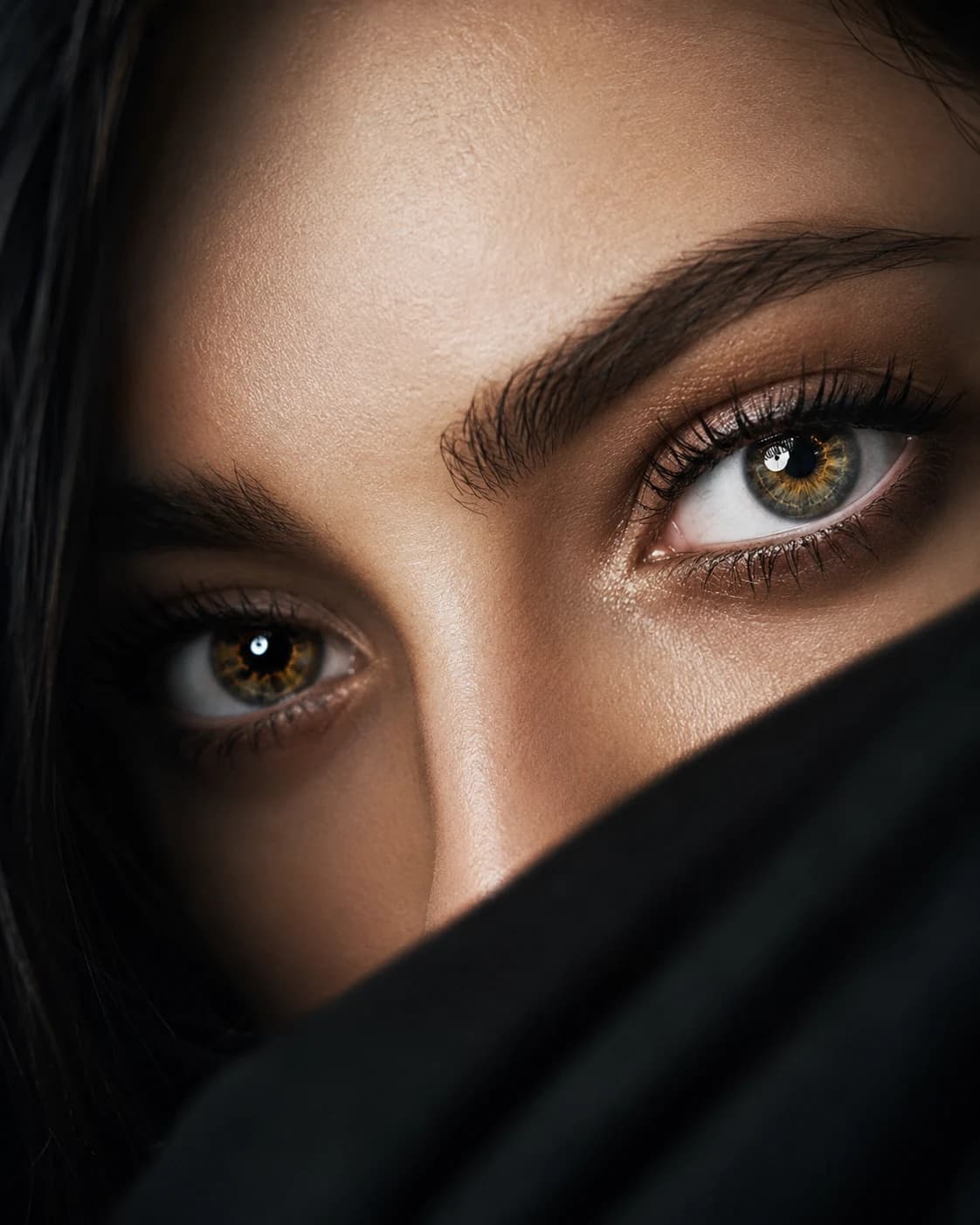
Doe Eyes: What Makes Eyes Look Wide, Soft, and Feminine
Doe eyes are characterised by a wide, round, open shape with a flat or slightly negative canthal tilt, giving the eye a soft, innocent quality that cross-cultural research consistently rates as highly appealing in female faces. This article breaks down the anatomy, the evolutionary science behind their attractiveness, and how doe eyes compare with sharper eye shapes in beauty perception.
What Are Doe Eyes?
Doe eyes describe an eye shape that appears wide, round, and open, with the outer corner of the eye sitting level with or slightly below the inner corner — a flat or mildly negative canthal tilt. The palpebral fissure (the visible eye opening) tends to be tall relative to its width, and the limbal ring (the dark outline of the iris) is often clearly visible all the way around, contributing to the impression of size and brightness.
The name references the large, luminous eyes of deer — a visual archetype of softness and innocence found across many cultures. In evolutionary biology, doe eyes are associated with neoteny: the retention of juvenile physical features into adulthood. Large eyes relative to face size, a trait of infants and children, trigger caregiving instincts and are perceived as non-threatening and warm across a wide range of social contexts.
Doe eyes are structurally opposite to fox eyes. Where fox eyes sweep upward and taper, doe eyes stay wide and round. Where fox eyes signal intensity and dominance, doe eyes signal approachability, softness, and youth. Both are widely considered attractive, but in different registers — doe eyes are consistently rated highest on warmth, trustworthiness, and approachability.
The Science of Why Doe Eyes Are Attractive
Michael Cunningham's landmark 1986 study on facial attractiveness identified large eyes as one of the strongest predictors of perceived female attractiveness — stronger than almost any other single feature measured. Cunningham proposed that large eyes trigger a nurturing or affiliative response in observers because they resemble the eye-to-face proportions of infants. This neonate schema effect is well-replicated: across cultures, faces with larger-appearing eyes are rated as more appealing, particularly in female faces.
A 2004 study by Benedict Jones and colleagues found that in female faces, larger apparent eye size correlated significantly with both attractiveness and perceived femininity. The researchers proposed that large, open eyes serve as a femininity signal, partly because they contrast with the smaller-relative-face-size and deeper-set eyes typical of male facial structure. Doe eyes are therefore simultaneously a beauty signal and a sex-differentiation signal.
Eye brightness also contributes. Wide-open eyes expose more of the sclera (white) and iris, increasing apparent eye brightness. High eye brightness is independently associated with perceived youth and health — both major attractiveness cues. People with naturally wide eye openings benefit from this visibility effect, which partly explains why the doe-eye look is so universally associated with a radiant, youthful appearance.
Doe Eyes vs Fox Eyes: Which Is More Attractive?
Neither doe eyes nor fox eyes are universally more attractive — they are attractive in different ways and to different evaluators. Research using preference surveys finds that doe eyes tend to score higher on warmth, approachability, and trustworthiness, while fox eyes score higher on confidence, intensity, and distinctiveness. Evaluators rating for long-term potential tend to prefer softer doe-eye features; those rating for physical magnetism may score fox-eye geometry higher.
Commercial advertising overwhelmingly selects doe-eye models for products associated with softness and approachability — skincare, food, baby products — while fashion editorial and luxury brands more often select fox-eye or hunter-eye geometry. This reflects genuine distinctions in what each eye shape communicates, not a value judgement about which is better. Both shapes are overrepresented among professionally beautiful faces precisely because they are distinct extremes on the attractiveness spectrum.
Most faces fall somewhere in between, with a canthal tilt close to zero degrees. This intermediate geometry tends to score well across evaluators precisely because it does not lean strongly toward either extreme — it reads as balanced rather than sharply intense or maximally soft.
Advertisement
Enhancing Doe Eyes With Makeup
The makeup strategy for enhancing doe eyes is almost exactly the inverse of the fox-eye technique. The goal is to maximise the perception of roundness and openness. Applying mascara heavily on the centre lashes of both upper and lower lids — with less at the inner and outer corners — draws the eye shape into a rounder, more central arc. Highlighting the inner corner with a pale shimmer opens the appearance of width and brightness.
On the upper lid, keeping shadow and liner focused centrally rather than extending to a flick at the outer corner preserves the round shape. A white or nude waterline liner on the lower inner rim makes the eye appear larger by preventing the visible lower rim from breaking the white space of the sclera. Curled lashes amplify the upward framing that makes the eye look more open from the front.
Brows matter significantly for the doe-eye effect. A gently rounded brow arch — as opposed to a sharp angled one — reinforces the soft, round visual language. Keeping the brow relatively close to its natural width without strong elongated tails prevents the upswept associations that compete with the doe-eye aesthetic. Brushing the brow hairs slightly upward in the centre adds a natural lift that opens the brow-to-lid distance.
To instantly amplify doe eyes in photos, position yourself so a circular light source (a ring light or window) reflects in your eyes. A circular catchlight directly mimics the wide, round quality of the doe-eye shape and adds visible luminosity that reads strongly in photographs.
Eye Health Habits That Preserve the Doe-Eye Look
The doe-eye appearance depends on several health-sensitive factors: eyelid fullness, eye brightness, limbal ring clarity, and scleral whiteness. All four degrade with dehydration, sleep deprivation, and chronic stress — and all four improve with targeted habits. Drinking adequate water maintains hydration of the periorbital tissues that keep lids from looking deflated. Seven to nine hours of sleep reduces eye-area puffiness and restores scleral brightness.
The limbal ring — the dark circle at the outer edge of the iris — is one of the strongest markers of doe-eye appeal. Research shows limbal ring clarity is highest in youth and health, fading with age, fatigue, and illness. It cannot be altered by makeup, but it responds to overall health: non-smokers, well-rested people, and those with lower oxidative stress tend to maintain clearer limbal rings longer.
Under-eye puffiness and dark circles reduce the doe-eye appearance significantly by adding shadow and heaviness to the eye area. Elevating your head during sleep, reducing sodium intake, and applying cool compresses in the morning can reduce puffiness noticeably within days. Addressing the root cause — whether allergy, sleep position, or fluid retention — sustains the effect long-term.
Frequently Asked Questions
What are doe eyes?
Doe eyes describe a wide, round, open eye shape with a flat or slightly negative canthal tilt — where the outer corner sits level with or slightly below the inner corner. Named after the large, luminous eyes of deer, they are associated with softness, youth, and approachability.
Are doe eyes attractive?
Yes — research consistently finds that larger-appearing, rounder eyes are rated as highly attractive in female faces across cultures. The attractiveness is linked to neoteny (youthful features), femininity signalling, and the warmth cues that wide, bright eyes communicate.
What is the difference between doe eyes and fox eyes?
Doe eyes have a flat or negative canthal tilt — outer corner level with or below the inner — creating a wide, round, soft look. Fox eyes have a positive canthal tilt — outer corner clearly above the inner — creating an upswept, elongated, intense look. They communicate opposite social signals: warmth vs intensity.
Can you make your eyes look more like doe eyes?
Yes, through makeup. Focusing mascara at the centre lashes, highlighting the inner corner, keeping liner centrally placed rather than extended at the outer corner, and curling lashes all create the wide-open impression associated with doe eyes. A pale or nude lower waterline liner also opens the eye significantly.
Do doe eyes look better in photos?
Wide, bright eyes photograph distinctively well because the size and brightness read clearly on camera. A circular catchlight — from a ring light or window — amplifies the doe-eye appearance in photos significantly by adding a round luminous element that reinforces the wide, open shape.
Lena Whitmore
Science Writer · Facial Analysis & Appearance Psychology
Lena covers the science of smiles, facial aging, and AI-powered biometrics. She writes evidence-based guides grounded in peer-reviewed research, with a focus on making appearance science accessible and actionable. All tools on Smile Tracker run locally in your browser — your photo is never uploaded anywhere.
Put it to the test
See your results with AI
Upload a photo and get your AI facial proportion analysis, symmetry measurement, and feature breakdown — free, private, instant.
Analyse My Face Free →Advertisement
Sources
Related reading
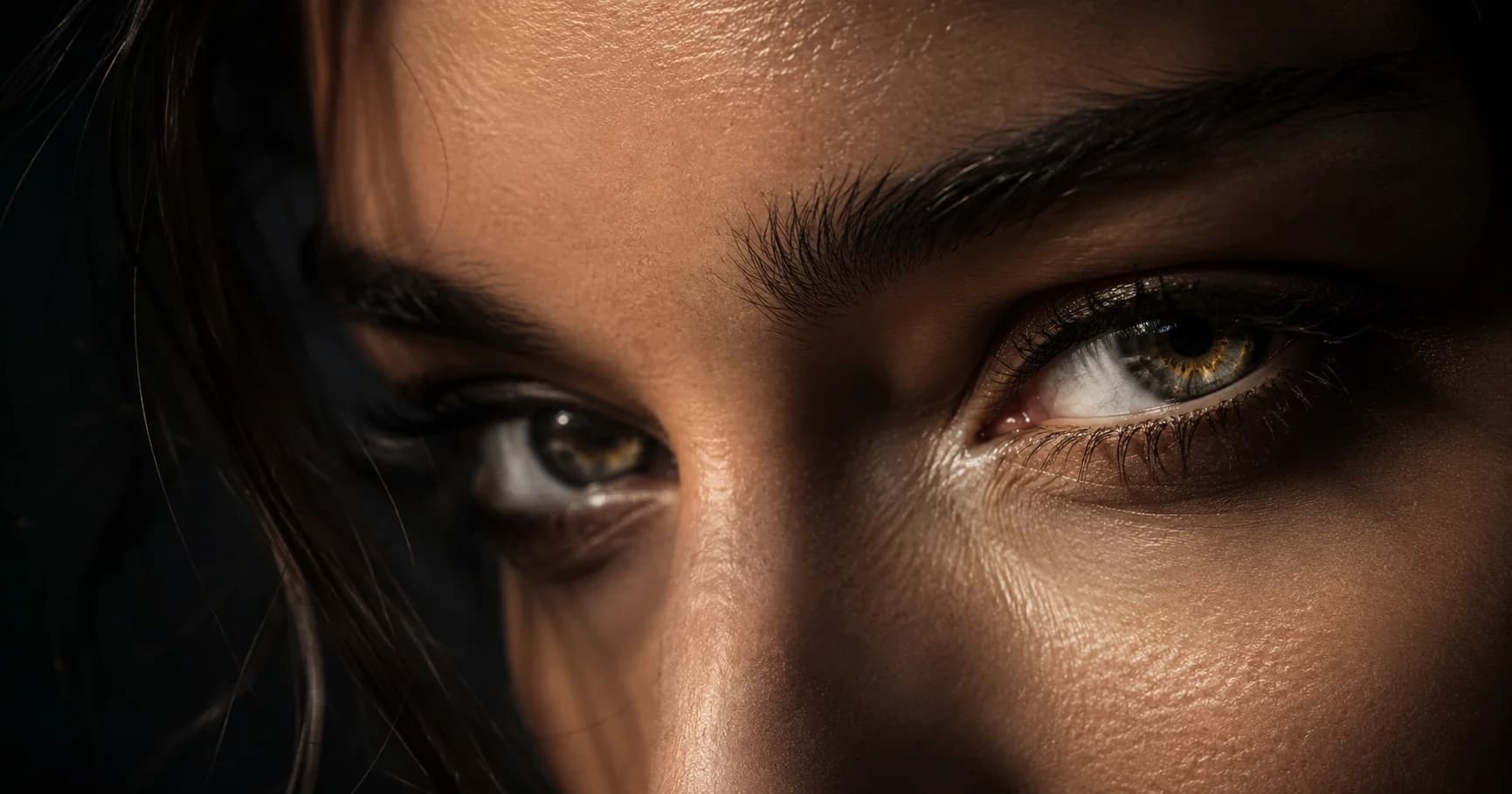
Hooded Eyes: Are They Attractive and What Do They Communicate?
May 2026 · 6 min read
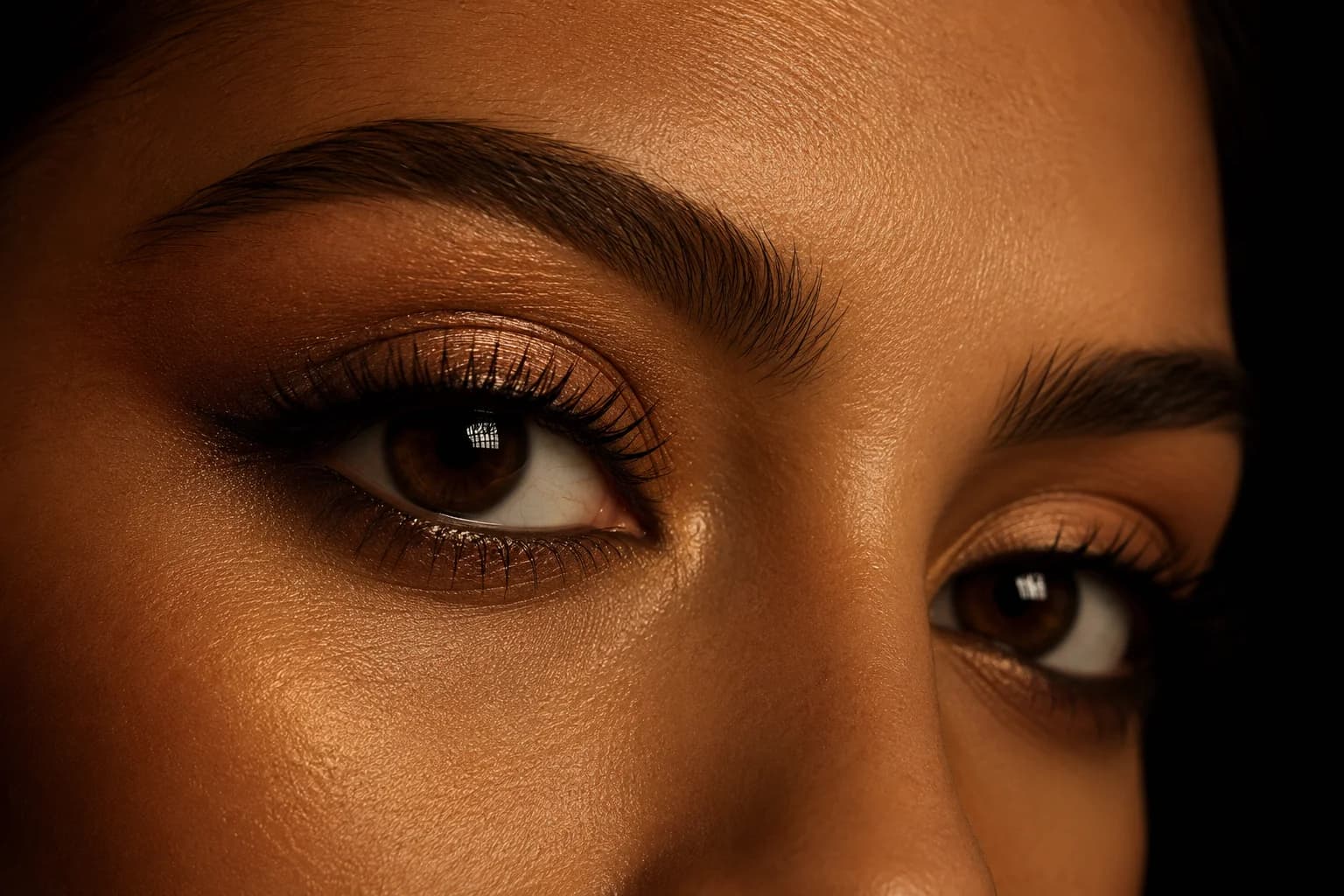
What Is Canthal Tilt and Does It Affect How Attractive Your Eyes Look?
May 2026 · 6 min read
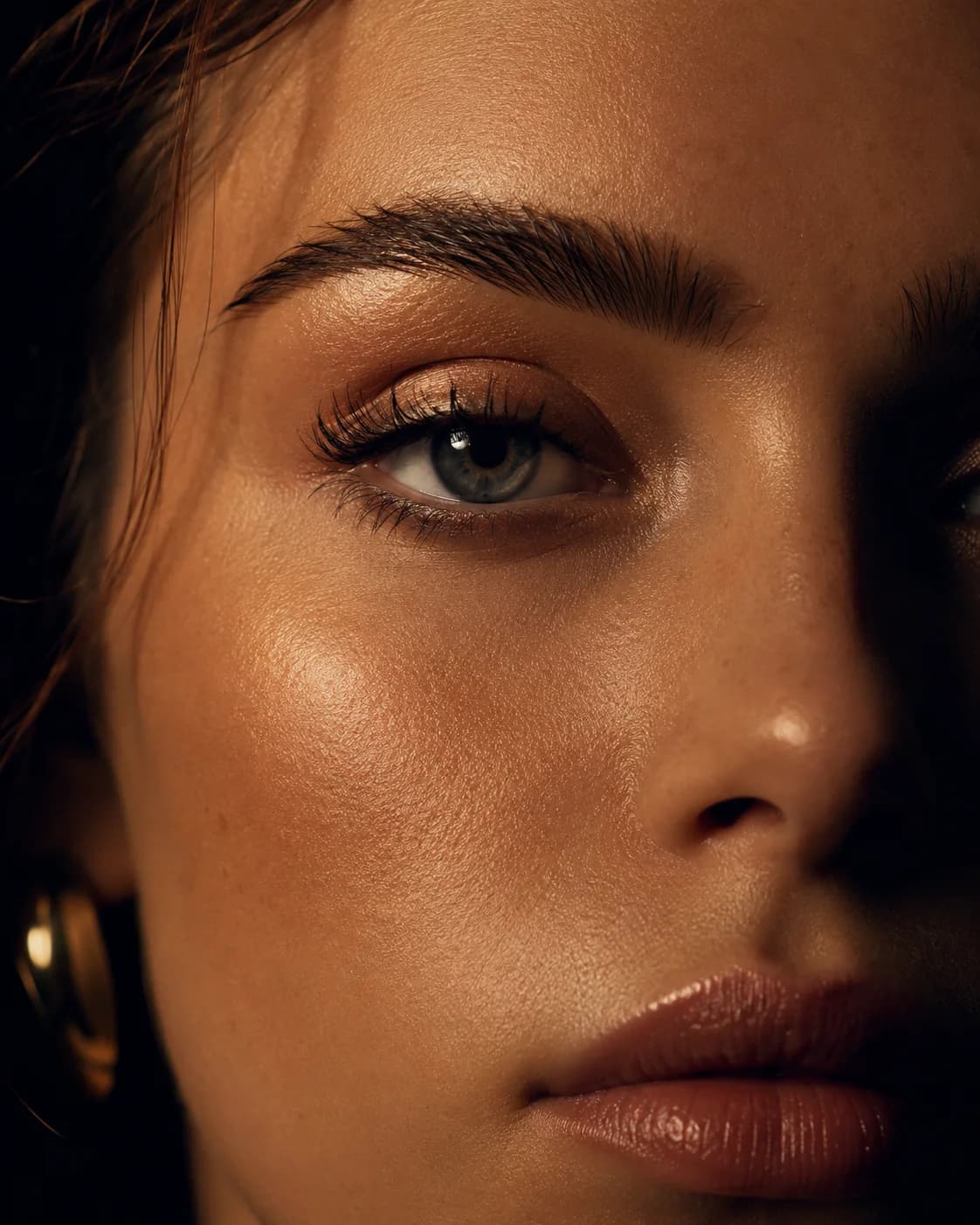
Eyebrow Shape and Attractiveness: What the Research Shows
May 2026 · 6 min read
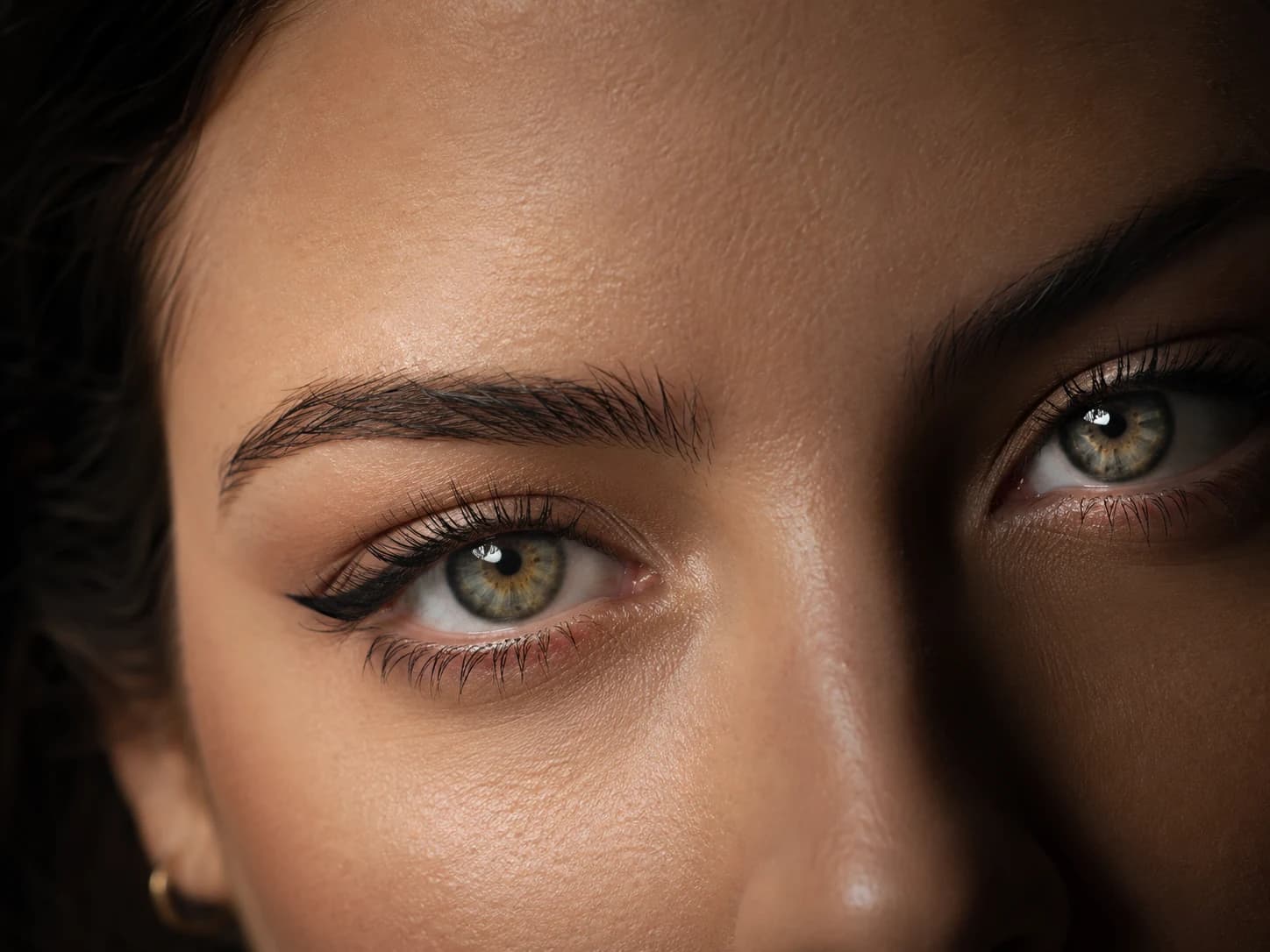
Fox Eyes: The Science Behind the Lifted, Almond Eye Look
June 2026 · 7 min read
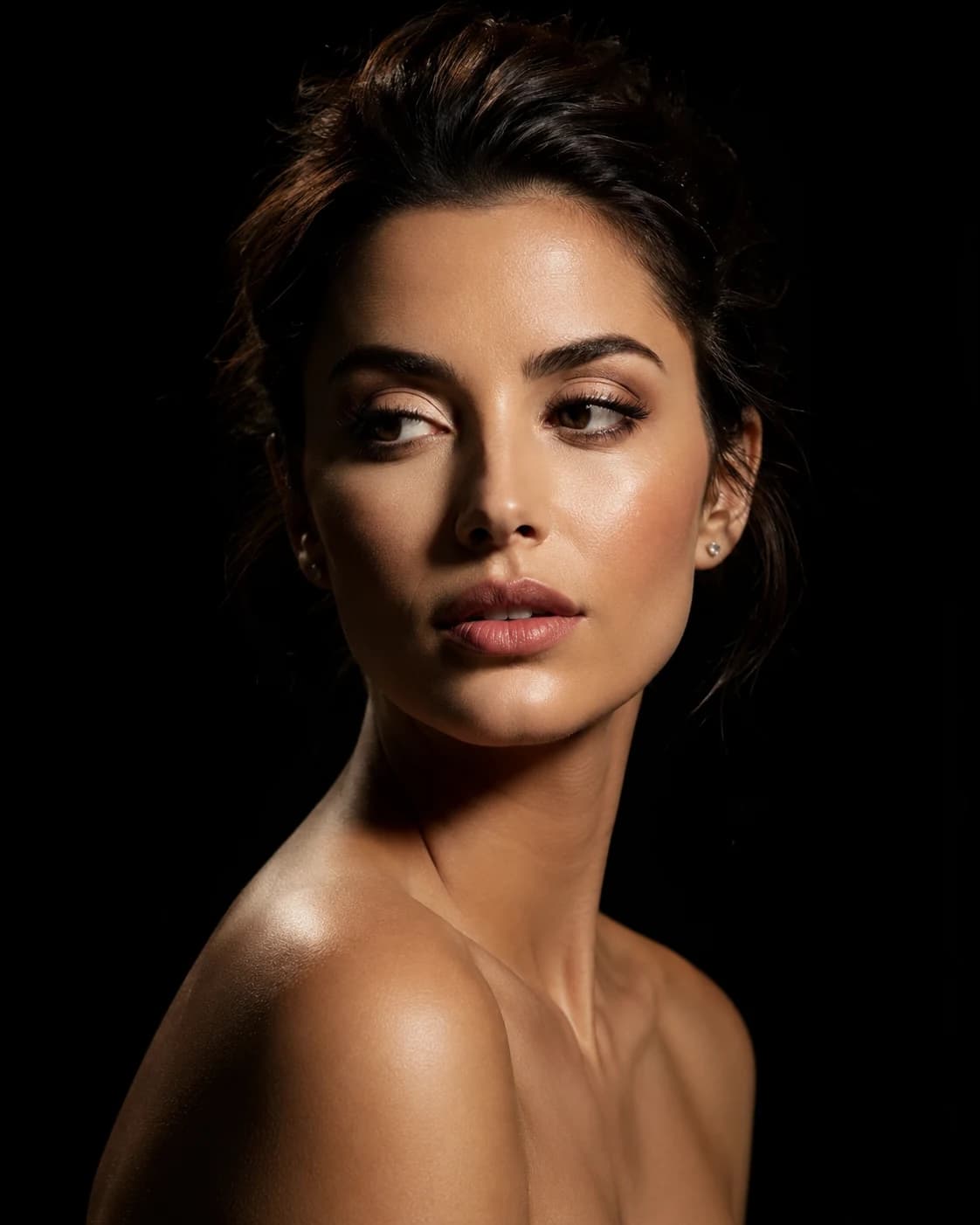
What Makes a Face Look Feminine: The Science of Feminine Facial Features
June 2026 · 9 min read
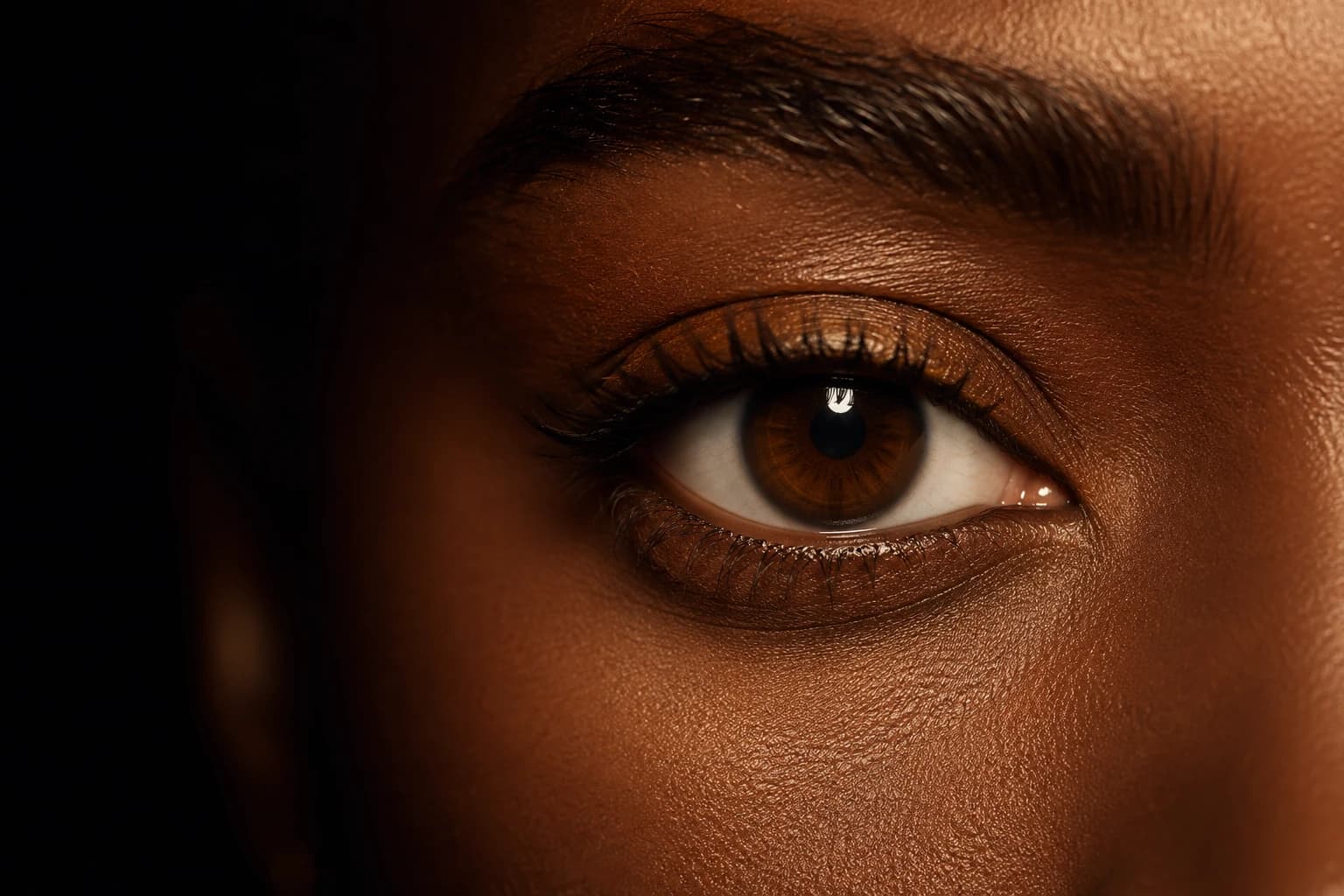
Types of Eye Shapes: Which Is Most Attractive?
June 2026 · 9 min read