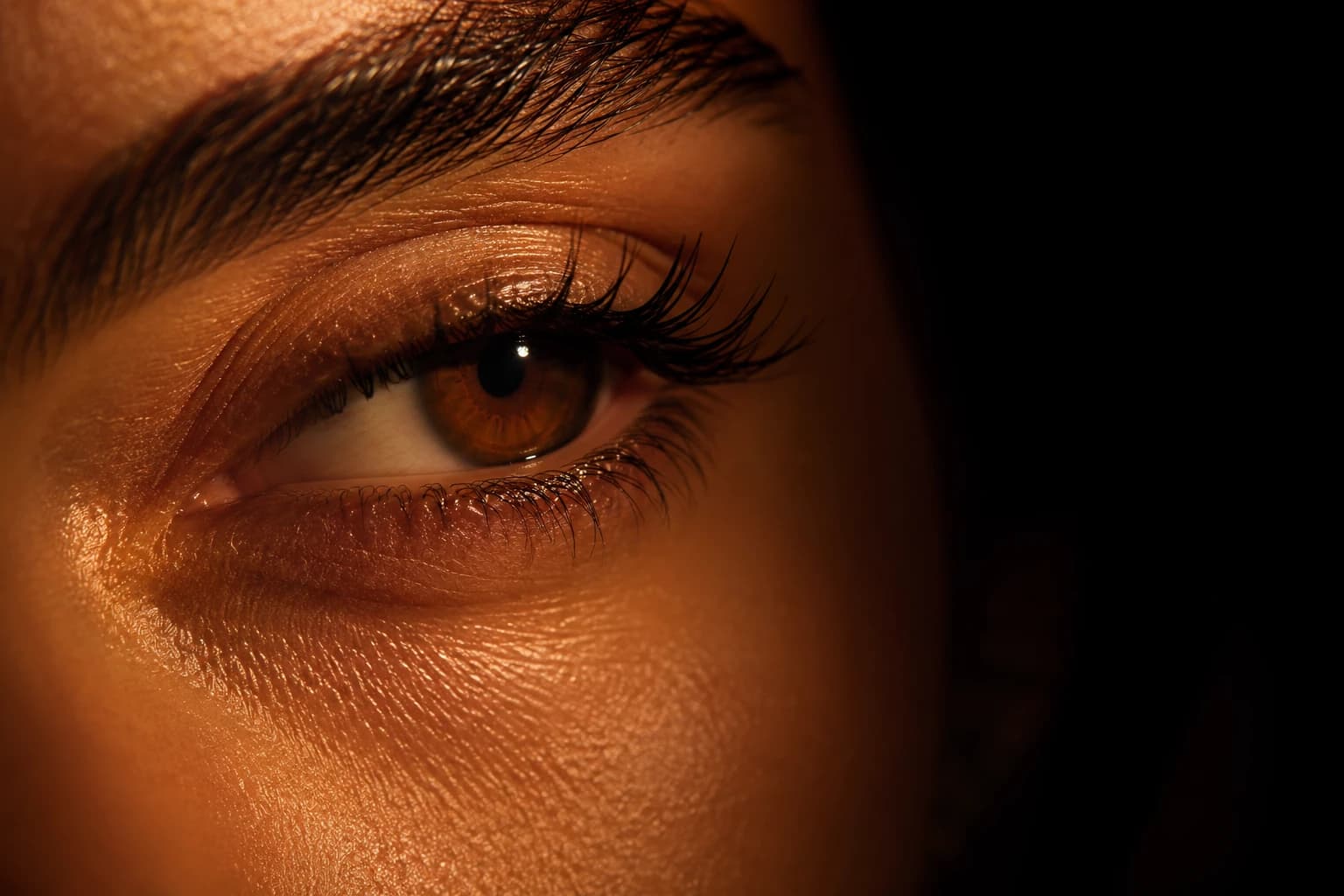
Under Eye Wrinkles: Causes, Prevention, and How to Reduce Them
Under eye wrinkles are among the first facial aging changes most women notice, typically appearing in the late twenties to early thirties as fine expression lines that initially smooth out at rest but progressively become static. The periorbital area — the skin surrounding the eyes — is the thinnest skin on the face, averaging 0.5mm in thickness compared to 2mm on the cheeks, which is why it shows aging first and most dramatically. Understanding the specific mechanisms that drive under eye wrinkle formation determines which treatments are appropriate and which are wasted effort.
This article is for informational and educational purposes only and does not constitute medical, dermatological, or psychological advice. Consult a qualified professional before making changes to your health or skincare routine.
Why Under Eye Skin Ages Faster Than the Rest of the Face
The periorbital skin has structural characteristics that make it inherently more vulnerable to wrinkle formation. It is the thinnest skin on the entire body, with fewer sebaceous glands (which produce protective oil), less subcutaneous fat beneath it, and a constant exposure to mechanical stress from blinking (approximately 15,000 times per day) and squinting. Each blink and expression subtly compresses and stretches the periorbital skin — a cumulative mechanical stress that, over decades, generates the crow's feet and under eye lines that define eye-area aging.
Collagen and elastin density in periorbital skin begins declining in the early twenties and drops faster than in other facial regions. The orbital fat pads beneath the under eye skin can also shift and protrude, contributing to the appearance of eye bags and emphasising the transition between the lower eyelid and the cheek — which is often described as the 'tear trough.' As fat pads descend, the overlying skin crumples because it no longer has the smooth, supported surface it previously stretched over.
UV exposure is the dominant external driver of under eye wrinkle formation. The periorbital area frequently goes unprotected by sunscreen — people either skip this area or find that sunscreen stings sensitive periorbital skin. UVA radiation reaching unprotected periorbital skin activates MMP enzymes that degrade collagen at an accelerated rate. People who use sun protection consistently around the eye area show significantly less periorbital wrinkling at equivalent ages compared to those who skip this area.
| Cause | Mechanism | Primary Treatment | Prevention |
|---|---|---|---|
| Collagen loss | Thin periorbital dermis degrades first | Retinoids (eye-safe), peptides | SPF, antioxidants |
| Repeated expression | Blinking/squinting creases thin skin | Botox (crow's feet) | Sunglasses reduce squinting |
| UV damage | MMPs degrade periorbital collagen | SPF, vitamin C, retinoids | Daily periorbital SPF |
| Fat pad descent | Support surface shifts, skin crumples | Filler (tear trough) | Stable weight, sleep position |
| Dehydration | Thin skin loses plumpness, lines visible | Hyaluronic acid, hydration | Adequate water, eye cream |
Topical Treatments for Under Eye Wrinkles
Retinoids are the most evidence-backed topical treatment for under eye wrinkles, but require careful application in the periorbital area. Periorbital skin is more reactive to retinoid irritation due to its thinness and low oil production. The recommended approach is 'flooding' — applying retinoid to the full face, then allowing it to migrate naturally to the eye area without direct application. This delivers a lower, skin-appropriate concentration. Retinaldehyde (retinal) is emerging as preferable to retinol for the eye area because it converts more efficiently to retinoic acid and requires fewer applications for equivalent stimulation.
Peptides are particularly appropriate for the periorbital area because they stimulate collagen production without the irritation risk of retinoids. Matrixyl 3000 (palmitoyl tripeptide-38) has clinical evidence for increasing dermal collagen type I and III. Argireline (acetyl hexapeptide-3), often called 'Botox in a jar,' has modest evidence for reducing the depth of expression lines through a different mechanism — it mildly inhibits the neurotransmitter release that drives muscle contraction, reducing the mechanical compression of squinting and blinking. The effect is mild compared to actual Botox but is meaningful with consistent use.
Hyaluronic acid applied to the periorbital area provides immediate visual improvement by drawing water into the skin and temporarily plumping the surface, reducing the appearance of fine lines. This is a cosmetic effect (hydration, not structural repair) but is significant in the under eye area where skin thinness means that even modest hydration changes the visual depth of fine lines. Look for low-molecular-weight hyaluronic acid, which penetrates more deeply than large molecules, for periorbital use.
Apply eye cream using the ring finger — it exerts the least pressure of any finger and reduces the mechanical stretching of the delicate periorbital skin during product application. Tap (never rub) the product in, working from the inner corner outward.
Professional Treatments: Botox, Filler, and Lasers
Botulinum toxin (Botox) is the most effective treatment specifically for dynamic under eye wrinkles — those that appear during expression (squinting, laughing) and are driven by the orbicularis oculi muscle. A small amount of Botox placed at the lateral orbital area relaxes the crow's feet dramatically. Under eye Botox for the fine lines directly beneath the eye requires significantly more precision and is performed by fewer practitioners — this is a specialised area where injector experience is critical, as over-treatment produces a 'droopy' appearance or affects lower eyelid position.
Tear trough filler addresses the structural component of under eye aging — the fat pad descent and hollowness that creates a shadow contributing to under eye wrinkle visibility. Hyaluronic acid filler placed along the tear trough creates a smooth, supported transition between the lower eyelid and cheek, which simultaneously reduces the shadowed crease and supports the overlying skin. This is the single most transformative treatment for under eye aging in people whose primary issue is hollowness rather than surface fine lines.
Fractional laser resurfacing (such as CO2 or erbium:YAG laser) and radiofrequency microneedling both stimulate significant collagen remodelling in the periorbital area and are the most effective treatments for static, established under eye fine lines. Multiple sessions are required (typically 2–4), and recovery varies from 5 days (RF microneedling) to 2–3 weeks (ablative laser). Results typically last 2–4 years and are among the most durable non-surgical treatments for periorbital aging.
Advertisement
Lifestyle Factors That Drive Under Eye Wrinkle Formation
Squinting is the largest behavioural contributor to under eye wrinkle formation. People who squint frequently — in bright light, during screen use, or due to uncorrected refractive errors — repetitively compress the periorbital skin and accelerate the formation of both crow's feet and under eye lines. Wearing sunglasses in bright conditions eliminates this repetitive compression while simultaneously protecting the periorbital skin from UV. Correcting vision with glasses or contact lenses eliminates the habitual squinting that occurs with uncorrected myopia.
Sleep quality and position both affect under eye wrinkles. Poor sleep increases cortisol, which directly suppresses collagen production and contributes to skin thinning. Side and stomach sleeping positions create contact between the face and pillow — the periorbital skin is particularly vulnerable to this compression because it is the thinnest facial skin. Over years, sleep-side under eye wrinkles develop asymmetrically in chronic side sleepers. A silk pillowcase significantly reduces friction-induced periorbital compression; back-sleeping eliminates it entirely.
Hydration and diet are relevant specifically in the periorbital area because the thinness of periorbital skin means that even modest dehydration visibly worsens the appearance of fine lines. Adequate water intake, a diet rich in antioxidants (vitamin C, E, carotenoids), and avoiding alcohol (which causes acute puffiness followed by dehydration) all support the under eye appearance. Excess salt and alcohol consumption are particularly visible in the periorbital area due to the thin, fragile skin structure.
How Under Eye Wrinkles Affect Your Apparent Age
The periorbital area is one of the first regions observers scan when estimating facial age. Under eye wrinkles — both the fine surface lines and the structural tear trough shadow — significantly increase perceived age because they are involuntary biological signals of collagen decline and UV exposure history. Research on facial aging perception consistently identifies the eye area (including under eye wrinkles and crow's feet) as among the strongest age-cue regions on the face, alongside the nasolabial folds and forehead.
The apparent age effect of under eye wrinkles is amplified by photography. Two-dimensional rendering compresses depth cues and makes surface texture — including fine lines — more prominent than they appear in person. This is why many people are surprised by how 'tired' they look in photographs taken in bright light or with unflattering angles — the camera exaggerates periorbital wrinkling in a way that real-time perception compensates for.
Our age estimator at /guess-my-age analyses under eye wrinkle depth and the tear trough shadow as part of its comprehensive apparent-age assessment. Upload a well-lit, straight-on photo to get your current apparent age score and a breakdown of which facial aging features are contributing most. This gives you a clear prioritisation guide for which area of your anti-aging routine deserves the most attention.
Frequently Asked Questions
What causes under eye wrinkles?
Under eye wrinkles are caused by the thinning of periorbital skin (the thinnest on the face), collagen and elastin loss from UV damage and age, repetitive mechanical stress from blinking and squinting (approximately 15,000 times per day), and fat pad descent that removes structural support from the overlying skin. Each cause requires a different treatment approach.
Can you get rid of under eye wrinkles naturally?
Natural approaches can reduce the visibility of fine under eye wrinkles — retinoids (the strongest topical option), peptides, consistent hydration, adequate sleep, and daily periorbital SPF all produce meaningful improvement over time. Deep, static wrinkles or structural hollowness typically require professional treatment (filler, laser, Botox) for significant improvement.
What is the best eye cream for wrinkles?
Evidence-based eye creams contain retinoids (retinol or retinal), peptides (Matrixyl 3000, Argireline), low-molecular-weight hyaluronic acid, and vitamin C. The concentration of actives matters more than the brand. Look for retinol 0.025–0.1%, peptide complexes in the first half of the ingredient list, and an occlusive base that seals moisture without causing milia (small whiteheads) around the eye.
Does drinking water help under eye wrinkles?
Adequate hydration plumps the dermis, temporarily reducing the visibility of fine under eye lines. Periorbital skin responds more visibly to hydration changes than most facial areas due to its extreme thinness — a well-hydrated person can look noticeably less wrinkled around the eyes than the same person mildly dehydrated. However, hydration does not address the collagen deficit that drives structural wrinkle formation.
At what age do under eye wrinkles appear?
Expression lines around the eyes (crow's feet) typically appear as dynamic lines (visible only during expression) in the mid-twenties. These progress to static lines (visible at rest) in the early-to-mid thirties in most people, depending on sun exposure history, skin thickness, and genetics. Significant static under eye wrinkling at rest is most common from the late thirties onward.
Lena Whitmore
Science Writer · Facial Analysis & Appearance Psychology
Lena covers the science of smiles, facial aging, and AI-powered biometrics. She writes evidence-based guides grounded in peer-reviewed research, with a focus on making appearance science accessible and actionable. All tools on Smile Tracker run locally in your browser — your photo is never uploaded anywhere.
Put it to the test
See your results with AI
Upload a photo and get your AI-estimated apparent age and Youthful Energy Score — free, private, instant.
Try Guess My Age Free →Advertisement
Sources
Related reading
How Lack of Sleep Ages Your Face (And How Quickly It Happens)
May 2026 · 7 min read
What Causes Eye Bags and How Do They Make You Look Older?
May 2026 · 6 min read

Are Dark Circles Genetic? What Science Says
May 2026 · 6 min read
Nasolabial Folds: What Causes Smile Lines and How to Reduce Them
June 2026 · 9 min read

Tech Neck Lines: How Your Phone Is Aging Your Neck Faster
June 2026 · 8 min read

How to Boost Collagen in Your Face Naturally (7 Proven Methods)
June 2026 · 9 min read