
Why Do I Always Look Tired? The Anatomy Behind a Permanently Fatigued Face
You slept eight hours. You drank water. You feel fine — but everyone keeps asking if you are okay, or if you got enough sleep. This is one of the more frustrating disconnects between how you feel and how you read to the world, and it is almost never about sleep at all. The tired look is a structural and anatomical story — about where fat pads live in the face, how the tear trough ligament anchors the skin, and what the corners of the mouth reveal about resting expression. Understanding the anatomy makes the whole thing a lot less personal.
The Tear Trough: Anatomy of the Tired Look
The tear trough is a curved groove that runs from the inner corner of the eye downward and outward across the cheek, separating the lower eyelid from the cheek below. In youth, the transition between the eyelid and the cheek is smooth and well-padded — fat fills the space and the skin is thick enough to conceal any underlying contour variation.
The tear trough is defined anatomically by the tear trough ligament — a fibrous attachment between the skin and the underlying bone of the orbital rim. This ligament anchors the skin in place, creating a fixed line on the face regardless of what happens to the surrounding soft tissue. As the orbital fat pad above the ligament descends or redistributes with age, and as the cheek fat below the ligament loses volume, the tear trough becomes increasingly visible as a hollow depression.
Even in young people, the depth and prominence of the tear trough varies significantly between individuals based on genetics, bone structure, and orbital fat distribution. Some people have a prominent tear trough in their twenties entirely independent of age-related changes. This is a structural feature of their orbital anatomy — not a sign of fatigue, poor health, or aging.
Orbital Fat Pad Descent and the Hollow-Eye Effect
The orbital fat pads are compartments of fat that sit within the bony eye socket, cushioning and supporting the eye. In youth, these fat pads are plentiful and positioned high within the socket, creating a smooth, full lower eyelid transition. Over time — and at varying rates between individuals — these fat pads either descend forward and downward over the orbital rim, creating a visible bulge (eye bags), or they atrophy and reduce in volume, creating a sunken, hollow appearance.
The hollow-eye look — technically called periorbital volume loss — is one of the strongest visual cues humans associate with fatigue, illness, and age. Research on facial attractiveness and perceived age consistently identifies periorbital fullness as one of the key markers of perceived youth and vitality. When this volume is reduced by anatomy or genetics rather than by actual fatigue, the face reads as tired regardless of the person's actual state.
Orbital fat descent can also push the fat pads outward over the tear trough ligament, creating a convex lower eyelid (eye bag) immediately above the concave tear trough hollow. This convex-concave pairing casts a shadow that deepens the visual impression of the under-eye hollow — producing the dark, tired appearance without any actual pigmentation involved.
If your dark circles look worse under overhead lighting but fade under soft front-facing light, they are almost certainly shadow-based (fat pad and hollow) rather than pigmentation-based.
Skin Pigmentation and the Under-Eye Colour
Not all dark circles are structural. A separate cause is true pigmentation — melanin deposits in the thin skin beneath the eye. The under-eye skin is the thinnest skin on the body, and the blood vessels and melanin concentration immediately beneath it are often visible through it. In people with darker Fitzpatrick skin types (types III–VI), melanin hyperpigmentation in the periorbital area is particularly common and is often inherited.
Vascular dark circles — caused by blood vessels visible through thin skin — tend to have a bluish or purplish hue and are more prominent in cold, tired, or dehydrated states when blood flow is sluggish and the vessels are more dilated and visible. Pigmentary circles tend to be brownish and more uniform in distribution. Many people have a combination of both.
The structural cause (shadow from fat pad displacement) and the pigmentary cause produce visually similar effects but respond to completely different interventions. Shadow-based dark circles worsen with lighting that comes from above and improve with soft front-facing light. Pigmentation-based circles look roughly the same under any lighting. This lighting test is a useful first-step diagnostic.
Advertisement
Downturned Mouth Corners and the Resting Expression
The position of the mouth corners at rest is one of the most powerful determinants of whether a face reads as tired, sad, or neutral. The levator anguli oris muscle elevates the mouth corners when smiling. The depressor anguli oris (DAO) muscle depresses them at rest. The balance between these two muscles — influenced by genetics, habitual expression, and soft tissue distribution — determines the resting mouth corner position.
When the DAO is relatively dominant, or when surrounding soft tissue pulls the corners downward, the resting mouth takes on a downturned position that humans universally associate with sadness, fatigue, and negative affect. This is entirely structural — the person is not feeling sad or tired, but the biomechanical position of their mouth corners communicates that signal regardless.
This is closely related to the concept of resting face expression — the unintentional signal a face sends when its owner is thinking about nothing in particular. People with structurally downturned mouth corners frequently hear comments about looking tired, unhappy, or unfriendly, and may develop anxiety about their neutral expression as a result.
Canthal Tilt and Perceived Alertness
Canthal tilt refers to the angle of the eye axis — the line connecting the inner corner (medial canthus) to the outer corner (lateral canthus) of each eye. A positive canthal tilt means the outer corners are higher than the inner corners, creating an upward-angled eye axis. A neutral or negative canthal tilt means the eye axis is horizontal or slopes downward.
Eyes with a downward or neutral canthal tilt are consistently perceived as more tired, sad, or droopy — even when the person is fully alert. This is a structural feature of the orbital anatomy and the insertion points of the ligaments that hold the lateral canthal angle in position. Like the tear trough, it is an inherited anatomical characteristic, not a behavioural or lifestyle signal.
Positive canthal tilt, by contrast, is associated with alertness, energy, and youth. It is a feature that is highly represented in aesthetically high-rated faces and is one of the structural variables that face analysis tools assess when evaluating eye appearance.
Lifestyle Factors That Amplify the Structural Effect
While the structural factors above are the primary cause of a permanently tired-looking face, several lifestyle factors can worsen or amplify them. Dehydration reduces skin plumpness and makes the under-eye hollow more prominent. High sodium intake causes fluid retention that can make the lower eyelid appear puffy, paradoxically worsening the convex-concave shadow effect. Poor sleep does genuinely worsen periorbital appearance — not by creating the hollow, but by increasing vascular dilation and skin pallor that makes existing structural features more visible.
Sun exposure accelerates periorbital pigmentation changes and degrades collagen in the already-thin under-eye skin, making structural contours more visible. Alcohol causes both dehydration and vascular dilation, temporarily worsening both shadow-based and vascular dark circles.
These factors matter most as amplifiers. If the structural anatomy is mild, managing them produces visible improvement. If the structural anatomy is pronounced, managing lifestyle factors reduces the effect but does not eliminate it. The tired look, for many people, is primarily a story about their inherited facial anatomy — and that is worth knowing.
Frequently Asked Questions
Why do I always look tired even when I sleep well?
The tired look is usually structural, not functional. Prominent tear trough hollows, periorbital fat pad descent, thin under-eye skin, downturned mouth corners, and a neutral or negative canthal tilt all create a fatigued appearance regardless of how much sleep you get. These are inherited anatomical features — your face is sending a signal that does not reflect your actual state.
What causes the hollow under-eye look?
Periorbital hollowing is caused by two overlapping processes: the descent or atrophy of the orbital fat pads (the cushioning fat within the eye socket) and the anchoring effect of the tear trough ligament. As fat volume above and below this ligament changes, a depression forms that casts a shadow — creating the dark, hollow under-eye appearance associated with fatigue.
Are dark circles from tiredness or genetics?
Both can contribute, but genetics is often the dominant factor. Structural dark circles (caused by fat pad displacement and shadow) and vascular dark circles (caused by blood vessels visible through thin skin) are largely determined by inherited anatomy. Pigmentary circles also have a strong genetic component, particularly in people with darker skin types. Sleep deprivation worsens vascular circles but does not cause the structural kind.
Can I fix always looking tired without surgery?
For shadow-based dark circles, improved front-facing lighting dramatically reduces the appearance. Proper hydration and sleep reduce vascular component. Topical retinoids and vitamin C can modestly improve skin quality and pigmentation over months. However, prominent structural tear trough hollows caused by fat pad changes respond primarily to filler or surgical interventions — there are no topical fixes for a structural volume deficit.
What is canthal tilt and why does it matter?
Canthal tilt is the angle of the eye axis — whether the outer corner of each eye sits higher, level with, or lower than the inner corner. A downward or neutral canthal tilt is strongly associated with looking tired, sad, or droopy, even in fully alert people. It is determined by orbital anatomy and ligament attachment points — an inherited structural feature rather than an expression of your current state.
Lena Whitmore
Science Writer · Facial Analysis & Appearance Psychology
Lena covers the science of smiles, facial aging, and AI-powered biometrics. She writes evidence-based guides grounded in peer-reviewed research, with a focus on making appearance science accessible and actionable. All tools on Smile Tracker run locally in your browser — your photo is never uploaded anywhere.
Put it to the test
See your results with AI
Upload a photo and get your AI-estimated apparent age and Youthful Energy Score — free, private, instant.
Try Guess My Age Free →Advertisement
Sources
Related reading

Resting Face & First Impressions: What Science Says About Your Default Expression
May 2026 · 6 min read

How Stress Ages Your Face: The Biology and What You Can Do
May 2026 · 7 min read
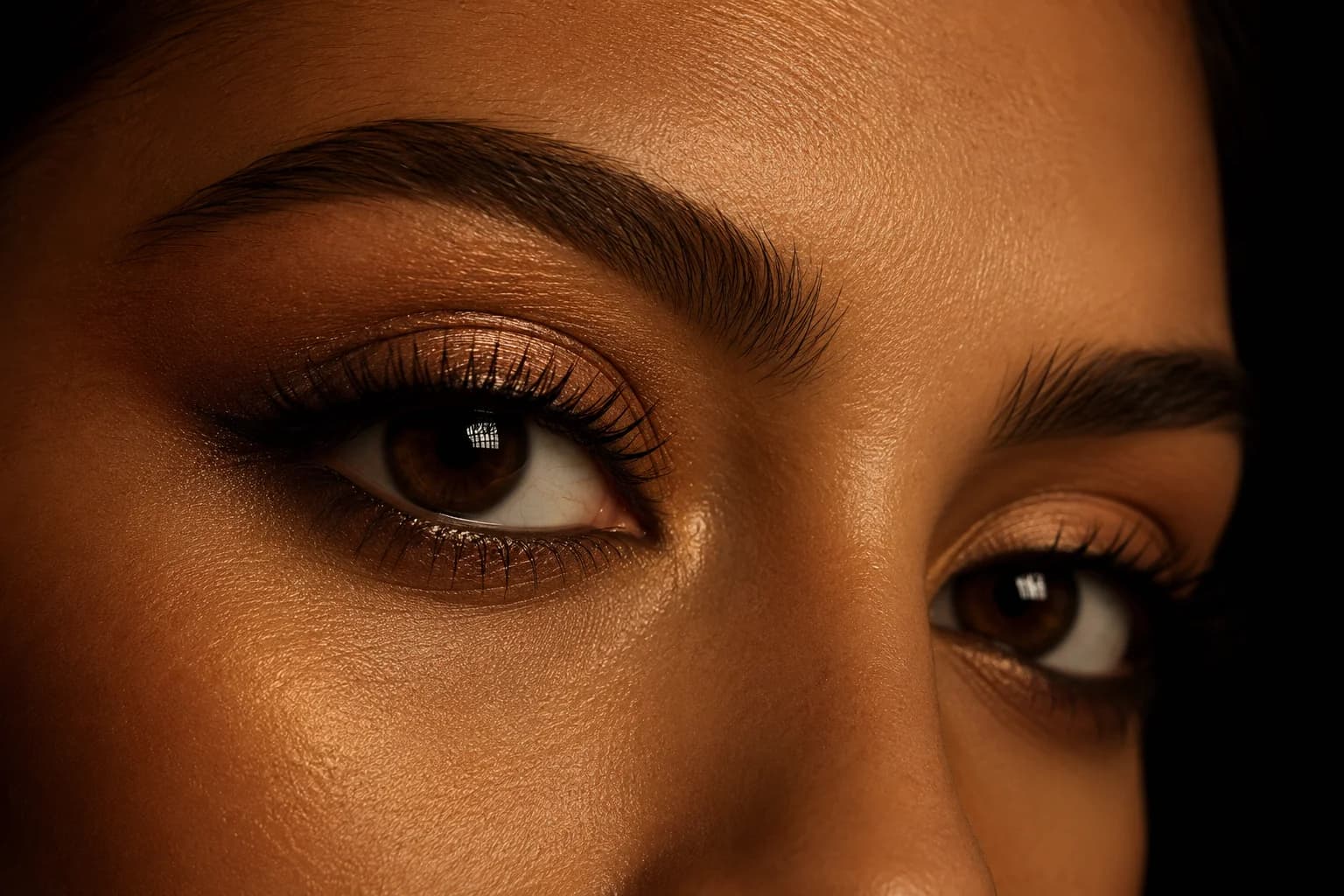
What Is Canthal Tilt and Does It Affect How Attractive Your Eyes Look?
May 2026 · 6 min read
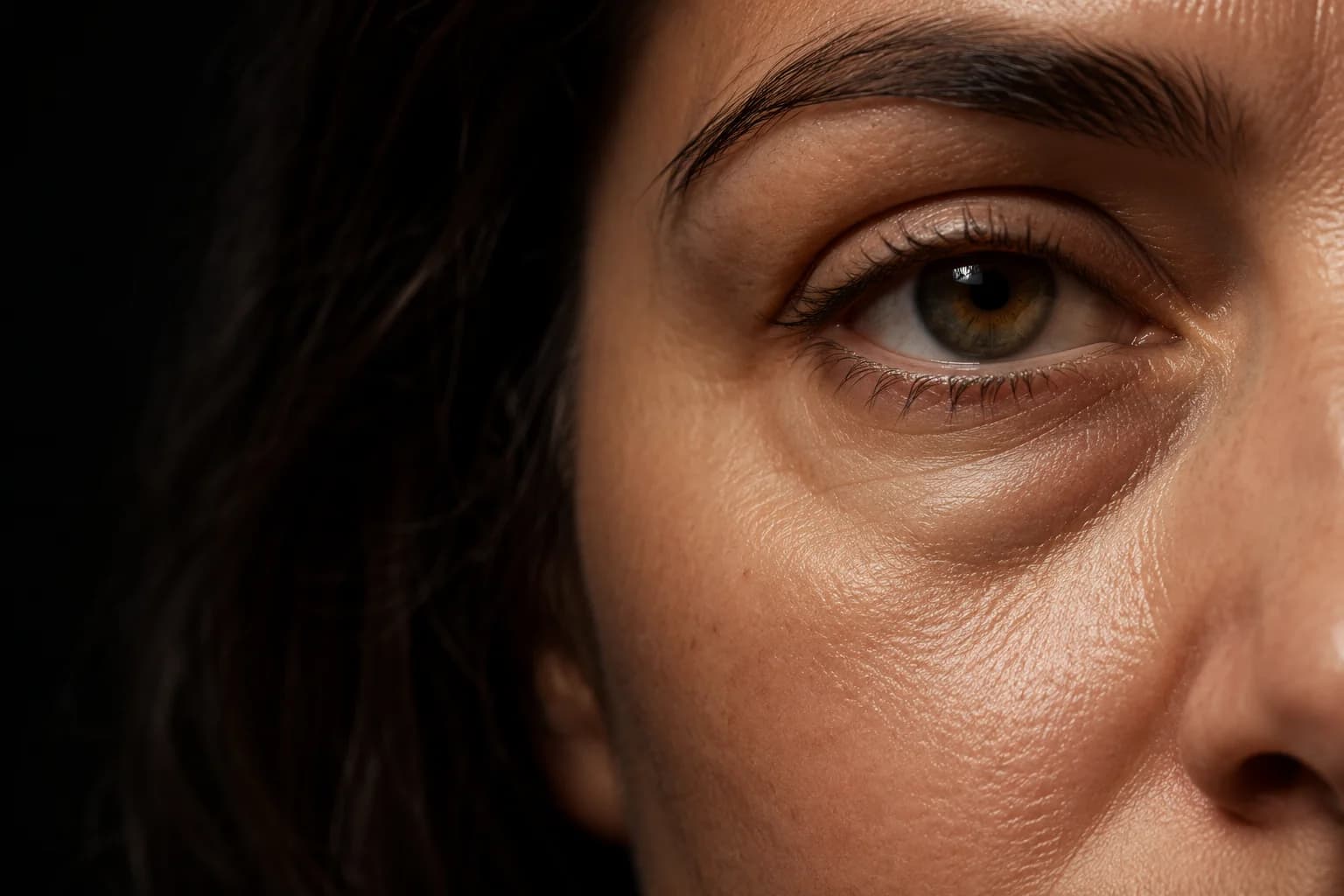
What Causes Eye Bags and How Do They Make You Look Older?
May 2026 · 6 min read

Are Dark Circles Genetic? What Science Says
May 2026 · 6 min read
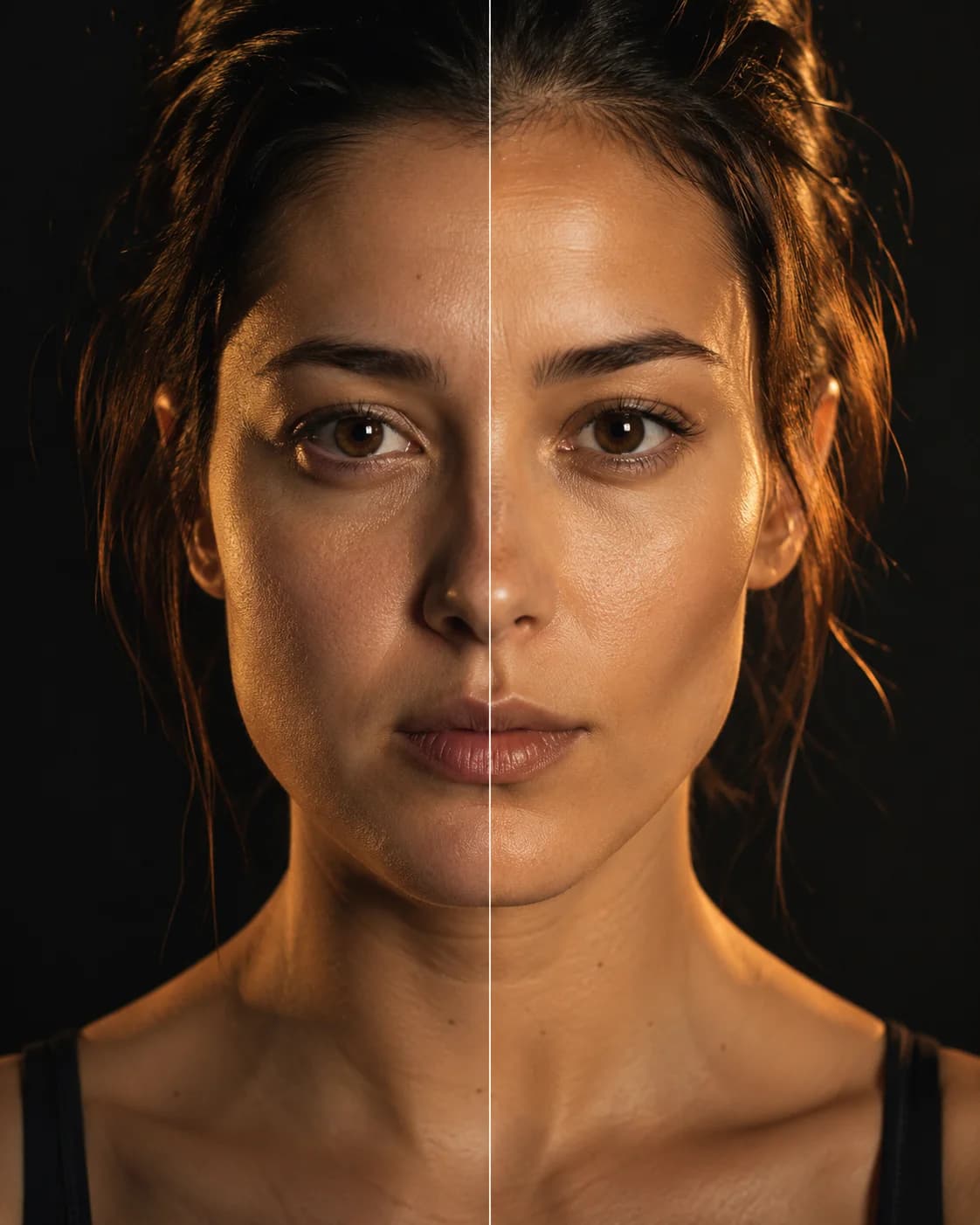
Cortisol Face: Why Chronic Stress Makes Your Face Look Puffy
May 29, 2026 · 7 min read