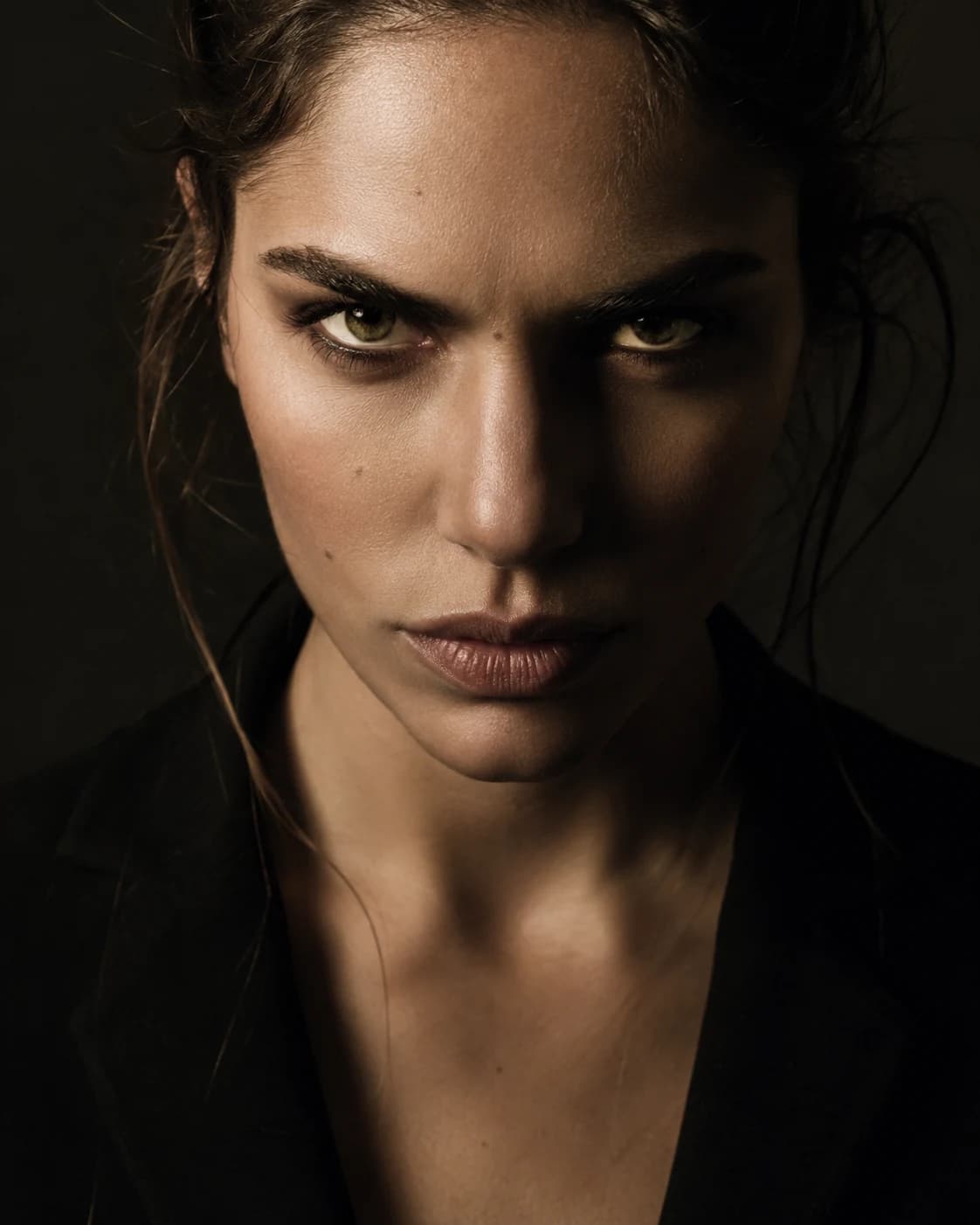
Deep Set Eyes: What They Are and Why They Look So Intense
Deep set eyes are characterised by an eye socket that sits further back in the skull, placing the eyeball deeper behind a more prominent supraorbital ridge (brow bone). The result is one of the most distinctive and striking eye configurations in facial analysis — an intense, shadowed look that reads as magnetic, serious, and often highly attractive. This guide covers the anatomy, why deep set eyes look the way they do, and how to work with or enhance them.
What Are Deep Set Eyes?
Deep set eyes occur when the orbital socket — the bony cavity in the skull that holds the eyeball — is deeper than average, positioning the eye further back relative to the surrounding brow bone and cheekbone. The supraorbital ridge (brow bone) therefore protrudes more prominently in front of the eye, casting a natural shadow over the upper eyelid and creating the characteristic hooded, intense appearance. This is a skeletal feature, not a soft-tissue one — it is set by bone structure and cannot be changed without surgical intervention.
The brow-to-lid distance — the visible space between the lower edge of the brow and the upper eyelid crease — is typically reduced in deep set eyes because the brow bone sits lower relative to the eye. This gives deep set eyes their characteristic appearance of a low, heavy brow framing the eye from above. When someone has both deep set eyes and a positive canthal tilt, the combination produces what attractiveness researchers describe as hunter eyes — one of the most consistently rated intense eye configurations in facial analysis.
Deep set eyes differ from hooded eyes, though the two are often confused. Hooded eyes are primarily a soft-tissue feature: the upper eyelid skin folds over the lid crease, reducing or hiding the visible eyelid platform. Deep set eyes are a skeletal feature: the eye socket itself is recessed, which causes the brow bone to shadow the eye from above. Both can occur in the same face — and frequently do — but they have different causes, different appearances, and respond to different makeup techniques.
How to Tell If You Have Deep Set Eyes
The clearest way to identify deep set eyes is to look at your profile in a mirror. Place a finger horizontally at the outermost point of your brow bone and observe whether the eyeball sits behind this point. If the eye visibly recedes behind the brow bone in profile, you have deep set eyes. From the front, deep set eyes tend to show a prominent brow ridge casting shadow on the upper lid, a reduced visible eyelid platform, and eyes that appear to sit within a slightly shadowed orbital frame rather than projecting out from the face.
In photographs, deep set eyes create a characteristic intensity because the orbital shadow darkens the upper eyelid area and creates depth contrast that other eye types lack. In direct sunlight, the brow bone casts a more pronounced shadow over the eye, amplifying the deep-set appearance. In shade or diffused lighting, the shadow is reduced and the eyes appear more open. This lighting-dependence is one of the clearest indicators — if your eyes look dramatically more intense in direct light and softer in shade, deep set orbital structure is likely contributing.
The brow-to-lid distance measurement is a useful diagnostic. With your face relaxed and eyes open in a neutral gaze, measure the distance from your lower brow hair to your upper lid crease. In average eyes this distance is typically 10-14mm in women. In deep set eyes, this distance is often less than 10mm because the brow bone sits closer to the eye, reducing the visible brow-to-crease space. You can use our face rating tool to get a precise measurement of your orbital structure from a photo.
Why Deep Set Eyes Are Considered Attractive
Deep set eyes are consistently rated as striking and intense in attractiveness research, with the effect particularly pronounced in male faces where brow bone prominence is a testosterone-related secondary sex characteristic. In female faces, deep set eyes read differently — they create a look of depth and mystery rather than dominance, and are often described as soulful or magnetic. The shadow created by the orbital recess makes the eye appear more three-dimensional and vivid, which observers reliably rate as memorable.
The shadow component is key. Deep set eyes naturally have more contrast between the dark orbital shadow and the bright iris and sclera — this high contrast makes the eye more visually arresting in conversation and in photographs. Eyes with high contrast between the surrounding orbital area and the iris draw more fixation time from observers, which is part of why people with deep set eyes often describe being told they have intense or compelling eyes even without any makeup or enhancement.
In evolutionary attractiveness research, orbital depth is associated with brow bone prominence, which in males signals testosterone exposure and in both sexes signals robust skeletal structure — both proxies for genetic health. In modern aesthetics, the association with high-fashion modelling and cinema (many acclaimed screen performers have deep set eyes) has added cultural amplification to the intrinsic structural appeal. This dual signal — biological plus cultural — makes deep set eyes one of the more robustly attractive eye configurations across evaluation contexts.
Advertisement
Deep Set Eyes vs Hooded Eyes: Key Differences
The confusion between deep set and hooded eyes is understandable because both result in a reduced visible eyelid platform. The distinction lies in the cause. Deep set eyes: the orbital socket is physically deeper, placing the eye further back. The eyelid crease itself is visible and defined — there is a crease, you just have less space above it due to the brow bone. Hooded eyes: the eyelid skin folds downward over the crease, hiding or obscuring it. The socket depth is less relevant.
In practice, the difference shows up in how makeup behaves. On deep set eyes, eye shadow applied to the lid crease and above is partially hidden by the brow bone shadow — so lid shadow needs to be placed higher and more intensely to show clearly. On hooded eyes, shadow applied at the crease is literally covered by the folding skin when the eyes are open — so the technique involves placing colour above where the crease appears when the eye is open, not where it physically is.
Many people have elements of both — a deep orbital socket AND some degree of upper lid skin folding. In these cases, both sets of techniques apply, but it is worth diagnosing which is the dominant feature. If your main issue is the brow bone shadow making your eyes look heavy, deep set techniques apply. If your main issue is eyelid skin covering your crease, hooded eye techniques apply. Often the most effective approach combines elements of both.
To instantly see whether your eye issue is deep set or hooded: look directly into a mirror with a light source above you. If a shadow falls across your upper lid from your brow bone, that is the deep set component. If skin physically folds over your crease line, that is the hooded component. Most eyes show a combination — identify which is dominant.
Makeup for Deep Set Eyes: Enhance or Open
There are two distinct approaches to makeup for deep set eyes: enhance the intensity (lean into the depth and drama) or open the eye (counteract the shadow and maximise visible eyelid space). Both are valid — the right choice depends on the look you want. For enhancement: apply a deep, smoky shadow across the entire lid and into the crease, use a strong liner on the upper lash line, and keep the lower lid mostly clean. The natural shadow from the brow bone becomes part of the look rather than something to fight.
For opening the eye: use light, matte shades on the lid to reflect light into the shadowed area. Apply highlighter on the brow bone just below the brow hair — this reflects light downward and reduces the apparent prominence of the brow bone shadow. Keep liner thin and tight to the upper lash line rather than thick and smudged. A white or nude waterline on the lower inner rim opens the lower eye. Curl lashes maximally — the upward curl catches light and draws the eye upward, counteracting the downward shadow from the brow.
In photos, deep set eyes require awareness of lighting angle. Overhead lighting — very common in indoor settings — casts additional shadow from the brow bone, deepening the already prominent orbital shadow and making the eyes look heavier. Position yourself so the light source is at your eye level or slightly below when being photographed. Even a slight downward tilt of a ring light or moving toward a lower window source produces a noticeably more open, brighter eye appearance on camera.
Frequently Asked Questions
What are deep set eyes?
Deep set eyes occur when the orbital socket sits deeper in the skull, placing the eyeball further back behind a more prominent brow bone. This creates a natural shadow over the upper eyelid and gives the eyes an intense, recessed appearance. It is a skeletal feature determined by bone structure.
Are deep set eyes attractive?
Yes — deep set eyes are consistently rated as striking and intense. The orbital shadow creates high contrast between the surrounding area and the iris, making the eyes appear more three-dimensional and vivid. In males, brow bone prominence signals testosterone exposure; in females, deep set eyes are often described as soulful or magnetic.
How do I know if I have deep set eyes?
Look at your face in profile — if your eyeball sits visibly behind the plane of your brow bone, you have deep set eyes. From the front, deep set eyes show a prominent brow ridge casting shadow on the upper lid and a reduced visible eyelid platform. The brow-to-lid crease distance is typically less than 10mm in women with deep set eyes.
What is the difference between deep set eyes and hooded eyes?
Deep set eyes are a skeletal feature — the orbital socket is literally deeper, placing the eye further back behind the brow bone. Hooded eyes are a soft-tissue feature — the upper eyelid skin folds over the crease, hiding it. Both reduce visible eyelid space but for different reasons, and they require different makeup approaches.
What makeup makes deep set eyes look bigger?
To open deep set eyes: use light matte shades on the lid to reflect light into the shadow, highlight the brow bone just below the brow to reduce its apparent prominence, apply a pale or nude lower waterline liner, curl lashes strongly, and keep liner thin on the upper lid. Avoid dark smoky shadow across the entire lid if your goal is to look more open — it amplifies the existing shadow.
Lena Whitmore
Science Writer · Facial Analysis & Appearance Psychology
Lena covers the science of smiles, facial aging, and AI-powered biometrics. She writes evidence-based guides grounded in peer-reviewed research, with a focus on making appearance science accessible and actionable. All tools on Smile Tracker run locally in your browser — your photo is never uploaded anywhere.
Put it to the test
See your results with AI
Upload a photo and get your AI facial proportion analysis, symmetry measurement, and feature breakdown — free, private, instant.
Analyse My Face Free →Advertisement
Sources
Related reading
Hooded Eyes: Are They Attractive and What Do They Communicate?
May 2026 · 6 min read
What Is Canthal Tilt and Does It Affect How Attractive Your Eyes Look?
May 2026 · 6 min read

Hunter Eyes vs Prey Eyes: What Is the Difference and Which Is More Attractive?
May 2026 · 6 min read
Eyebrow Shape and Attractiveness: What the Research Shows
May 2026 · 6 min read
Fox Eyes: The Science Behind the Lifted, Almond Eye Look
June 2026 · 7 min read
Apparent Age vs Chronological Age: What Makes a Face Look Older or Younger
June 2026 · 8 min read